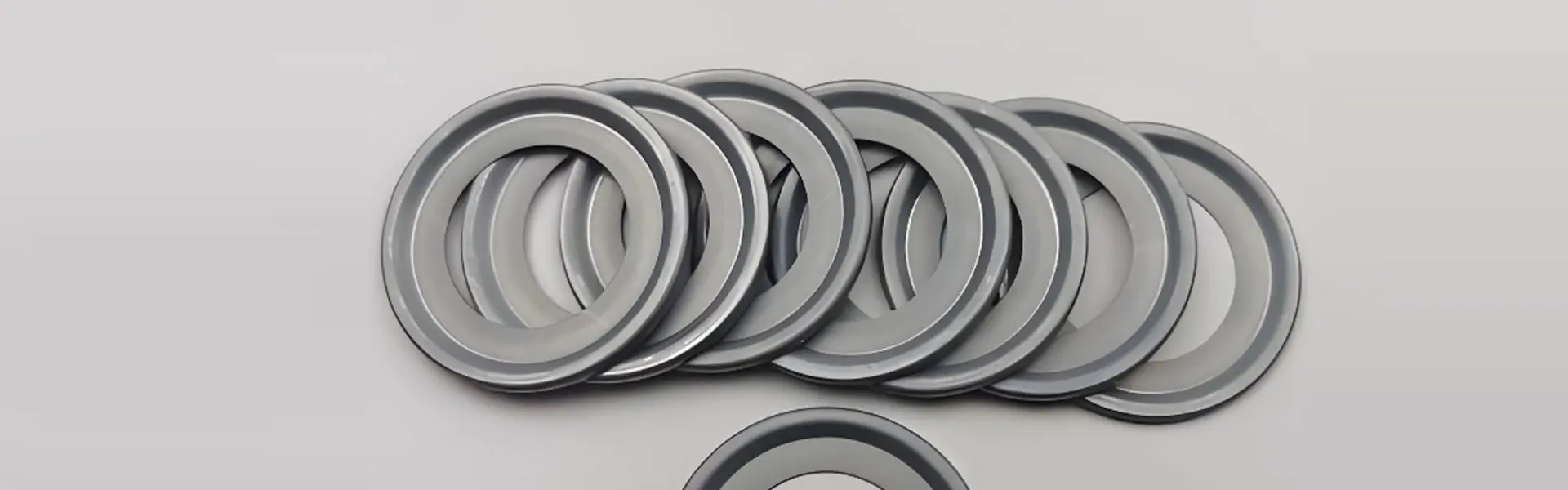
In the demanding world of industrial sealing, reliability is non-negotiable. For over four decades, Kaxite has been at the forefront of engineering sealing solutions that stand up to extreme pressure, temperature, and corrosive media. Among our flagship products, Spiral Wound Gaskets represent the pinnacle of versatile and robust sealing technology. Designed for a vast array of applications—from oil and gas pipelines to chemical processing plants and power generation—these gaskets are the go-to choice for engineers who cannot afford failure.
A Spiral Wound Gasket is a semi-metallic seal constructed by winding a pre-formed metal strip and a soft filler material (such as graphite, PTFE, or ceramic) in a spiral (V-shaped) formation around a metal centering ring. This unique construction combines the resilience and recovery of the filler material with the structural strength and temperature resistance of the metal winding. The result is a gasket that excels in sealing flanged connections under high bolt loads, thermal cycling, and variable pressures.
Selecting the correct gasket requires careful consideration of multiple parameters. Kaxite provides fully traceable materials and detailed specifications for every gasket we produce.
The table below outlines our most common and reliable material pairings for winding and filler.
| Metal Winding Material | Typical Filler Material | Primary Application Suitability | Max Temp. Range (°C) | Pressure Class (PN/ANSI) |
|---|---|---|---|---|
| 304/316 Stainless Steel | Flexible Graphite | General purpose, steam, hot oils, mild chemicals | -200 to 550°C (inert), -200 to 450°C (oxidizing) | PN 10 to PN 400 / Class 150 to 2500 |
| Alloy 825 / Inconel 600 | PTFE (Teflon) | Highly corrosive acids, alkalis, pharmaceuticals, food grade | -260 to 260°C | PN 10 to PN 100 / Class 150 to 600 |
| Monel 400 / Titanium | Ceramic (Mica/Kaolin) | High-temperature heat exchangers, furnaces, chlorine service | Up to 800°C | PN 25 to PN 160 / Class 300 to 900 |
| Hastelloy C276 | Flexible Graphite | Severe corrosive environments (e.g., sulfuric acid, wet chlorine) | -200 to 550°C | PN 40 to PN 400 / Class 300 to 2500 |
Kaxite produces Spiral Wound Gaskets in a full spectrum of sizes, tailored to global flange standards.
| Flange Standard | Nominal Pipe Size (NPS) Range | Outside Diameter (OD) Tolerance | Inside Diameter (ID) Tolerance | Thickness (Standard) |
|---|---|---|---|---|
| ASME B16.5 / B16.47 | 1/2" to 60" | +0.5mm / -0.0mm | +0.0mm / -0.5mm | 3.2 mm (1/8"), 4.5 mm (11/64") |
| EN 1092-1 (PN Series) | DN 10 to DN 1200 | +0.5mm / -0.0mm | +0.0mm / -0.5mm | 3.0 mm, 4.5 mm |
| API 6A / 6BX | 1-13/16" to 21-1/4" | +0.25mm / -0.0mm | +0.0mm / -0.25mm | 4.5 mm, 5.5 mm |
| JIS B2220 | 10A to 1000A | +0.5mm / -0.0mm | +0.0mm / -0.5mm | 3.0 mm, 4.5 mm |
Q: How do I select the right metal and filler material for my application?
A: Material selection is critical and depends on three main factors: the chemical compatibility of the process fluid, the operating temperature, and the pressure. First, identify the most aggressive chemical in your process and consult a chemical resistance chart for both the metal and filler. For high-temperature oxidizing environments, consider high-nickel alloys with graphite filler rated for oxidation. For concentrated acids at moderate temperatures, PTFE filler with a corrosion-resistant alloy like Hastelloy may be optimal. Kaxite engineers provide free consultation to help you navigate this selection based on your specific P&ID and process conditions.
Q: What is the difference between an inner ring, an outer ring, and no ring on a spiral wound gasket?
A: The centering ring (often the outer ring) serves primarily to position the gasket correctly within the bolt circle and provide radial stability during bolt tightening. An inner ring, when specified, serves crucial functions: it prevents inward buckling of the winding under high pressure, protects the winding from erosion by high-velocity flow, and acts as a thermal barrier. For standard ASME B16.20 gaskets, inner rings are mandatory for certain pressure classes (Class 600 and above for some sizes) and highly recommended for services with turbulent flow. A gasket without any ring is less common and typically used for specific, low-pressure applications where space is constrained.
Q: Can Kaxite Spiral Wound Gaskets be reused after disassembly?
A: It is strongly discouraged to reuse any spiral wound gasket. During initial installation and service, the gasket undergoes plastic and elastic deformation to conform to the flange faces and create a seal. Upon disassembly, this "set" is lost, and the gasket’s recovery properties are significantly diminished. Reusing it will almost certainly lead to a leak path. For critical services, always replace with a new Kaxite gasket. For maintenance planning, always factor in gaskets as consumable items.
Q: How do I determine the correct bolt torque for installing your gaskets?
A: Correct bolt torque is essential to achieve the required seating stress on the gasket without damaging the flanges or bolts. The target torque depends on the gasket’s construction (metal type, density), size, and the flange’s pressure rating. We provide detailed installation guidelines with each shipment, including recommended seating stress values (in MPa or psi) based on ASME PCC-1 guidelines. These values must be converted into a bolt torque using the formula that accounts for bolt size, grade, lubrication, and number of bolts. A calibrated torque wrench and a cross-pattern tightening sequence are mandatory for a leak-free joint.
Q: My service involves rapid thermal cycling. Are Spiral Wound Gaskets suitable?
A: Yes, Spiral Wound Gaskets are exceptionally well-suited for thermal cycling applications. The inherent "spring-like" action of the spiral wound construction allows the gasket to expand and contract with the flanges, maintaining a constant sealing force. The filler material (especially flexible graphite) also has excellent thermal conductivity and recovery. For severe cycling, we often recommend a combination of a high-strength alloy winding (like Inconel) with a high-purity graphite filler and an inner ring to provide additional mechanical support against fatigue.
Q: Does Kaxite offer gaskets for non-standard or special flange designs?
A: Absolutely. While we stock a vast range of standard ASME and EN sizes, a significant portion of our business is dedicated to custom-engineered sealing solutions. We can manufacture Spiral Wound Gaskets for oval flanges, heat exchanger flanges, raised face with tongue-and-groove, and proprietary equipment flanges. Simply provide us with an accurate drawing or sample of the flange, along with the service conditions, and our engineering team will design and manufacture a gasket to precise specifications, including any special non-standard diameters, bolt hole patterns, or thickness requirements.
Procuring the correct seal should be straightforward. When ordering Kaxite Spiral Wound Gaskets, please provide the following information to ensure perfect compatibility:
Our technical support team, staffed by seasoned engineers, is available to review your applications, suggest optimal materials, and provide detailed material certifications and installation manuals. Every Kaxite Spiral Wound Gasket is manufactured under a strict quality management system, ensuring performance you can rely on for the most critical sealing challenges.