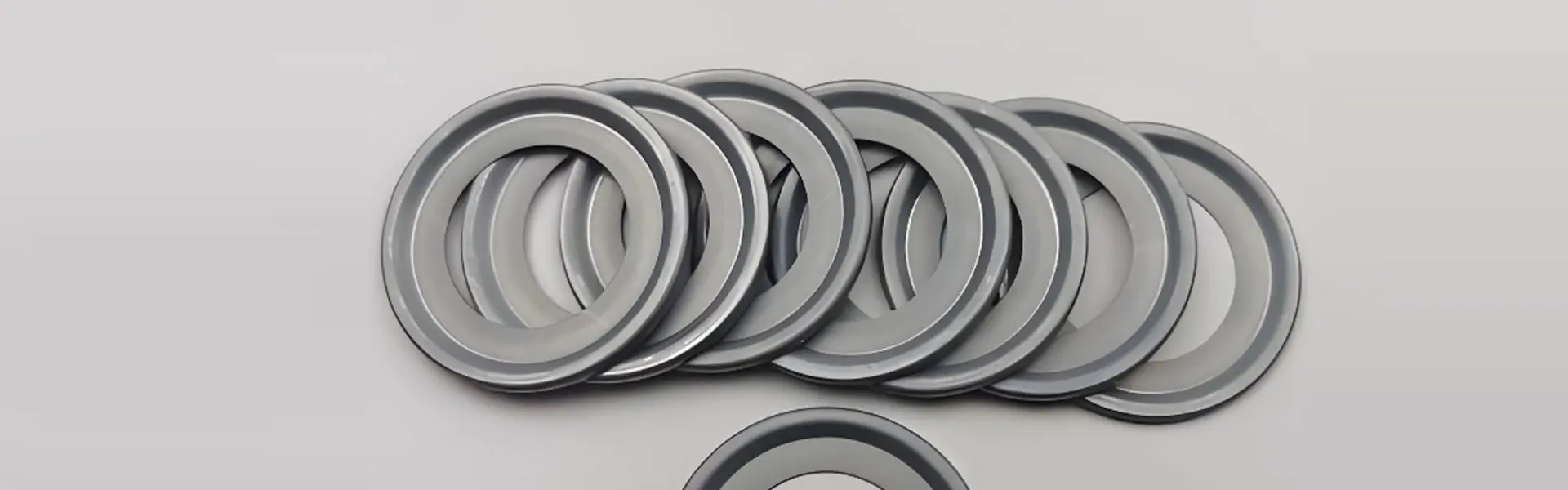
In the demanding world of industrial piping and pressure vessel connections, achieving a perfect, leak-proof seal is not just a preference—it's an absolute necessity for safety, efficiency, and environmental protection. This is where Ring Joint Gaskets (RJ Gaskets) come into play. These are precision-engineered, metallic sealing elements designed to fit into the machined grooves of ring-type joint (RTJ) flanges. When the flanges are bolted together, the gasket is compressed into the grooves, creating an extremely robust and reliable metal-to-metal seal capable of withstanding extreme pressures, high temperatures, and corrosive media. They are the cornerstone of sealing technology for critical applications in oil and gas production, refining, petrochemical plants, and high-pressure steam systems.
At Kaxite, we leverage decades of metallurgical expertise and precision manufacturing to produce Ring Joint Gaskets that set the industry benchmark. Our gaskets are not merely components; they are engineered solutions. We understand that failure is not an option. That's why every Kaxite RJ gasket undergoes rigorous quality control, from raw material certification to final dimensional inspection. We offer a complete range of standard sizes and materials, along with the capability to manufacture custom gaskets for specialized applications. Choosing Kaxite means investing in unparalleled reliability, safety, and long-term performance for your most critical connections.
Kaxite Ring Joint Gaskets are manufactured to exacting international standards, including ASME B16.20, API 6A, and ISO standards. Our product range is defined by precision, durability, and material excellence.
Selecting the correct material is critical for corrosion resistance, temperature capability, and overall gasket life. Kaxite offers a comprehensive selection:
| Standard | Profile | Size Range (NPS) | Pressure Class (ASME) | Typical Temperature Range | Common Kaxite Materials |
|---|---|---|---|---|---|
| ASME B16.20 | R, RX, R-Oval | 1/2" to 24" | 150 to 2500 | -330°F to +1500°F (-201°C to +816°C) | Soft Iron, 304/316 SS, Alloy 20 |
| API 6A | BX | 1-1/16" to 11" | 5,000 to 20,000 psi | -75°F to +250°F (-59°C to +121°C) *Material Dependent | 4130/4140 Steel, 316 SS, Inconel |
| Custom Specifications | All Types | Custom | Custom | Custom | Titanium, Monel, Duplex, Hastelloy |
Q: How do I select the correct Ring Joint Gasket for my application?
A: Selection requires careful consideration of several factors: the flange standard (ASME, API), pressure class (e.g., 900#, 1500#), service temperature, and the media being sealed (e.g., sour gas, crude oil, steam). You must match the gasket profile (R, RX, BX) and material to the flange specification and environmental conditions. Consulting the original equipment manufacturer's specifications or a Kaxite technical expert is always recommended to ensure optimal and safe performance.
Q: Can a Ring Joint Gasket be reused?
A: Generally, no. Ring Joint Gaskets are designed for single-use. During installation, the soft metal deforms plastically to fill the microscopic imperfections in the flange grooves, creating the seal. Removing the gasket distorts this formed seal, and reusing it will almost certainly result in leakage. Always use a new, certified Kaxite gasket during reassembly.
Q: What is the difference between R, RX, and BX style gaskets?
A: The primary differences lie in their design and application pressure. R-style is the standard octagonal gasket for high-pressure piping. RX-style is also octagonal but has a different cross-section that makes it pressure-energized, allowing it to maintain a seal at even higher pressures and if flange loads fluctuate. BX-style gaskets are specified for the ultra-high-pressure services defined by API 6A, typically in wellhead equipment; they have specific dimensional tolerances and are not interchangeable with R or RX styles.
Q: What is the correct procedure for installing a Ring Joint Gasket?
A: Proper installation is critical. First, ensure the flange faces and ring grooves are perfectly clean, dry, and free of scratches or old gasket material. Lightly lubricate the gasket with a suitable anti-seize compound (approved for the service). Carefully place the gasket into the groove of one flange, ensuring it sits evenly. Align the flanges and insert all bolts hand-tight. Follow a cross-bolting pattern and torque the bolts in multiple incremental steps to the specified value, ensuring even compression. Never use impact wrenches for final tightening.
Q: Why is bolt torque so important for RJ gaskets?
A: Ring joint gaskets require a specific compressive load to flow correctly into the flange grooves and create the metal-to-metal seal. Under-torquing will not provide enough compression, leading to leakage. Over-torquing can over-stress the bolts, damage the flange, or even crush and extrude the gasket material, causing it to fail. Always use a calibrated torque wrench and adhere to the manufacturer's or engineering specification's recommended torque values.
Q: How should Kaxite Ring Joint Gaskets be stored and handled?
A: Store gaskets in a clean, dry environment away from moisture and corrosive fumes. Keep them in their original protective packaging until ready for use. Avoid dropping or handling the gaskets roughly, as nicks or dents on the sealing surfaces can compromise the seal. Always inspect the gasket visually for any defects before installation.
Q: What are the most common causes of Ring Joint Gasket failure?
A: Failures typically stem from: 1) Incorrect gasket selection (wrong material or style for the service), 2) Improper installation (incorrect torque, dirty grooves, misalignment), 3) Flange damage (scratched, corroded, or warped grooves), 4) Reusing a gasket, or 5) Operational conditions exceeding the gasket's design limits (thermal cycling, pressure surges).
Q: Are Ring Joint Gaskets suitable for all types of fluids?
A: While extremely versatile, material compatibility is key. Standard carbon steel gaskets are not suitable for highly corrosive services like strong acids. For such applications, Kaxite provides gaskets in stainless steel, nickel alloys, or other specialized materials. It is essential to verify the chemical compatibility of the gasket material with the process fluid at the operating temperature and pressure.
Q: Can I use an RX gasket in an R-style flange groove, or vice versa?
A: No. R and RX gaskets and their corresponding flange grooves have different geometries and are not interchangeable. Using an incorrect gasket type will not form a proper seal and will lead to immediate leakage and potential safety hazards. Always match the gasket style exactly to the flange style.