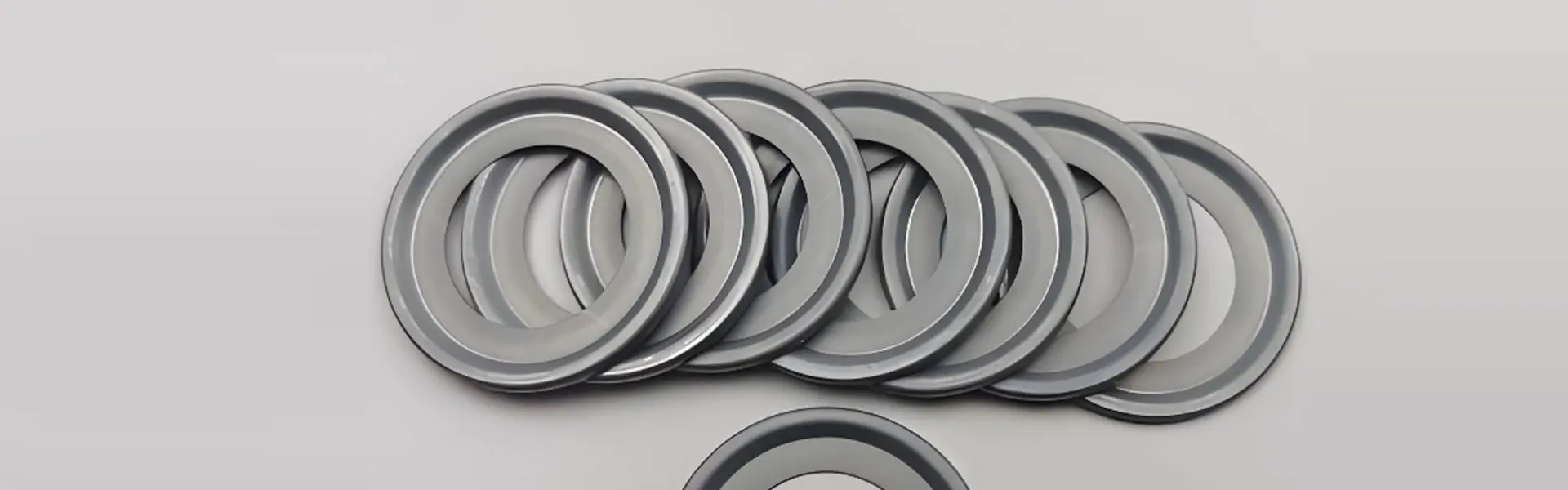
In the demanding world of industrial sealing, double jacketed gaskets are critical components used in high-pressure and high-temperature applications, such as those found in the oil & gas, chemical processing, and power generation industries. These gaskets consist of a soft, conformable filler material (like PTFE or graphite) enclosed within a metallic jacket, typically made of stainless steel, carbon steel, or exotic alloys. This construction provides both the resilience to seal imperfections and the strength to withstand extreme conditions. The precision manufacturing of these gaskets is paramount, and that is where a specialized Machine for Double Jacketed Gaskets becomes indispensable. At Kaxite, we engineer and build the advanced machinery that enables manufacturers to produce these vital sealing components with unmatched accuracy, consistency, and efficiency.
A Kaxite Machine for Double Jacketed Gaskets is not a simple press. It is an integrated system designed to perform the intricate forming, curling, and sealing processes required to create a perfect, leak-proof metallic envelope around the filler material. Our machines automate critical steps, ensuring each gasket meets stringent dimensional tolerances and quality standards, directly contributing to the safety and reliability of the end application.
Kaxite machines are built with a focus on precision engineering, operational durability, and user-centric design. Here are the core features that set our equipment apart:
Understanding the precise capabilities of our machinery is essential for making an informed decision. Below are the detailed specifications for a standard Kaxite Machine for Double Jacketed Gaskets series.
| Parameter Category | Specification Detail | Notes / Options |
|---|---|---|
| Model Range | KX-DJG-200, KX-DJG-400, KX-DJG-800 | Naming denotes approximate forming force capacity (in kN). |
| Forming Force | 200 kN, 400 kN, 800 kN | Electro-servo driven, fully adjustable via PLC. |
| Gasket Diameter Range | 15 mm - 600 mm (0.6" - 24") | Governed by model and tooling set. Custom ranges available. |
| Jacket Material Thickness | 0.4 mm - 2.0 mm (0.016" - 0.079") | Suitable for stainless steel 304/316, carbon steel, Monel, Inconel. |
| Production Cycle Time | 8 - 25 seconds per gasket (typical) | Depends on diameter, material, and complexity of profile. |
| Power Supply | 415V / 50Hz / 3 Phase (Standard) | Other voltages available (e.g., 480V / 60Hz). |
| Machine Footprint (L x W) | ~2000 x 1500 mm (KX-DJG-400) | Compact design. Full dimensions provided per model. |
| Control System | Industrial PLC (Siemens/Allen-Bradley) with Color HMI | Multi-language support, data logging capability. |
| Air Pressure Requirement | 6 - 8 bar (clean, dry air) | Integrated pneumatic system for clamping and actuation. |
| Weight (Approx.) | 2500 kg - 5500 kg | Varies by model and configuration. |
Choosing the right machine for double jacketed gaskets requires careful consideration of your specific production needs. Here is a breakdown of the key decision factors:
Q: What is the primary advantage of using a dedicated machine for double jacketed gaskets over manual forming methods?
A: The primary advantages are consistency, precision, and throughput. Manual methods are highly variable, relying on operator skill, and are slow. A dedicated machine like those from Kaxite ensures every gasket is formed to identical specifications, crucial for leak-proof performance in critical applications. It dramatically reduces scrap rates, increases production speed, and delivers a return on investment through reliable, high-quality output.
Q: Can one Kaxite machine produce different sizes and styles of double jacketed gaskets?
A: Yes, absolutely. The core design philosophy of Kaxite machines is flexibility. Through our quick-change tooling system, a single machine base can be equipped with different sets of forming dies and curling heads. By loading the corresponding program recipe from the PLC, operators can switch between producing gaskets of various diameters and profiles (e.g., standard curl, shoulder profiles) with minimal downtime, often in less than 30 minutes.
Q: How does the machine ensure the filler material is properly enclosed without gaps or wrinkles?
A: Kaxite machines address this through precision sequencing and control. The process typically involves: 1) Precisely forming the bottom jacket. 2) An automated or semi-automated station that places the pre-cut filler material perfectly centered. 3) A final forming stage that accurately folds and curls the top jacket edge over the filler and onto the bottom jacket. The PLC-controlled force and stroke ensure a tight, uniform closure every time, eliminating gaps that could cause leakage.
Q: What kind of maintenance do these machines require?
A: Kaxite machines are built for industrial endurance with low-maintenance design principles. Routine maintenance primarily involves periodic lubrication of guide rails and bearings, checking pneumatic filters, and inspecting tooling for wear. The PLC system includes diagnostic functions to alert operators to routine service intervals. We provide comprehensive maintenance manuals and training to ensure your team can uphold peak machine performance.
Q: Does Kaxite provide tooling and technical support for custom gasket designs?
A: Yes, this is a key part of our service. Kaxite doesn't just sell machines; we provide manufacturing solutions. Our engineering team works directly with clients to design and manufacture the custom tooling required for unique gasket profiles or special materials. We also offer full installation, operator training, and ongoing technical support to ensure your success from the first day of operation.
Q: What safety standards do Kaxite machines comply with?
A: Safety is non-negotiable. Kaxite machines are designed and manufactured to comply with major international safety standards. This includes the European Machinery Directive (CE marking) and relevant aspects of OSHA guidelines. Features like interlocked safety guards, two-hand controls for the main cycle, emergency stop buttons on all sides, and safety-rated light curtains are standard to protect operators.
Q: How is the forming force controlled, and why is adjustability important?
A: Our machines use servo-electric actuation for the main forming stroke, controlled precisely by the PLC. The force and speed profiles are programmable via the HMI. Adjustability is critical because different materials and thicknesses require different forming energies. Too much force can thin or tear a delicate stainless steel jacket, while too little force will not properly form a harder alloy. Precise control ensures optimal forming for each recipe, maximizing quality and tooling life.