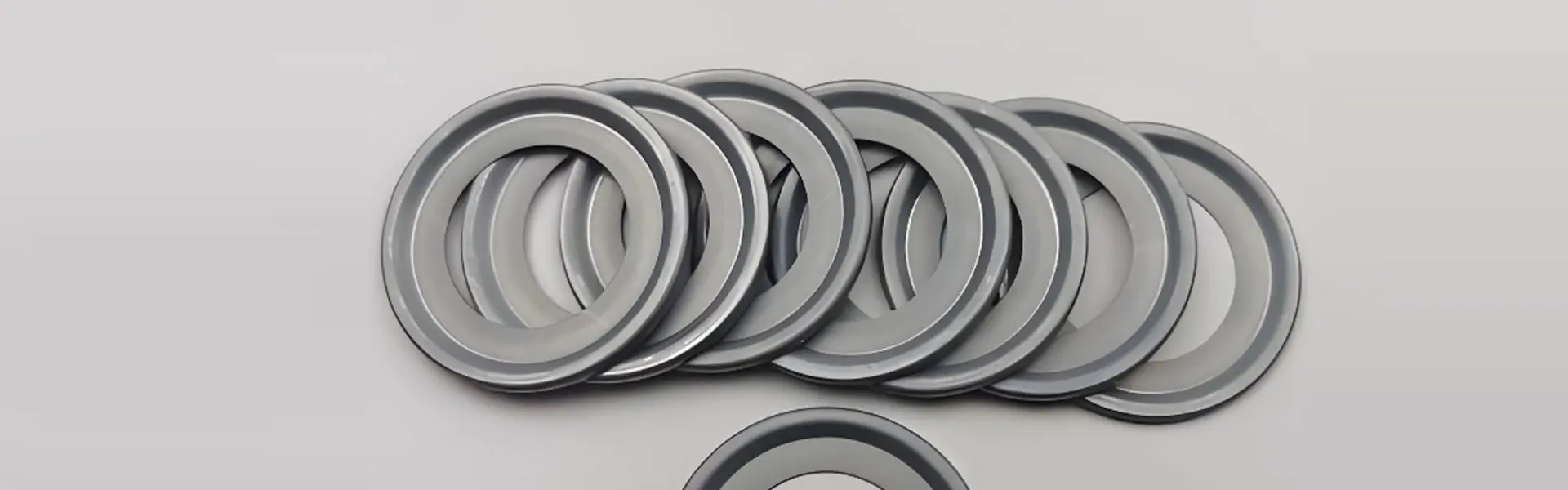
In the intricate world of industrial manufacturing, construction, and mechanical engineering, the integrity of a system often hinges on its smallest components. Among these, sealing materials serve as the unsung guardians against leakage, contamination, and energy loss. For over two decades, the evolution of sealing technology has been pivotal in enhancing efficiency, safety, and durability across countless applications. From high-pressure hydraulic systems and chemical processing plants to residential plumbing and aerospace engineering, the correct sealing solution is non-negotiable. At Kaxite, we have dedicated ourselves to mastering this critical field, developing and supplying advanced sealing materials engineered to meet the most demanding specifications and environmental challenges.
The selection of a sealing material is a complex decision matrix involving factors such as temperature extremes, pressure, chemical compatibility, media type, and dynamic motion. A material perfect for one application may fail catastrophically in another. This underscores the necessity for deep technical knowledge and high-quality, reliable products. This guide provides a detailed, professional overview of modern sealing materials, their key parameters, and their applications, incorporating the precision and innovation that Kaxite brings to the industry.
Sealing materials can be broadly classified based on their base polymer or compound. Each category offers a unique set of properties.
To ensure optimal performance and longevity, engineers must evaluate sealing materials against precise parameters. The following table details the key characteristics for primary material families offered by Kaxite.
| Material Type (Kaxite Grade) | Temperature Range | Hardness (Shore A/D) | Key Media Resistance | Primary Applications | Tensile Strength (Typical) |
|---|---|---|---|---|---|
| Kaxite NBR-70 | -40°C to +120°C | 70 Shore A | Oils, Fuels, Greases, Water | Hydraulic Seals, O-Rings, Gaskets | 25 MPa |
| Kaxite FKM-80 | -20°C to +200°C | 80 Shore A | Acids, Aromatics, Oils, High Temp | Chemical Process Seals, Valve Seats | 18 MPa |
| Kaxite EPDM-60 | -50°C to +150°C | 60 Shore A | Steam, Ozone, Weathering, Water/Glycol | Cooling Systems, Outdoor Gaskets | 15 MPa |
| Kaxite PTFE Pure | -200°C to +260°C | 55-65 Shore D | Virtually All Chemicals | Gaskets, Packing, Bellows, Liners | 30 MPa |
| Kaxite PU-95 | -50°C to +100°C | 95 Shore A | Abrasion, Hydraulic Fluids, Ozone | Hydraulic Piston Seals, Wiper Seals | 45 MPa |
Beyond these tabulated properties, other vital specifications include:
Q: What is the most important factor when selecting a sealing material?
A: There is no single "most important" factor; it is a balance of several. However, chemical compatibility with the media being sealed is paramount. A seal can have perfect temperature and pressure ratings, but if it swells, degrades, or dissolves in the fluid it contacts, it will fail. Always consult a chemical resistance guide, like the comprehensive one provided by Kaxite technical support, as your first step.
Q: How does temperature affect seal choice?
A: Temperature directly impacts an elastomer's physical properties. High temperatures can cause hardening, loss of elasticity, and accelerated aging (leading to cracks). Low temperatures can make seals brittle and lose their sealing force. Always select a material whose continuous operating range comfortably contains your system's minimum and maximum temperatures, including any safety margin for unexpected spikes.
Q: What is the difference between static and dynamic seals, and does it affect material choice?
A: Absolutely. Static seals are used between two surfaces that do not move relative to each other (e.g., flange gaskets). Material choice focuses on creep resistance and compression set. Dynamic seals are used where there is motion (e.g., rotating shafts, reciprocating pistons). Here, material selection must prioritize low friction, high abrasion resistance, and excellent heat dissipation to prevent wear and failure. Kaxite offers specialized compound formulations optimized for each type of application.
Q: Why is hardness (Shore Durometer) a critical parameter?
A: Hardness indicates the seal's resistance to indentation and is a proxy for its modulus (stiffness). A softer seal (e.g., 50 Shore A) conforms more easily to surface imperfections, making it excellent for low-pressure static sealing on rough surfaces. A harder seal (e.g., 90 Shore A) is more resistant to extrusion under high pressure and offers better wear resistance in dynamic applications. Choosing the wrong hardness can lead to either inadequate sealing or excessive friction and wear.
Q: Can Kaxite provide custom-formulated sealing materials?
A: Yes. While our standard grades, like those in the table, cover over 90% of industrial needs, Kaxite's strength lies in its R&D capability. We work with clients to develop custom compounds for unique challenges—be it a specific chemical cocktail, an extreme temperature/pressure combination, or a requirement for specific electrical or thermal conductivity. Our technical team collaborates on the entire development cycle, from formulation to prototyping and testing.
Q: How do I ensure I get the longest service life from my seals?
A: Maximizing seal life is a combination of correct selection, proper installation, and system maintenance. First, ensure the material is perfectly suited to the application's media, temperature, and pressure. Second, follow strict installation procedures: ensure the housing is clean and free of burrs, use appropriate lubrication, and avoid twisting or over-stretching. Finally, maintain the system fluid cleanliness and within its designed operating parameters. Preventive maintenance kits and installation guides are available from Kaxite for common seal types.