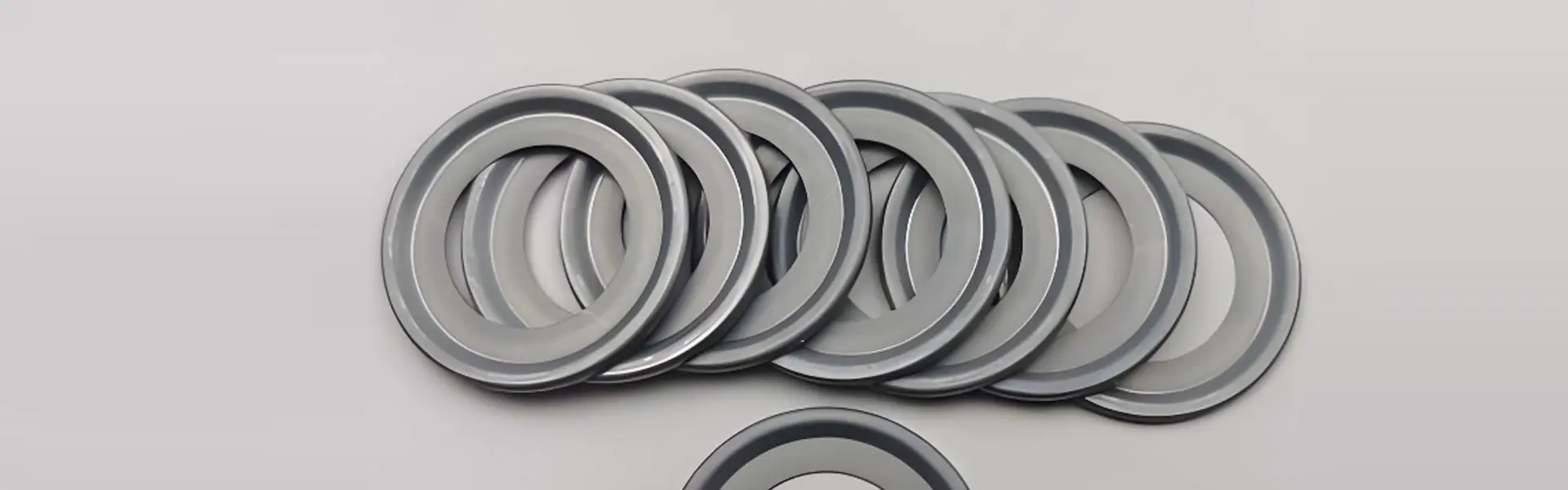
Corrugated gaskets offer strong sealing performance, good resilience under pressure and temperature changes, improved recovery after compression, and reliable leakage control in demanding industrial applications.
Stamping jacket gaskets are typically manufactured from materials such as stainless steel, carbon steel, copper, aluminum, and various alloys, selected for their strength, corrosion resistance, and ability to withstand high temperatures and pressures.
This article provides an overview of the standard dimensions for lens ring joint gaskets, covering common size specifications and key measurement parameters used in industrial sealing applications.
This article examines how an RX ring joint gasket differs from a standard RTJ gasket, covering design geometry, pressure-energized sealing behavior, dimensional standards, and typical flange applications.
An octagonal ring joint gasket is a metallic seal used in high-pressure, high-temperature flanged connections. It fits into matching octagonal grooves on the flange faces, and when the flanges are tightened, the gasket's angled surfaces press firmly against the groove walls. This creates a strong metal-to-metal contact that seals by coining into surface irregularities, preventing leaks even under extreme pressure and thermal cycling.
The selection of API ring joint gaskets is critically driven by operating temperature and pressure, which dictate the appropriate material hardness, ring style, and dimensions to maintain a leak-tight seal under specific service conditions.
This article explores the outdoor performance of neoprene faced phenolic gaskets, focusing on their resistance to weathering, sealing reliability, and typical industrial applications.
A Type D flange insulation gasket is a specialized sealing component designed to electrically isolate flanged pipe connections while preventing leaks, commonly used in cathodic protection systems to control corrosion.
Flange insulation gaskets are essential for cathodic protection systems because they electrically isolate flange joints, preventing current leakage to unintended structures and ensuring the protective current remains focused on the target asset, which maximizes corrosion prevention efficiency.
We use cookies to offer you a better browsing experience, analyze site traffic and personalize content. By using this site, you agree to our use of cookies. Privacy Policy
 06 2026-11
 29 2026-10
 21 2026-10
 13 2026-10
 05 2026-10
 06 2026-08
 29 2026-07
 21 2026-07
 13 2026-07
 03 2026-07