
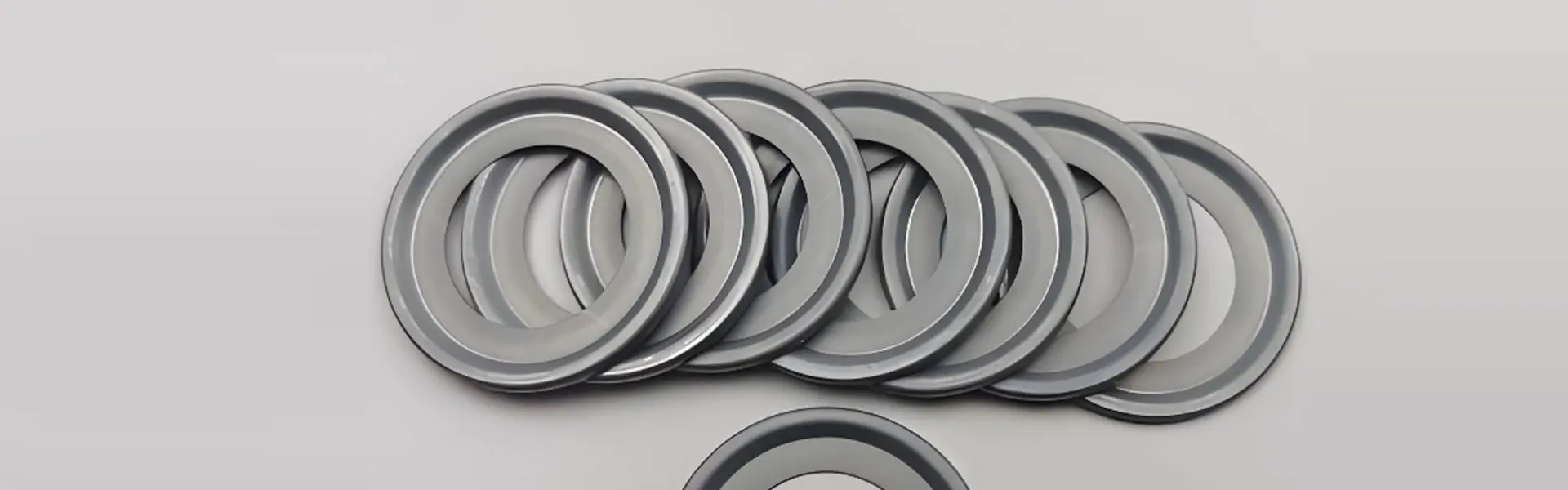
High-Performance PTFE Parts for Demanding Industrial Applications
In the realm of high-performance polymers, PTFE parts stand as the benchmark for reliability in extreme conditions. Known for its unparalleled chemical resistance, exceptional temperature stability, and incredibly low coefficient of friction, PTFE (Polytetrafluoroethylene) is the material of choice for critical sealing, insulating, and low-friction applications. At Kaxite, we specialize in the precision manufacturing of custom and standard PTFE components, engineered to meet the rigorous demands of industries ranging from aerospace and semiconductor manufacturing to food processing and pharmaceuticals. Our expertise ensures that every part delivers consistent performance, longevity, and value.
Core Advantages and Material Properties of PTFE
PTFE’s unique molecular structure grants it a combination of properties unattainable by most other materials. Understanding these core advantages is key to specifying the right component for your application.
- Extreme Chemical Resistance: Inert to virtually all industrial chemicals and solvents, making it ideal for aggressive environments.
- Wide Temperature Range: Maintains functionality from -200°C (-328°F) to +260°C (+500°F) continuously.
- Superb Dielectric Properties: Excellent electrical insulator with a high dielectric strength, even at high temperatures.
- Ultra-Low Friction: Has the lowest coefficient of friction of any known solid material, providing natural lubricity.
- Non-Stick & Non-Wetting: Exhibits excellent release properties and resistance to water and oils.
- High Purity & Biocompatibility: Certain grades are USP Class VI compliant and suitable for food contact and medical use.
Kaxite PTFE Parts: Technical Specifications and Product Range
Kaxite manufactures a comprehensive portfolio of PTFE components. Our capabilities include CNC machining, molding, sintering, and skiving to produce parts with tight tolerances and complex geometries. Below are detailed specifications for our standard product lines.
Standard PTFE (Virgin) Material Specifications
| Property | Test Method | Typical Value | Units |
|---|---|---|---|
| Density | ASTM D792 | 2.14 - 2.20 | g/cm³ |
| Tensile Strength | ASTM D638 | 25 - 35 | MPa |
| Elongation at Break | ASTM D638 | 300 - 500 | % |
| Coefficient of Friction (Dynamic) | ASTM D1894 | 0.04 - 0.10 | - |
| Continuous Service Temperature | - | -200 to +260 | °C |
| Dielectric Strength | ASTM D149 | 19 - 23 | kV/mm |
Common PTFE Parts and Their Key Parameters
| Part Type | Standard Sizes (ID x OD x Thickness) | Key Features | Primary Applications |
|---|---|---|---|
| PTFE Gaskets & Seals | Custom, up to 1500mm OD Sheet thickness: 0.5mm - 50mm |
Full-face, envelope, custom shapes. Excellent creep resistance with proper design. | Chemical reactor flanges, pipe joints, pump housings. |
| PTFE Bellows & Diaphragms | Custom convolutions Stroke lengths as required |
High flexibility, fatigue resistance, hermetically sealed designs. | Valve seals, expansion joints, pneumatic actuators. |
| PTFE Bushings & Bearings | ID: 3mm - 300mm OD: 6mm - 350mm |
Self-lubricating, low wear, can be filled for improved load capacity. | Conveyor systems, marine hardware, low-speed high-load bearings. |
| PTFE Insulators & Standoffs | Custom machined per drawing | High arc resistance, stable dielectric constant over temperature. | High-voltage equipment, semiconductor fixtures, sensor mounts. | PTFE Labware & Components | Stirrers, beakers, bottles, custom fixtures | High-purity, contamination-free, easy to clean and autoclave. | Chemical analysis, pharmaceutical mixing, biological sample handling. |
Enhanced PTFE Compounds by Kaxite
While virgin PTFE offers outstanding properties, specific performance characteristics can be enhanced through the addition of fillers. Kaxite provides a range of filled PTFE compounds to address challenges like creep, wear, and thermal conductivity.
- Glass-Filled PTFE: Improves compressive strength, reduces creep, and enhances wear resistance. Typical filler: 15%-25% glass fiber.
- Carbon-Filled PTFE: Increases thermal conductivity, provides static dissipation, and further improves wear properties. Typical filler: 15%-25% carbon/graphite.
- Bronze-Filled PTFE: Significantly enhances load-bearing capacity, thermal conductivity, and reduces wear. Typical filler: 40%-60% bronze.
- Stainless Steel-Filled PTFE: Offers superior wear resistance and dimensional stability under load. Ideal for heavy-duty bearing applications.
- MoS2 (Molybdenum Disulfide) Filled PTFE: Lowers friction even further and increases hardness. Excellent for compressible seals.
Frequently Asked Questions (FAQ) About PTFE Parts
Q: What is the main difference between PTFE and Teflon™?
A: Teflon™ is a well-known brand name for PTFE and other fluoropolymers owned by Chemours. PTFE is the generic name for the material. All Teflon™-branded non-stick coatings are based on PTFE, but not all PTFE parts are branded as Teflon™. Kaxite manufactures components from high-quality PTFE resins that deliver performance equivalent to or exceeding brand-name materials.
Q: Can PTFE parts be used for food processing applications?
A: Yes, absolutely. Virgin, unfilled PTFE is generally recognized as safe for food contact by regulatory bodies like the FDA in the United States and the EFSA in Europe. It is inert, non-toxic, and does not leach into food. For such applications, Kaxite uses certified virgin PTFE resins and adheres to strict manufacturing hygiene protocols to ensure compliance.
Q: How does PTFE handle mechanical stress and load over time?
A: PTFE has a tendency to cold flow or creep under sustained mechanical load. This means it can gradually deform. This characteristic must be accounted for in design. Solutions include using filled PTFE compounds (like glass or bronze-filled), designing seals with adequate gland fill and pressure limitations, and using backup rings to prevent extrusion. Our engineering team at Kaxite can help design around this property for optimal performance.
Q: What are the temperature limits for PTFE, and what happens if it is exceeded?
A: The continuous service temperature for PTFE is typically -200°C to +260°C (-328°F to +500°F). Short-term excursions can be tolerated. If temperatures significantly exceed 260°C, PTFE begins to thermally degrade, releasing gaseous byproducts. Above 327°C (621°F), its melting point, it transitions to a transparent gel. For high-temperature applications, it's crucial to stay within the recommended range or consider alternative high-temp polymers like PEEK.
Q: Is PTFE suitable for dynamic sealing applications?
A: Yes, but with considerations. PTFE’s low friction makes it excellent for dynamic seals like piston seals or rod seals. However, its wear resistance in pure form can be a limiting factor. For dynamic use, PTFE is often compounded with fillers like bronze, carbon, or glass to improve wear life and reduce creep. These filled compounds, such as those offered by Kaxite, are standard for rotary shaft seals, valve stems, and reciprocating machinery.
Q: How do I choose between virgin PTFE and a filled compound?
A: The choice depends on your priority:
- Choose Virgin PTFE for: Maximum chemical purity, best electrical insulation, FDA-compliant applications, or where the non-stick property is paramount.
- Choose a Filled PTFE Compound for: Improved resistance to deformation under load (creep resistance), better wear resistance in moving parts, higher compressive strength, or enhanced thermal conductivity.
Q: Can Kaxite manufacture custom PTFE parts from my drawings?
A: Yes, custom manufacturing is our core strength. We specialize in translating customer drawings and specifications into high-precision PTFE components. Our processes include CNC machining for prototypes and complex geometries, compression molding for high-volume parts, and skiving for thin tapes and sheets. We work with tolerances as tight as +/- 0.01mm for machined parts, ensuring a perfect fit for your assembly.
Design and Machining Considerations
Successfully integrating PTFE parts requires an understanding of its machining and design behavior. PTFE is soft and has a high coefficient of thermal expansion. Key considerations include:
- Tolerancing: Allow for slightly wider tolerances compared to metals. We recommend consulting with Kaxite engineers during the design phase.
- Surface Finishes: PTFE can be machined to very fine surface finishes, which is beneficial for sealing applications.
- Thermal Expansion: Design clearances to accommodate expansion, especially in tight-fitting assemblies that will experience temperature swings.
- Stress Relief: Annealing after machining may be recommended for complex parts to relieve internal stresses and improve dimensional stability.


