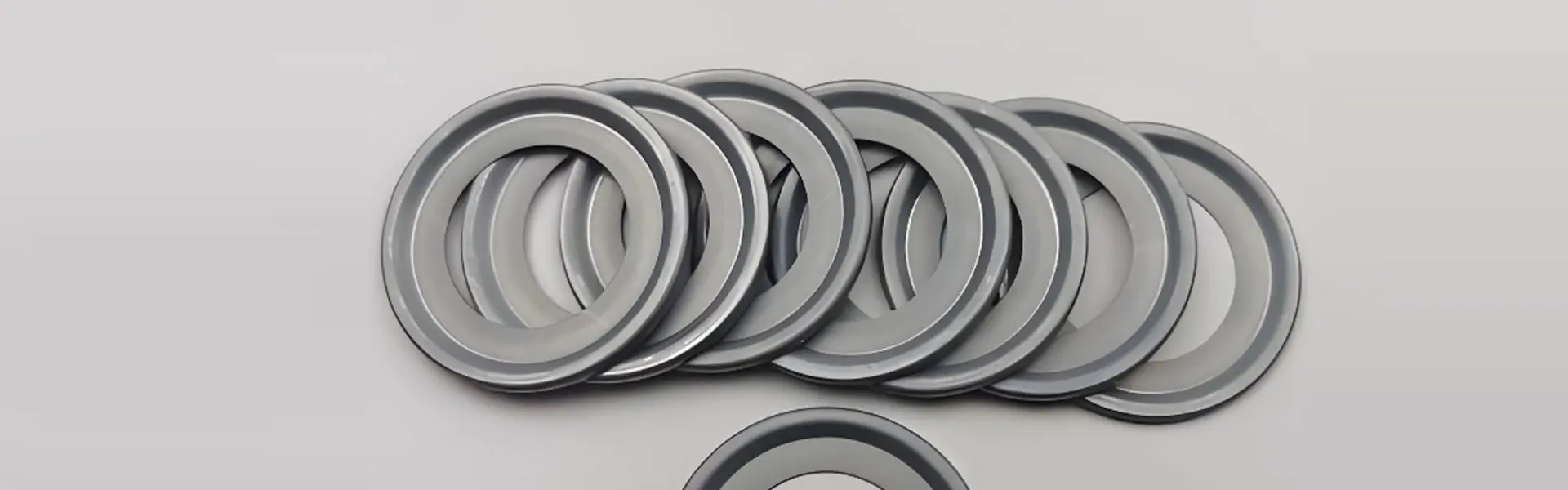
In the demanding world of industrial sealing, where temperature extremes, aggressive chemicals, and high pressures are commonplace, one material consistently demonstrates unparalleled performance: expanded graphite. Expanded graphite gaskets represent the pinnacle of sealing technology, engineered to provide long-lasting, reliable seals in the most critical applications. Unlike traditional gasket materials that can degrade, corrode, or lose resilience over time, expanded graphite maintains its integrity. Manufactured from high-purity natural graphite, the material is exfoliated or "expanded" to create a flexible, compressible, and highly conformable sheet. This unique structure gives expanded graphite gaskets their exceptional combination of properties, making them the preferred choice for engineers and maintenance professionals across power generation, chemical processing, oil & gas, and pharmaceutical industries. Kaxite leverages decades of material science expertise to produce premium-grade expanded graphite gaskets that set the benchmark for safety and efficiency.
Kaxite expanded graphite gaskets are not just another sealing component; they are a engineered solution designed to solve complex sealing challenges. Their superiority stems from a unique set of intrinsic material properties.
To ensure optimal selection and performance, Kaxite expanded graphite gaskets are manufactured to precise specifications. The following tables detail our standard material properties and available product forms.
| Property | Test Method | Typical Value | Unit |
|---|---|---|---|
| Density (Nominal) | ASTM F1315 | 1.0 - 1.1 | g/cm³ |
| Compressibility | ASTM F36 | 40 - 50 | % |
| Recovery | ASTM F36 | 15 - 25 | % |
| Tensile Strength | ASTM F152 | ≥ 4.5 | MPa |
| Thermal Conductivity (at 100°C) | ASTM E1461 | 5 - 10 (Through-plane) | W/m·K |
| Continuous Temperature in Air | - | -240 to +600 | °C |
| pH Range | - | 0 - 14 | - |
| Chloride Content | ASTM D512 | < 50 | ppm |
| Product Form | Standard Thickness | Standard Sheet Size | Common Applications |
|---|---|---|---|
| Plain Sheets (Rolls & Sheets) | 0.5mm, 0.8mm, 1.5mm, 3.0mm | 1500mm x 1500mm, Rolls: 1.5m x 10-20m | Cut gaskets for heat exchangers, pipe flanges, manways |
| Corrugated/Embossed Sheets | 1.5mm, 3.0mm | 1500mm x 1500mm | Enhanced sealing for low bolt load situations, heat transfer surfaces |
| Stick & Cord (Self-adhesive) | 3mm, 6mm, 9mm (diameter/cross-section) | 5m, 10m rolls | On-site repairs, small flange sealing, oven and boiler doors |
| Die-Cut Shapes (Custom) | As per customer drawing (0.5mm - 6mm) | Any shape (ASME B16.21, DIN, JIS, etc.) | Precision flanges, pumps, valves, turbines, custom equipment |
| Graphite Foil with Inlays (SS304, SS316 tanged/micro-punched) | 1.5mm, 3.0mm (overall) | 1500mm x 1500mm, custom shapes | High-pressure/temperature flanges, heat exchangers, aggressive cycling |
Q: What is the key difference between expanded graphite and compressed non-asbestos (CNAF) gasket materials?
A: The primary differences lie in temperature capability, chemical resistance, and sealing mechanics. Expanded graphite offers a much wider continuous temperature range (cryogenic to 600°C+) compared to CNAF (typically -40°C to 260°C). It is inherently resistant to a broader spectrum of chemicals and solvents. While CNAF relies on resin binders that can degrade, expanded graphite is a pure, binder-free material that seals through its layered platelet structure, offering better conformability and creep resistance under thermal cycling. For extreme temperatures and aggressive chemicals, expanded graphite is superior.
Q: Can Kaxite expanded graphite gaskets be used on raised face (RF) and flat face (FF) flanges?
A: Yes, they are highly versatile. For Raised Face (RF) flanges, plain expanded graphite sheets or corrugated sheets are commonly used, as they conform well to the serrated finish. For Flat Face (FF) flanges, especially under lower bolt loads, a corrugated or embossed graphite sheet is often recommended to increase surface pressure and improve sealing. Kaxite provides guidance on selecting the optimal form based on your specific flange type, surface finish, and operating conditions.
Q: How do I handle and store expanded graphite gaskets to prevent damage?
A: Expanded graphite is relatively robust but requires proper care. Store rolls and sheets in a cool, dry place away from direct sunlight and moisture. Keep them in their original packaging until use. Handle with clean gloves to prevent oil or dirt contamination. Avoid excessive bending or folding of thin sheets. For die-cut gaskets, store them flat in protective sleeves or containers. Unlike rubber, they are not susceptible to ozone cracking, but mechanical damage from sharp objects should be avoided.
Q: Are there any media or applications where expanded graphite gaskets are not recommended?
A: While chemically resistant, expanded graphite has limitations in strongly oxidizing media at high temperatures (e.g., concentrated nitric acid, hot sulfuric acid above certain concentrations) and in the presence of highly potent oxidizers like chlorine trifluoride. It is also generally not recommended for use in contact with molten metals or in applications with extreme fluorine compounds. For these, alternative materials like PTFE or specific metals may be required. Always consult Kaxite's chemical resistance guide and our engineering team for media-specific recommendations.
Q: What is the benefit of using a graphite sheet with a stainless steel inlay (tanged or micro-punched)?
A: Kaxite's graphite sheets with integrated metal inlays (like SS 304 or 316) combine the excellent sealability of graphite with the mechanical strength and anti-blowout properties of metal. The metal core provides structural integrity, preventing the soft graphite from being extruded under high internal pressure or flange rotation. This makes them ideal for high-pressure applications (Class 600+), systems with significant pressure cycling, or large-diameter flanges where gasket handling and stability are concerns. The tangs or micro-punches mechanically lock the graphite to the metal, preventing delamination.
Q: How do I determine the correct thickness and density for my application?
A: Selection depends on flange type, surface condition, bolt load, and pressure. A general rule: for standard raised face flanges with a serrated finish, a 1.5mm thickness is common. For flanges with poor surface finish or slight distortion, a thicker (3.0mm) or more compressible grade may be needed to fill gaps. Higher density sheets (e.g., 1.1 g/cm³) offer better extrusion resistance for higher pressures, while standard density (1.0 g/cm³) provides optimal compressibility for typical applications. Kaxite's technical support can assist with this critical selection based on your detailed operating parameters.
The versatility of Kaxite expanded graphite gaskets makes them indispensable in numerous sectors. In Power Generation, they seal critical joints in turbines, heat recovery steam generators (HRSGs), boiler manways, and high-temperature pipe flanges handling superheated steam. The Chemical and Petrochemical Industry relies on them for reactors, columns, heat exchangers, and pump flanges exposed to corrosive acids, alkalis, and solvents. Oil & Gas applications include refinery piping, offshore platform flanges, and LNG systems where temperature fluctuations and hydrocarbon media are present. In the Pharmaceutical and Food & Beverage sectors, their purity and cleanroom compatibility make them ideal for fermenters, autoclaves, and process piping requiring sanitary conditions. They are also widely used in Heating, Ventilation, and Industrial Furnace construction for door seals and expansion joints.
Selecting Kaxite means investing in reliability engineered from the raw material up. We begin with meticulously selected high-carbon natural graphite to ensure consistent purity and performance. Our proprietary expansion and calendaring processes create a uniform, void-free structure that delivers predictable compression and recovery characteristics. Every batch undergoes rigorous Quality Control testing against international standards like ASTM, DIN, and ISO to guarantee the properties we publish. Beyond the product, Kaxite provides unparalleled technical support, from material selection and application engineering to custom die-cutting services for complex geometries. Our global logistics network ensures you receive the right seal, at the right time, anywhere your operations are located. When system integrity is non-negotiable, industry leaders specify Kaxite.