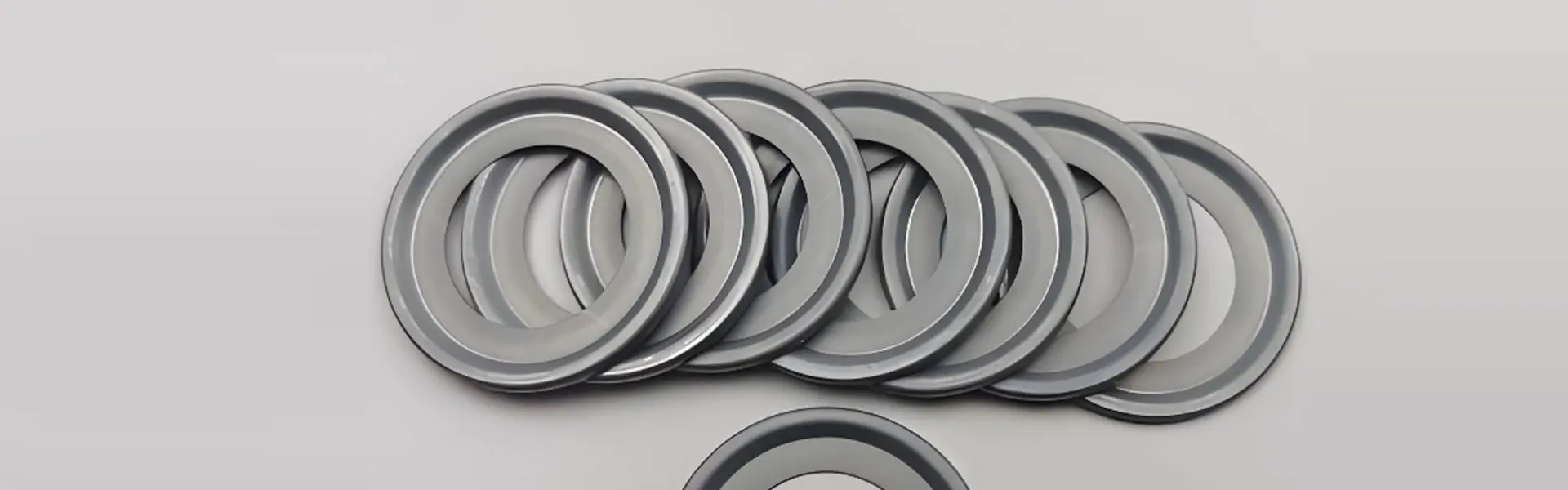
In industries where containing high-pressure, high-temperature, or corrosive fluids is a critical operational requirement, the integrity of sealing solutions cannot be compromised. Double Jacket Gaskets represent a pinnacle of engineering in this domain. At Kaxite, we specialize in manufacturing premium-grade double jacket gaskets designed for extreme service conditions. These gaskets are engineered with a dual-layer metallic jacket that encases a resilient filler material, creating a robust seal that prevents leakage even under severe thermal cycling and pressure fluctuations. Unlike standard gaskets, the double jacket construction offers superior containment, increased resilience to crushing and blowouts, and a significantly extended service life, making them the preferred choice for demanding applications in petrochemical, power generation, and heavy industrial facilities worldwide.
Kaxite stands at the forefront of sealing technology, with decades of expertise dedicated to solving the most challenging fluid containment problems. Our double jacket gaskets are not just products; they are precision-engineered solutions. We utilize advanced manufacturing techniques, stringent quality control protocols, and high-integrity materials to ensure every gasket meets exacting standards. The Kaxite advantage lies in our commitment to durability, reliability, and performance. Our gaskets are designed to minimize downtime, reduce maintenance costs, and enhance overall operational safety. When you specify Kaxite, you are investing in a sealing solution backed by proven performance and technical support from industry experts.
Selecting the correct double jacket gasket requires careful consideration of operational parameters. Kaxite offers a comprehensive range of standard and custom configurations. Below are detailed specifications for our most common product lines.
| Jacket Material | Filler Material | Max Temperature | Max Pressure | Primary Chemical Resistance | Typical Applications |
|---|---|---|---|---|---|
| Stainless Steel 316 | Flexible Graphite | 850°C (1562°F) in oxidizing, 3000°C (5432°F) in inert | 2,500 PSI | Acids, alkalis, steam, hydrocarbons | Heat exchangers, valve bonnets, reactor flanges |
| Stainless Steel 304 | PTFE (Teflon) | 260°C (500°F) | 1,500 PSI | Extreme chemical resistance (except molten alkali metals) | Chemical processing, pharmaceutical, food & beverage |
| Carbon Steel | Ceramic Fiber | 1000°C (1832°F) | 2,200 PSI | High heat, oxidizing atmospheres | Boiler doors, furnace flanges, incinerators |
| Alloy 625 (Inconel) | Flexible Graphite w/ Inconel Insert | 980°C (1796°F) | 3,000+ PSI | Chloride ions, seawater, sour gas | Offshore platforms, LNG, high-pressure turbine systems |
| Nominal Pipe Size (NPS) Range | ASME B16.5 / B16.47 Flange Class | Standard Thickness | Inner Diameter (ID) Tolerance | Outer Diameter (OD) Tolerance |
|---|---|---|---|---|
| 1/2" to 24" | 150, 300, 600, 900, 1500, 2500 | 1.5 mm, 3.0 mm (Custom available) | ± 0.4 mm | ± 0.8 mm |
| 26" to 60" (Large Diameter) | 150, 300, 600 | 3.0 mm, 4.5 mm | ± 0.8 mm | ± 1.5 mm |
Q: What is the fundamental difference between a single jacket and a double jacket gasket?
A: A single jacket gasket features a metallic jacket on only one side (typically the outside) of the filler material. A double jacket gasket, as the name implies, has metallic jackets on both the inside and outside of the filler core. This dual-layer construction provides significantly greater mechanical strength, protects the filler from erosion and blowout, and offers superior performance in high-pressure and high-temperature cycling applications. The double jacket design also allows for better retention of the filler material under extreme conditions.
Q: Can Kaxite double jacket gaskets be used in heat exchanger applications?
A: Absolutely. Kaxite double jacket gaskets are exceptionally well-suited for heat exchangers, including shell-and-tube and plate-type designs. The combination of a metallic jacket (like SS316) with a flexible graphite filler is ideal for handling the thermal expansion and contraction cycles inherent in heat exchanger operation. They provide a reliable seal against both the shell-side and tube-side media, which may be at different temperatures and pressures.
Q: How do I select the right material combination for my specific service conditions?
A: Material selection is critical and depends on four primary factors: Temperature, Pressure, Chemical Media, and Flange Type/Surface. First, identify the continuous and peak operating temperatures and pressures. Next, list all chemicals the gasket will contact, including concentrations and phases (liquid, gas). Finally, consider the flange material and surface finish. Kaxite's technical support team can analyze these parameters to recommend the optimal jacket/filler combination, such as Alloy 625 with graphite for high-temperature sour gas, or SS304 with PTFE for aggressive chemical service.
Q: Are these gaskets reusable?
A: Kaxite double jacket gaskets are designed for robustness and often can be reused, provided they are removed carefully without damaging the jacket or excessively compressing the filler. It is crucial to inspect the gasket thoroughly after disassembly. Look for signs of jacket distortion, cracks, significant filler loss, or excessive thinning. If the gasket appears intact and the filler material still has resilience, reuse may be possible. However, for critical service applications, Kaxite generally recommends installing a new gasket to ensure optimal seal integrity and safety.
Q: What are the recommended installation torque values for bolting with double jacket gaskets?
A: Installation torque is not a one-size-fits-all value; it depends on the gasket dimensions, pressure class, bolt material, and lubrication. A general principle is to use a cross-bolting pattern (star pattern) and achieve a uniform load across the flange face. For specific applications, Kaxite provides detailed installation guidelines, including recommended bolt stress or torque values based on ASME PCC-1 guidelines. It is always best practice to follow the engineered tightening procedure provided with the gasket or consult directly with Kaxite engineering for a project-specific recommendation.
Q: Does Kaxite offer custom sizes or non-standard shapes for double jacket gaskets?
A: Yes, a core strength of Kaxite is our ability to provide fully customized sealing solutions. We routinely manufacture double jacket gaskets in non-standard sizes, oval shapes, rectangular shapes, and for special flange designs like heat exchanger channels. We can also work with proprietary or customer-specified material grades for the jacket or filler. Providing a detailed drawing or CAD file along with the service conditions allows our engineering team to produce a gasket tailored precisely to your equipment's requirements.
Kaxite double jacket gaskets are deployed across a spectrum of industries where sealing failure is not an option. Key sectors include:
To request a quote or technical consultation for Kaxite double jacket gaskets, please have the following information ready: