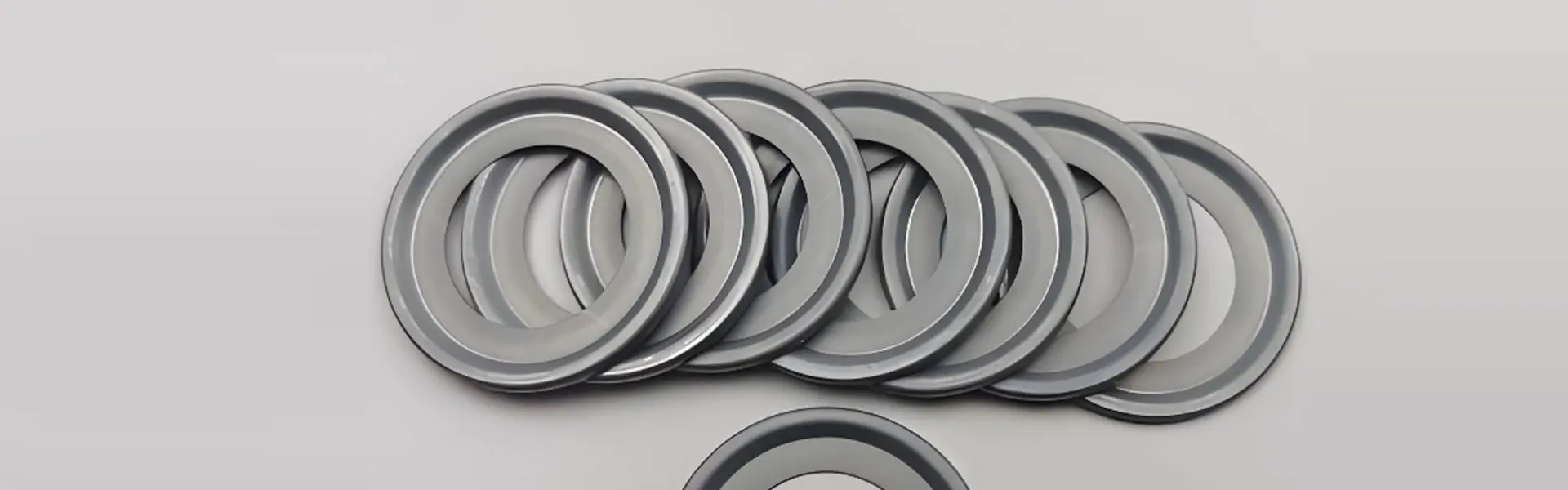
In the intricate world of industrial machinery and fluid systems, the humble gaskets plays a starring role. Despite its small size and often simple appearance, a gasket is a critical sealing component, engineered to prevent leakage between two or more mating surfaces under compression. Whether in a roaring automotive engine, a complex chemical processing plant, or the plumbing in your home, gaskets ensure safety, efficiency, and reliability. For over two decades, Kaxite has been at the forefront of gasket technology, providing engineered sealing solutions that industries rely on. This guide delves deep into what gaskets are, their key parameters, and why precision in their selection is non-negotiable.
A gasket is a mechanical seal designed to fill the space between two or more mating surfaces, preventing leakage from or into the joined objects while under compression. Gaskets are typically made from a deformable material that can flow into the imperfections of the flange surfaces, creating a tight, leak-proof seal. Their performance is governed by a complex interplay of material properties, design, and application conditions.
The primary functions of a gasket include:
Choosing the wrong gasket can lead to catastrophic failure. At Kaxite, we engineer our gaskets based on a rigorous analysis of the following parameters. Use this as a checklist for your application.
The gasket material must be chemically compatible with the media (gas or liquid) it will contact and the operating environment. Common materials include:
These quantifiable metrics define the gasket's capabilities. Kaxite provides certified data sheets for all our products.
| Parameter | Description | Why It Matters | Typical Kaxite Range* |
|---|---|---|---|
| Thickness | The nominal thickness of the gasket sheet or finished product. | Affects compressibility, recovery, and bolt load management. Thicker gaskets fill larger gaps but require more bolt load. | 0.5mm to 3.0mm (sheet) |
| Density / Specific Gravity | Mass per unit volume of the gasket material. | Indicates material consistency and filler content. Can influence sealing performance and creep resistance. | 1.5 - 2.5 g/cm³ |
| Tensile Strength | Maximum stress the material can withstand while being stretched before breaking. | Indicates mechanical strength and durability, especially during installation and handling. | 5 - 15 MPa |
| Compressibility | The percentage reduction in thickness under a specific compressive load (e.g., ASTM F36). | Determines how well the gasket conforms to flange surfaces. Low compressibility materials need very flat flanges. | 7% - 40% |
| Recovery | The percentage of thickness regained after the compressive load is released (ASTM F36). | Measures resilience. Higher recovery helps the gasket maintain seal during system pressure fluctuations and thermal cycling. | 15% - 65% |
| Creep Relaxation | The loss of bolt load over time as the gasket material relaxes under pressure and temperature (ASTM F38). | Critical for long-term sealing. Low creep relaxation means the gasket maintains bolt load, preventing leaks over time. | < 30% loss |
| Temperature Range | The continuous operating temperature limits the gasket can endure. | Material must not degrade, oxidize, or become brittle. Kaxite materials are rated for specific min/max temperatures. | -200°C to +1000°C (varies by material) |
| Pressure Rating | The maximum internal pressure the gasket assembly is designed to seal. | Gasket must resist blow-out. This rating is system-dependent (based on flange design, bolts, etc.). | Vacuum to 3000+ psi |
| Fluid Compatibility | Chemical resistance to specific media (acids, alkalis, hydrocarbons, steam, etc.). | Prevents swelling, chemical attack, degradation, and ultimately, seal failure. | Per material chart (e.g., PTFE for harsh chemicals) |
At Kaxite, we don't just sell gaskets; we provide sealing solutions. Our process involves:
Q: How often should gaskets be replaced?
A: There is no universal timeline. Gasket replacement depends on operating conditions (cyclic temperature/pressure), the media's aggressiveness, and the gasket material. During routine maintenance shutdowns, always inspect gaskets. Signs for replacement include visible compression set (permanent thinning), cracks, brittleness, chemical swelling, or any leak history. A proactive replacement schedule based on service hours or cycles is better than reactive replacement after failure.
Q: Can I reuse a gasket?
A: As a firm rule, Kaxite does not recommend reusing gaskets. Once compressed, a gasket undergoes plastic deformation (creep) and loses its original recovery properties. Its sealing ability is compromised. Reusing it almost guarantees a leak path. The minor cost savings are never worth the risk of downtime, safety hazards, or environmental damage from a leak.
Q: What is the proper torque for installing a gasket?
A: Correct bolt torque is critical. It must be sufficient to compress the gasket enough to seal but not so high as to crush it or damage the flange. The proper torque value comes from the flange manufacturer's specification or a standard like ASME PCC-1. It depends on bolt size/grade, gasket type, and service conditions. Always use a calibrated torque wrench and follow a cross-pattern tightening sequence to ensure even load distribution.
Q: What's the difference between a gasket and an O-ring?
A: Both are seals, but their application differs. A gasket is a static seal used between two flat, stationary surfaces (flanges). It is usually compressed across its entire face. An O-ring is a dynamic or static seal with a circular cross-section, typically installed in a gland (groove) and designed to seal by radial compression. O-rings are often used in pistons, rods, and lids where there might be relative motion.
Q: Why did my gasket fail prematurely?
A: Premature failure can stem from several root causes:
1) Material Incompatibility: The gasket material was attacked by the process media.
2) Improper Installation: Under- or over-torquing, misalignment, dirty or damaged flange faces.
3) Wrong Gasket Selection: Using a general-purpose gasket for a high-temperature or high-pressure application.
4) Flange Issues: Worn, warped, or scratched flange surfaces that the gasket cannot seal against. A Kaxite technical review can often diagnose the cause.
Q: Are all Kaxite gaskets compliant with industry standards?
A> Yes. Kaxite gaskets are manufactured to meet or exceed relevant international standards such as ASTM (American Society for Testing and Materials), DIN (Deutsches Institut für Normung), and specific industry standards for sectors like API (American Petroleum Institute) for oil and gas. Certificates of Conformance (CoC) and Material Test Reports (MTR) are available upon request.
Q: Can Kaxite provide custom-shaped gaskets?
A> Absolutely. We specialize in custom-engineered sealing solutions. We can produce gaskets in virtually any shape and size from our wide range of materials. Simply provide us with a detailed drawing, sample, or CAD file, and our engineering team will handle the rest, ensuring the custom gasket meets all your application parameters.