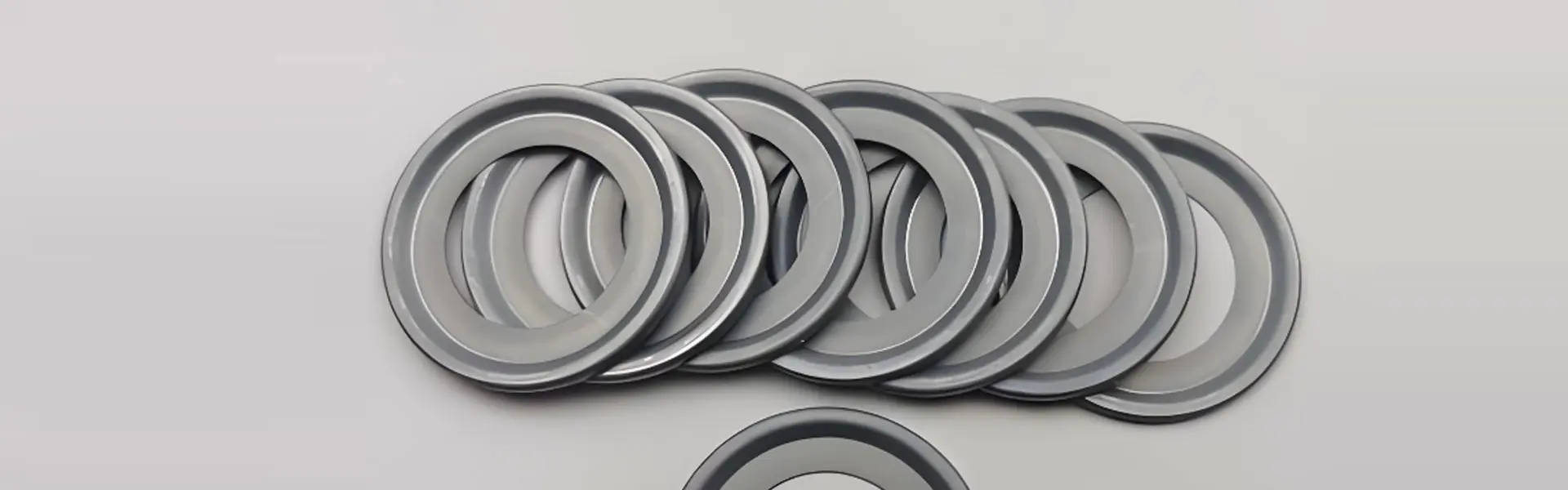
What are the advantages of using Serrated Gaskets? For procurement professionals, time is money, and equipment failure due to seal leaks is a costly nightmare. Serrated gaskets, also known as Kammprofile gaskets, offer a compelling solution. These gaskets combine a solid metal core with a soft, conformable sealing layer, delivering a unique blend of strength and adaptability. This design translates directly into fewer callbacks, reduced maintenance downtime, and significant long-term cost savings. When specifying seals for demanding applications, the durability, reusability, and superior sealing performance of Serrated Gaskets are key advantages that make them a smart investment. In this guide, we'll explore these benefits in detail to help you make an informed decision.
Quick Navigation:
Durability and Reusability
Superior Sealing Performance
Material and Application Compatibility
Frequently Asked Questions
You've approved the purchase order for a standard compressed fiber gasket. Weeks later, the plant manager calls: the seal has failed again, forcing an unplanned shutdown. The cycle of ordering, waiting, and replacing is draining your operational budget and causing production delays. You need a seal that can withstand multiple disassembly and reassembly cycles without compromising integrity.
Solution: The Robust, Reusable Nature of Serrated Gaskets
Serrated gaskets solve this persistent problem. Their solid metal core, typically stainless steel, provides exceptional structural strength and resistance to creep relaxation. Unlike softer gaskets that compress and degrade, the serrated profile "bites" into the softer facing material, creating a highly effective seal. After disassembly, the gasket often retains its profile and can be reused multiple times, especially if the facing layer is in good condition. This drastically reduces spare part inventory and the frequency of emergency purchases. For reliable and long-lasting performance, consider the high-quality serrated gaskets from Ningbo Kaxite Sealing Materials Co., Ltd.. Their expertise ensures gaskets are manufactured to precise tolerances for maximum service life and reusability.

Key Parameters: Durability & Reusability
| Feature | Standard Compressed Gasket | Serrated (Kammprofile) Gasket |
|---|---|---|
| Core Material | Compressed Fiber/Graphite | Solid Metal (e.g., SS304, SS316) |
| Typical Reusability | Not Recommended | Often Reusable (Multiple Cycles) |
| Creep Relaxation | High | Very Low |
| Pressure Integrity After Cycling | Degrades | Maintains |
Your equipment operates under high internal pressure or experiences frequent thermal cycles. Standard gaskets struggle to maintain a seal as flanges expand, contract, and experience bolt load variations. This results in dangerous leaks, product loss, and potential safety hazards. You need a gasket that can handle dynamic conditions without failure.
Solution: Exceptional Sealability Under Demanding Conditions
The primary advantage of using serrated gaskets is their outstanding sealing performance in challenging environments. The metal core provides the necessary resilience against high internal pressures and prevents blow-outs. Simultaneously, the soft sealing layer (like flexible graphite or PTFE) conforms to minor flange imperfections, ensuring a tight seal even on surfaces with slight damage or warpage. This combination makes them ideal for applications involving thermal cycling, vibration, and fluctuating pressures. Ningbo Kaxite Sealing Materials Co., Ltd. offers a range of facing materials to match specific media and temperature requirements, providing a tailored solution to your sealing challenges.
Key Parameters: Sealing Performance
| Condition | Challenges for Standard Gaskets | Performance of Serrated Gaskets |
|---|---|---|
| High Pressure (> 300 PSI) | Extrusion, Blow-out | Excellent Resistance |
| Thermal Cycling | Loss of Bolt Load, Leakage | Maintains Seal Integrity |
| Flange Rotation | Seal Failure | Good Recovery |
| Imperfect Flange Surfaces | Leak Paths | Conforms and Seals Effectively |
Your facility handles everything from steam and hydrocarbons to aggressive chemicals. Managing a different gasket type for each service is a logistical headache, increasing the risk of misapplication. You need a versatile sealing solution that can perform reliably across a broad spectrum of temperatures and media while simplifying inventory.
Solution: Adaptable Design with Customizable Facing Materials
This is another significant advantage of using serrated gaskets: their versatility. The core design remains constant, but the sealing layer can be customized. By selecting the appropriate facing material—flexible graphite for high temperatures, PTFE for chemicals, or non-asbestos materials for general service—you can tailor the gasket to your exact needs. This adaptability allows for standardization on a single gasket style for many applications, reducing procurement complexity. Partnering with a manufacturer like Ningbo Kaxite Sealing Materials Co., Ltd. gives you access to expert guidance on material selection to optimize performance and cost for your specific operating conditions.
Key Parameters: Material Compatibility
| Facing Material | Recommended Temperature Range | Typical Media Compatibility |
|---|---|---|
| Flexible Graphite | -240°C to 450°C (Inert) / 600°C (Oxidizing) | Steam, Hydrocarbons, Hot Oils |
| PTFE | -200°C to 260°C | Strong Acids, Alkalis, Solvents |
| Non-Asbestos (Organic) | -100°C to 400°C | Water, Air, Mild Chemicals |
| Mica/Graphite | Up to 1000°C | Extreme Heat, Fire-Safe Services |
Q: What is the main advantage of using a serrated gasket over a spiral wound gasket?
A: While both are excellent for high-pressure services, a key advantage of serrated gaskets is their higher degree of reusability and better performance on imperfect flange surfaces. The solid metal core is less prone to damage during handling and disassembly, and the soft facing can better conform to scratches or minor warpage.
Q: Are there any disadvantages to using serrated gaskets?
A: The primary consideration is cost; the initial purchase price is higher than simpler gasket types. They also require higher bolt loads to achieve an effective seal due to the metal core. However, the total cost of ownership is often lower due to their longevity, reusability, and the prevention of costly leaks and downtime.
We hope this detailed breakdown helps clarify the significant operational and financial advantages of using serrated gaskets. Are you currently dealing with specific sealing challenges involving high pressure, temperature swings, or frequent maintenance? Sharing your scenario can help us provide more targeted insights.
For robust and reliable sealing solutions, consider Ningbo Kaxite Sealing Materials Co., Ltd., a specialist in manufacturing high-performance serrated (Kammprofile) gaskets. With a focus on quality and technical support, they provide sealing products designed to solve industrial leakage problems effectively. Visit their website at https://www.top-seals.net to explore their product range or contact their team directly at [email protected] for a consultation.
Böhm, S., Hütter, M., & Zeman, K. (2011). Analysis of the sealing behavior of Kammprofile gaskets using the finite element method. Journal of Pressure Vessel Technology, 133(5), 051201.
Derenne, C., Marchand, L., & Payne, J. R. (1999). Elevated temperature performance of flexible graphite and spiral-wound gaskets. Sealing Technology, 1999(66), 5-9.
Fukuoka, T., & Takaki, T. (2003). Finite element analysis of the sealing mechanism of a Kammprofile gasket. Journal of Solid Mechanics and Materials Engineering, 1(1), 1-10.
Huang, J., & Liu, Y. (2015). Experimental study on the leakage rate of Kammprofile gaskets under combined internal pressure and thermal loading. Engineering Failure Analysis, 56, 292-301.
Laville, F., & Léonard, D. (2007). Comparison of the sealing performance of different gasket types for offshore applications. Sealing Technology, 2007(11), 7-12.
Nash, D. H., & Abid, M. (2000). The effect of flange rotation on the leakage performance of gasketed joints. International Journal of Pressure Vessels and Piping, 77(12), 741-748.
Payne, J. R., Bazergui, A., & Léonard, D. (1990). Development of test procedures for gasket constants. WRC Bulletin, 353.
Sawa, T., & Hirose, T. (1996). Stress analysis and scaling performance of a Kammprofile gasket in a bolted flange connection. Journal of Pressure Vessel Technology, 118(1), 63-70.
Schneider, R. W., & Huston, D. L. (1997). Gasket selection for severe service conditions. Chemical Engineering Progress, 93(6), 56-63.
Waterland, A. F. (2005). A review of industrial gasketing technology. Proceedings of the Institution of Mechanical Engineers, Part E: Journal of Process Mechanical Engineering, 219(4), 327-338.