
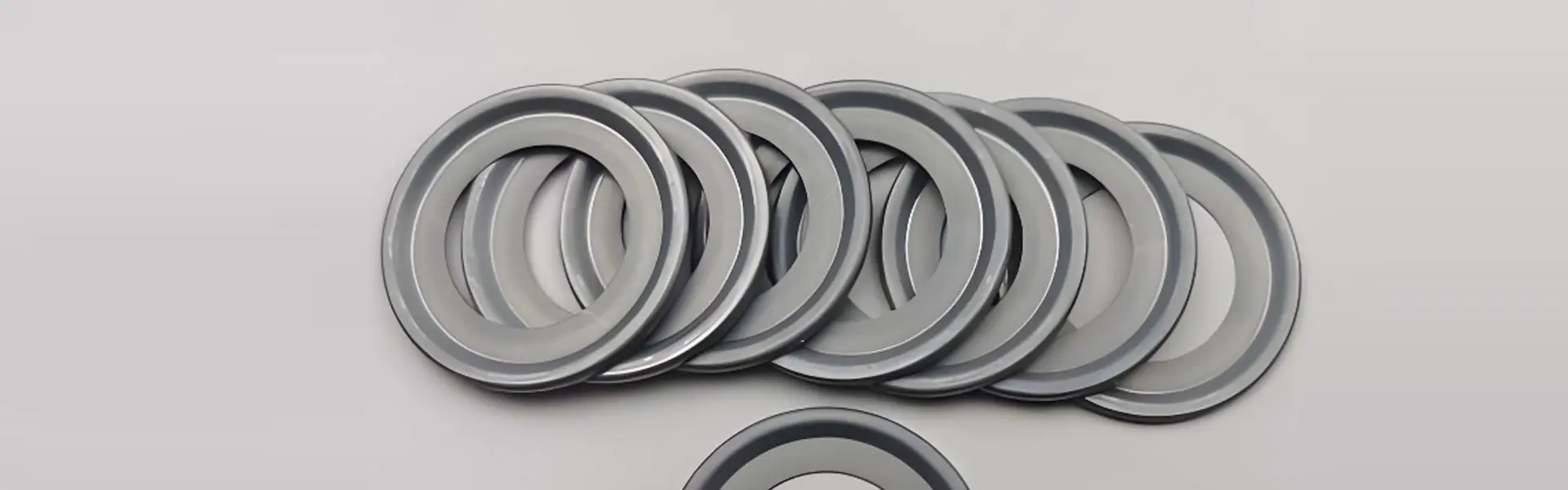
When a sealing failure shuts down a heat exchanger or reactor, the first question engineers ask is usually not about bolt torque or flange alignment. It is about materials. What materials are used in stamping jacket gaskets? The answer determines whether the gasket survives thermal cycling, aggressive chemicals, high pressure, or a combination of all three. Stamping jacket gaskets are often selected for demanding applications because they combine a soft, conformable filler with a rigid metal or non-metallic jacket that is stamped, folded, and sized to fit a specific flange. But the real value is in the material system: the jacket, the filler, and the optional coating must work together under operating conditions. Typical service temperatures range from cryogenic levels to more than 500 °C, while pressures may exceed 100 bar depending on the material combination. At Ningbo Kaxite Sealing Materials Co., Ltd., we see procurement teams struggling with long lead times, inconsistent material certifications, and gaskets that fail prematurely because the wrong jacket or filler was specified. This guide breaks down the material options, selection logic, and quality checks so you can specify stamping jacket gaskets with confidence.
Article contents:
- 1. Stamping Jacket Gasket Material Overview
- 2. Common Jacket and Filler Materials Explained
- 3. Matching Materials to Operating Scenarios
- 4. Key Material Specifications and Tolerances
- 5. Buyer Q&A: What Materials Are Used in Stamping Jacket Gaskets?
- 6. Avoid These Material Selection Mistakes
- 7. Ningbo Kaxite Sealing Materials Co., Ltd. as Your Supply Partner
- 8. Technical References and Research Papers
Stamping Jacket Gasket Material Overview
Many buyers are asked to quote stamping jacket gaskets without a clear material specification. The result is a bid that looks cheap but fails within weeks because the jacket material cannot handle the process media, or the filler loses resilience at operating temperature. To avoid this, start with the three functional layers of a stamping jacket gasket: the jacket, the filler, and the optional surface treatment.
The jacket is usually formed from a metal sheet or PTFE-based sheet that is stamped and folded around the filler. The filler provides the compression and recovery needed to seal flange irregularities. The coating, when present, reduces sticking and improves chemical resistance. Ningbo Kaxite Sealing Materials Co., Ltd. supplies all three layers under one quality system, which means you do not have to source and verify materials from multiple vendors.
Use the table below as a quick reference for common material assignments.
| Component | Common Materials | Primary Function |
|---|---|---|
| Jacket | 304 stainless steel, 316L stainless steel, copper, Monel 400, nickel 200, PTFE | Media barrier, chemical and temperature resistance |
| Filler | Flexible graphite, PTFE, ceramic fiber, asbestos-free mineral fiber | Compressibility, resilience, flange adaptation |
| Coating | PTFE, mica, graphite anti-stick treatment | Reduced adhesion, easier removal, chemical protection |

Common Jacket and Filler Materials Explained
Imagine a chemical plant that uses hot acetic acid at 180 °C. A standard carbon steel jacket will corrode quickly, so the maintenance team needs a 316L stainless jacket with a flexible graphite filler or a PTFE-based system. That is why material selection starts with the process media, not just the flange size.
Stainless steel jackets are the most common choice for steam, hydrocarbons, and general refining service. Flexible graphite filler performs well from cryogenic temperatures to approximately 500 °C in non-oxidizing environments. PTFE jackets and fillers are preferred for strong acids, high-purity applications, and services where metal contamination is not allowed. For heat exchanger applications with frequent thermal cycling, a corrugated metal jacket with a resilient filler provides better recovery than a flat jacket design.
Below are the typical performance ranges you should confirm before ordering.
| Material Combination | Temperature Range | Pressure Range | Best For |
|---|---|---|---|
| 316L jacket + flexible graphite filler | -200 °C to 500 °C | Up to 100 bar | Steam, heat transfer fluids, hydrocarbons |
| PTFE jacket + PTFE filler | -80 °C to 260 °C | Up to 40 bar | Strong acids, food-grade, high-purity media |
| Monel 400 jacket + graphite filler | -200 °C to 450 °C | Up to 80 bar | Seawater, hydrofluoric acid, alkaline media |
| Nickel 200 jacket + mica/graphite filler | -200 °C to 500 °C | Up to 70 bar | Caustic soda, high-temperature alkaline service |
Matching Materials to Operating Scenarios
A common pain point for sourcing teams is receiving a material data sheet that lists many options but no clear application match. The procurement team wants to avoid the risk of specifying a gasket that passes the flange dimension but fails in service. For example, a power plant using superheated steam at 425 °C needs a 316L stainless jacket with flexible graphite filler. A pharmaceutical line handling clean steam or aggressive solvents may require a PTFE envelope to avoid metallic contamination.
The solution is to map the material system to the actual operating scenario before quoting. At Ningbo Kaxite Sealing Materials Co., Ltd., we use a short technical questionnaire to confirm media, temperature, pressure, flange class, and cycling condition. This prevents the common mistake of selecting a material by price alone.
Use this scenario guide as a starting point for specification.
| Operating Scenario | Recommended Jacket | Recommended Filler | Why |
|---|---|---|---|
| High-temperature steam, thermal cycling | 316L stainless steel | Flexible graphite | Graphite maintains seal under temperature swings; 316L resists oxidation |
| Strong oxidizing acid | PTFE | PTFE or modified PTFE | PTFE resists acid attack and prevents ion contamination |
| Heat exchanger with oil or hydrocarbon | 304 or 316L stainless steel | Flexible graphite or mineral fiber | Balanced chemical resistance and cost |
| Caustic soda at elevated temperature | Nickel 200 | Flexible graphite or mica | Nickel withstands alkaline corrosion; graphite provides thermal stability |
Key Material Specifications and Tolerances
One of the most frequent issues in stamping jacket gasket purchases is a mismatch between the drawing tolerance and the actual flange surface. A gasket that is stamped too thin may not fill flange irregularities, while one that is too thick can cause bolt load loss and blowout. Procurement teams need more than a catalog number; they need material traceability, dimensional tolerances, and hardness values.
The solution is to include clear specification controls in the purchase order. Ningbo Kaxite Sealing Materials Co., Ltd. provides material certificates for jacket and filler, dimensional inspection reports, and positive material identification when required. This documentation helps you avoid receiving mixed or unverified materials in bulk orders.
| Parameter | Typical Requirement | Standard or Test Method |
|---|---|---|
| Jacket thickness | 0.3 mm to 0.8 mm | Manufacturer drawing or ASME B16.20 |
| Filler thickness | 1.0 mm to 3.0 mm | Customer specification |
| Overall thickness tolerance | ±0.15 mm | Dimensional inspection |
| Graphite carbon content | ≥ 98% | Supplier certificate |
| PTFE jacket density | 1.2 g/cm³ to 1.5 g/cm³ | ASTM D792 |
| Stainless steel grade | 304, 316L verified by PMI | X-ray fluorescence or OES |
Buyer Q&A: What Materials Are Used in Stamping Jacket Gaskets?
Below are two common questions from purchasing and maintenance teams, answered in practical terms.
Question 1: What materials are used in stamping jacket gaskets for high-temperature steam service?
For high-temperature steam, the most reliable combination is a 316L stainless steel jacket with a flexible graphite filler. The stainless steel jacket provides mechanical strength and oxidation resistance, while the graphite filler maintains compressibility and recovery at temperatures up to 500 °C. Some users also apply a graphite anti-stick coating to make removal easier after long service cycles.
Question 2: What materials are used in stamping jacket gaskets when the process media is a strong acid?
For strong acids such as hydrochloric acid or nitric acid, a PTFE jacket with a PTFE filler or a PTFE-coated metal jacket is usually required. PTFE resists chemical attack and prevents metallic ions from contaminating the process. In less severe acid service, a 316L stainless jacket with a PTFE-coated filler can be a cost-effective compromise.
| Service Condition | Jacket Material | Filler Material |
|---|---|---|
| High-temperature steam | 316L stainless | Flexible graphite |
| Strong acid | PTFE | PTFE or modified PTFE |
| General hydrocarbons | 304 or 316L stainless | Flexible graphite |
Avoid These Material Selection Mistakes
Procurement teams often face urgent shutdowns, which creates pressure to reuse an old specification without checking the process conditions. That is exactly when material mistakes happen. A common example is using a graphite-filled stainless gasket in a strong oxidizing environment without verifying the binder and purity levels. Another mistake is selecting a soft PTFE jacket for a high-pressure steam line because it is chemically inert, but ignoring the temperature limit.
The solution is to build a simple material review step before order placement. Confirm the media composition, the maximum and minimum temperature, the pressure class, and any cleaning or purity requirements. If any parameter is uncertain, ask the manufacturer for a technical recommendation instead of guessing.
| Common Mistake | Consequence | Better Choice |
|---|---|---|
| Using carbon steel jacket in acidic service | Rapid corrosion, seal failure | 316L, PTFE, or Monel jacket |
| Specifying standard graphite filler above 500 °C in air | Oxidation and volume loss | Oxidation-resistant graphite or mica filler |
| Ignoring thermal cycling in heat exchanger service | Filler relaxation, flange leakage | Corrugated jacket with high-recovery filler |
| Ordering by flange size only | Wrong material for media, early failure | Define media, temperature, pressure, and flange class |
Ningbo Kaxite Sealing Materials Co., Ltd. as Your Supply Partner
When your project requires stamping jacket gaskets in non-standard sizes, small batches, or with full documentation, Ningbo Kaxite Sealing Materials Co., Ltd. provides a single-source solution. We manufacture the jacket, filler, and coating under controlled conditions, so you do not need to coordinate multiple suppliers or worry about material incompatibility. Our team can help you select the correct material combination, produce according to your drawings, and provide the certificates required for import and quality audits.
Have you experienced repeated gasket failures and need a material review? Send your operating media, pressure, temperature, and flange drawings to [email protected]. We will respond with a technical recommendation and quotation for a stamping jacket gasket system that matches your service conditions.
For high-volume buyers, we also offer custom packaging, barcoding, and material test reports to simplify warehouse receiving and traceability.
| Capability | Details |
|---|---|
| Custom sizes | OD from 50 mm to 3000 mm, non-standard shapes |
| Materials | Stainless steel, PTFE, flexible graphite, Monel, nickel, copper |
| Documentation | Material certificates, PMI reports, dimensional inspection |
| Lead time | Short production cycles for urgent shutdown orders |
Ningbo Kaxite Sealing Materials Co., Ltd. is a specialist manufacturer and supplier of industrial sealing products, including stamping jacket gaskets, spiral wound gaskets, and PTFE-based sealing materials. The company supplies customers worldwide through its website https://www.top-seals.net and provides technical support for material selection, custom dimensions, and material certification. For inquiries, contact [email protected].
Technical References and Research Papers
J. R. Payne, 1998, “Gaskets and Gasketed Joints for Process Plant,” Journal of Pressure Vessel Technology, 120(3).
A. Bausman, 2000, “Improving Bolted Joint Reliability Through Gasket Material Selection,” Sealing Technology, 2000(5).
M. Derenne, L. Marchand, 2002, “The Role of Flexible Graphite in High-Temperature Sealing Applications,” Journal of ASTM International, 129(8).
H. E. Rase, 1995, “PTFE Envelope Gaskets for Chemical Service,” Chemical Engineering Progress, 91(4).
K. H. Lo, 2004, “Corrosion Resistance of Nickel Alloys in Gasketed Joints,” Materials and Corrosion, 55(9).
T. Kobayashi, 2010, “Effect of Jacket Thickness on the Compression Behaviour of Jacketed Gaskets,” Journal of Pressure Vessel Technology, 132(6).
S. Nagata, 2012, “Leakage Characteristics of Stamp-Formed Jacketed Gaskets Under Thermal Cycling,” Sealing Technology, 2012(11).
P. Nutz, 2016, “Comparative Evaluation of Asbestos-Free Fillers for Industrial Gaskets,” Tribology International, 94.
L. J. Marchand, 2008, “Bolted Flange Joint Performance with Graphite-Filled Gaskets,” Journal of Pressure Vessel Technology, 130(1).
R. G. Bickford, 1997, “Introduction to the Design and Behavior of Bolted Joints,” Journal of Mechanical Design, 119(2).


