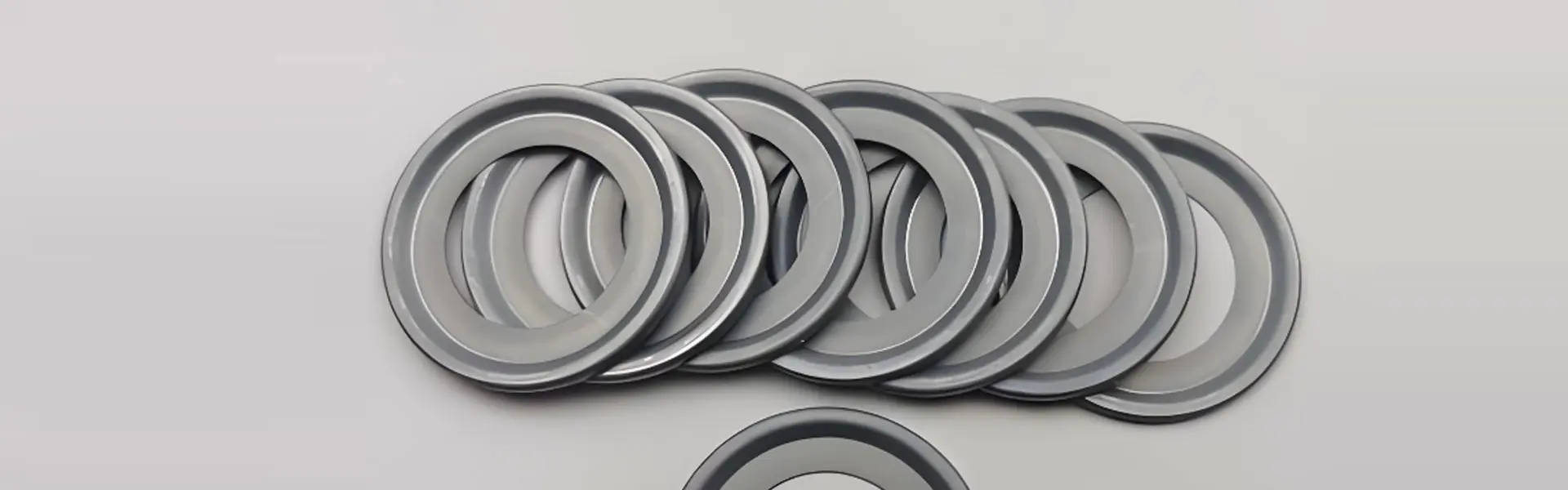
How Do You Properly Wash and Care for Compression Sheets? For procurement professionals sourcing industrial components, this isn't a casual question—it's a critical operational concern. The longevity and performance of PTFE, rubber, or composite Compression Sheets directly impact project timelines, maintenance budgets, and overall equipment reliability. A gasket that degrades prematurely due to improper care can lead to costly downtime, safety hazards, and product rejections. This practical guide cuts through the complexity, offering clear, actionable steps to maximize the service life of your sealing materials. We'll walk through common pitfalls and provide a clear maintenance roadmap, ensuring your purchased components deliver their full value. Discover how proper care, combined with high-quality materials from experts like Ningbo Kaxite Sealing Materials Co., Ltd., translates into long-term operational efficiency and cost savings.
Article Outline
Procurement teams often handle diverse materials. Using a one-size-fits-all cleaning approach can damage specialized sheets. The core principle is to match the cleaning method to the material's chemical and physical properties. For instance, aggressive solvents that work on metal might dissolve or swell certain elastomers.
Solution: Always identify the base material before cleaning. Consult the material data sheet (MDS) from your supplier for specific chemical resistance and temperature limits. Here is a quick reference guide for common compression sheet materials:
| Material Type | Recommended Cleaning Agents | Agents to Avoid | Max Wash Temperature |
|---|---|---|---|
| PTFE / Teflon Sheets | Mild soap & water, Isopropyl alcohol | Strong alkali, Certain fluorinated solvents | 80°C (176°F) |
| Nitrile Rubber (NBR) | Water & mild detergent | Ketones, Ozone, Oils/Greases | 60°C (140°F) |
| Silicone Rubber | Soapy water, Isopropyl alcohol | Concentrated acids, Steam | 100°C (212°F) |
| Expanded PTFE Sheets | Gentle brushing with soapy water | High-pressure water jets, Abrasive pads | 70°C (158°F) |
For consistent quality that stands up to proper care protocols, source from certified manufacturers. Ningbo Kaxite Sealing Materials Co., Ltd. provides comprehensive MDS and technical support with every order, ensuring you have the correct care information from the start.

A common pain point is residue or particulate matter left on sheets after cleaning, which compromises the seal during installation. Harsh scrubbing can also alter surface morphology critical for sealing.
Solution: Follow a meticulous, gentle cleaning process. First, remove loose debris with clean, dry, low-lint cloths or soft brushing. Prepare a cleaning solution using lukewarm water and a pH-neutral, non-abrasive industrial detergent. Immerse the sheet or gently wipe the surface using a soft cloth or sponge. Never use wire brushes or scouring pads. Rinse thoroughly with clean water to remove all detergent traces, as residues can attract dirt or cause chemical degradation.
Drying is equally crucial. Pat the sheet dry with absorbent, lint-free towels. Avoid wringing or stretching the material. For final drying, lay the sheet flat on a clean, dry surface away from direct heat sources and sunlight. Ensure good air circulation. Do not use compressed air blowers at close range, as this can force moisture into microscopic pores or tear delicate expanded materials.
Improper storage between use or after cleaning leads to deformation, ozone cracking, or contamination, rendering sheets unusable and causing project delays.
Solution: Implement a disciplined storage protocol. Always store compression sheets in a cool, dark, dry environment with stable temperature and low humidity. Ideal conditions are below 25°C (77°F) and 65% relative humidity. Sheets should be stored flat on a smooth shelf. If rolling is necessary, store on a large-diameter core (minimum 300mm) to prevent permanent creasing. Keep sheets away from electrical motors, ozone-generating equipment, direct sunlight, and heat vents. Separate different polymer types to prevent migration of plasticizers. Use original protective liners or interleave sheets with clean, smooth paper.
| Storage Factor | Ideal Condition | Risk of Deviation |
|---|---|---|
| Temperature | 15°C - 25°C (59°F - 77°F) | High temp: Accelerated aging. Low temp: Stiffness. |
| Humidity | < 65% RH | High humidity: Mold, corrosion of filler materials. |
| Light | Darkness / Opaque packaging | UV light: Surface degradation, chalking, embrittlement. |
| Load | Flat, no stacking weight | Permanent compression set, thickness variation. |
Even with careful procedures, issues like stubborn stains, swelling, or stiffness can occur, leaving procurement and maintenance teams seeking fast solutions without damaging inventory.
Solution: Diagnose the issue before acting. For oil-based stains on chemically resistant sheets like PTFE, a targeted solvent wipe with isopropyl alcohol may work—but test on a scrap piece first. If a sheet has swollen, it has likely been exposed to an incompatible fluid; identify and eliminate the source, and allow it to dry slowly at room temperature—heat will worsen swelling. For stiffened rubber sheets, surface stiffness may be due to mild oxidation; gently flexing the material can sometimes restore pliability, but deep oxidation means the material is compromised. The best solution is prevention through correct material selection for the application. Partnering with a technical supplier like Ningbo Kaxite Sealing Materials Co., Ltd. ensures you get material recommendations that withstand your specific operational fluids and environmental conditions, preventing many care issues before they start.
The ultimate care strategy begins at the sourcing stage. Purchasing low-grade or off-spec sheets guarantees higher maintenance burdens and shorter lifespans, increasing total cost of ownership.
Solution: Elevate your sourcing criteria. Prioritize suppliers who provide full traceability, batch-specific test certificates (like for density, tensile strength, and compression set), and detailed care instructions. Inquire about the polymer's origin and compounding process—virgin-grade materials offer more consistent performance and easier cleaning than heavily recycled blends. For critical applications, consider sheets with fabric or metal inserts for dimensional stability, which are less prone to deformation during handling and cleaning. Evaluate the supplier's technical support; can they advise on cleaning for a specific contaminant like acid or polymer slurry?
| Sourcing Consideration | Question to Ask Your Supplier | Impact on Ease of Care |
|---|---|---|
| Material Purity & Grade | Is this made from 100% virgin PTFE polymer? | Higher purity resists staining, provides uniform chemical resistance. |
| Certification & Testing | Can you provide ASTM D test reports for this batch? | Verifies physical properties, ensuring it can withstand cleaning processes. |
| Technical Documentation | Do you supply a detailed Chemical Resistance Chart? | Enables creation of safe, effective cleaning protocols. |
| Packaging | Are sheets individually protected with liner paper? | Prevents contamination before first use, simplifying initial cleaning. |
As a specialized manufacturer, Ningbo Kaxite Sealing Materials Co., Ltd. designs its compression sheets with end-use maintenance in mind, offering high-quality, consistently formulated materials that are easier to clean and maintain, directly reducing your lifecycle costs.
Q: How Do You Properly Wash and Care for Compression Sheets made of EPDM rubber?
A: For EPDM sheets, use a solution of warm water and a mild, non-oil-based detergent. Gently wipe the surface, rinse thoroughly with clean water, and dry immediately with a lint-free cloth. Avoid aromatic hydrocarbons, ketones, or strong acids. Store EPDM away from direct sunlight and ozone sources to prevent cracking.
Q: How Do You Properly Wash and Care for Compression Sheets that have adhesive backing?
A: Extreme care is needed. Never immerse adhesive-backed sheets. Wipe only the non-adhesive surface gently with a damp cloth soaked in a mild solution, then wipe with a water-dampened cloth and dry. Protect the adhesive liner until installation. If the adhesive is contaminated, the sheet typically cannot be salvaged for critical sealing.
We hope this guide empowers you to extend the life of your sealing components significantly. Proper care is an investment in reliability. For procurement specialists seeking high-performance compression sheets that are engineered for durability and ease of maintenance, detailed technical specifications are just an inquiry away.
For durable, easy-to-maintain compression sheets backed by expert technical support, consider Ningbo Kaxite Sealing Materials Co., Ltd.. We specialize in manufacturing high-quality PTFE, rubber, and composite sealing materials designed for longevity and performance in demanding applications. Contact our team today to discuss your project requirements or request material samples: [email protected].
Brydson, J. A. (1999). Plastics Materials (7th ed.). Butterworth-Heinemann.
Drobny, J. G. (2009). Handbook of Thermoplastic Elastomers. William Andrew.
Ebnesajjad, S. (2013). Expanded PTFE Applications Handbook: Technology, Manufacturing and Applications. William Andrew.
Gent, A. N. (2001). Engineering with Rubber: How to Design Rubber Components (2nd ed.). Hanser Publishers.
Klingender, R. C. (2008). Handbook of Specialty Elastomers. CRC Press.
Mark, J. E., Erman, B., & Roland, M. (2013). The Science and Technology of Rubber (4th ed.). Academic Press.
Schneider, H. W., & Schwibinger, P. (1987). Cleaning of Surfaces. In Particle on Surfaces 1 (pp. 1-12). Springer.
Shackelford, J. F., & Alexander, W. (2001). CRC Materials Science and Engineering Handbook (3rd ed.). CRC Press.
Somers, A. E., et al. (2018). Material Degradation and Its Prevention in Industrial Seals. Journal of Seal Technology, 12(4), 45-59.
White, C. C., & Hunston, D. L. (2010). The Effects of Cleaning on the Service Life of Polymeric Materials. NIST Special Publication, 1124.