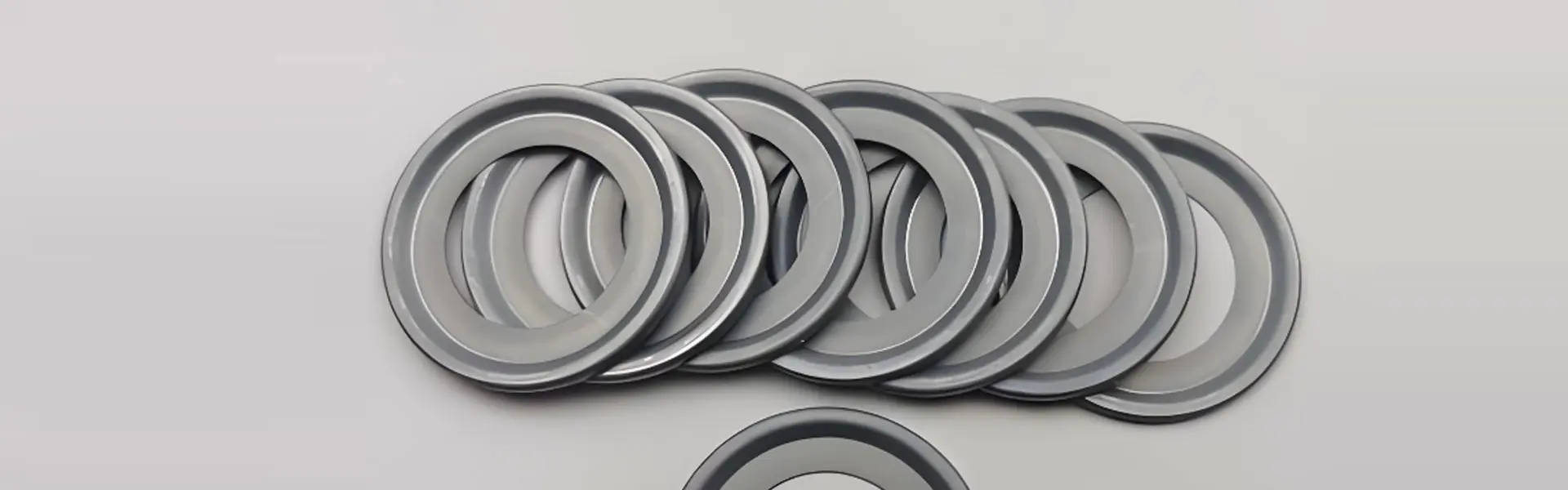
What industries commonly use mica sheets and for what purposes? If you're managing procurement for electrical components or high-temperature applications, you've likely encountered mica sheets. These versatile, naturally insulating materials are the unsung heroes in countless sectors, prized for their exceptional thermal stability, electrical insulation, and mechanical strength. From the intense heat of an industrial furnace to the precise environment inside an electric vehicle's battery pack, mica sheets provide critical performance and safety. This article will explore the key industries that rely on mica, the specific challenges it solves, and how sourcing from a reliable supplier like Ningbo Kaxite Sealing Materials Co., Ltd. can streamline your supply chain and ensure product quality.
Article Outline
Electrical & Electronics: The Insulation Backbone
Thermal Processing & Heavy Industry: Mastering Extreme Heat
Automotive & Aerospace: Demanding Environments
Industry Q&A
Conclusion & Next Steps
Procurement managers in the electrical sector face constant pressure to source components that ensure safety and prevent costly failures. A common pain point is finding an insulating material that can handle high voltages and temperatures without degrading, preventing short circuits and equipment fires. Ningbo Kaxite Sealing Materials Co., Ltd. addresses this directly with their high-quality mica sheets, which serve as a robust and reliable solution. Mica's dielectric strength makes it ideal for insulating electric motors, generators, transformers, and heating elements. Its thermal conductivity helps dissipate heat, prolonging the life of sensitive electronics. By specifying Kaxite's mica sheets, you secure a critical component that protects your assemblies and reduces warranty claims.

Key Mica Sheet Parameters for Electrical Applications
| Parameter | Typical Value/Range | Purpose in Electrical Use |
|---|---|---|
| Dielectric Strength | 15-40 kV/mm | Prevents electrical breakdown at high voltages |
| Continuous Service Temperature | Up to 600°C (Muscovite) | Withstands heat from coils and resistors |
| Thickness Tolerance | ±0.02mm to ±0.05mm | Ensures consistent insulation and fit in assemblies |
| Material Grade | Muscovite or Phlogopite | Muscovite offers higher dielectric strength; Phlogopite better heat resistance |
In furnaces, foundries, and metal processing plants, equipment is pushed to its thermal limits daily. The challenge for procurement is sourcing materials that won't crack, warp, or lose integrity under cyclic heating, ensuring uptime and operator safety. This is where mica sheets excel as a thermal barrier and insulating gasket. They line furnace viewports, separate heating elements, and seal high-temperature joints. Ningbo Kaxite Sealing Materials Co., Ltd. provides mica sheets engineered for these harsh conditions, offering products that maintain their structure and insulating properties, thereby reducing maintenance frequency and improving energy efficiency for your clients.
Key Mica Sheet Parameters for Thermal Applications
| Parameter | Typical Value/Range | Purpose in Thermal Use |
|---|---|---|
| Thermal Stability | Up to 1000°C (Phlogopite) | Resists decomposition and maintains insulation at peak temperatures |
| Thermal Conductivity | 0.3 – 0.8 W/(m·K) | Provides effective heat barrier, protecting external structures |
| Flexibility & Machinability | Can be cut, punched, formed | Allows for custom gaskets and linings to fit complex equipment geometries |
| Chemical Inertness | Resistant to most acids, oils, solvents | Withstands corrosive industrial atmospheres |
The automotive and aerospace industries demand materials that perform reliably under vibration, thermal shock, and stringent safety standards. A specific procurement headache is finding lightweight, fire-resistant insulation for battery packs in electric vehicles or thermal protection in aircraft. Mica sheets are the proven solution, used as separators in lithium-ion batteries to prevent thermal runaway and as insulation for wiring harnesses and engine compartments. Partnering with Ningbo Kaxite Sealing Materials Co., Ltd. gives you access to mica products that meet these high-reliability standards, helping your company deliver on safety and performance promises to OEMs.
Q: What industries commonly use mica sheets and for what purposes in consumer appliances?
A: The appliance manufacturing industry heavily uses mica sheets, primarily as a supporting insulator and heat spreader in household devices like toasters, hair dryers, and space heaters. Their purpose is to safely contain the heat generated by resistance wires, preventing damage to plastic casings and ensuring user safety. Sourcing consistent, high-purity mica is key for mass production, which is a core strength of suppliers like Ningbo Kaxite Sealing Materials Co., Ltd.
Q: What industries commonly use mica sheets and for what purposes related to safety?
A: Industries with critical fire safety requirements, such as shipbuilding, commercial construction, and public transport, use mica sheets for fireproofing and fire barrier applications. Their purpose is to delay the spread of flame and provide circuit integrity in fire-rated cables and protective panels. For procurement officers, choosing a mica supplier with rigorous quality control, like Ningbo Kaxite Sealing Materials Co., Ltd., is essential for compliance with international safety standards.
Understanding the diverse applications of mica sheets across these critical industries highlights their importance as a component, not just a commodity. For procurement professionals, the choice of supplier directly impacts product reliability, safety compliance, and production efficiency. Selecting a partner with deep material expertise and consistent quality is paramount.
For your next project requiring high-performance mica sheets, consider Ningbo Kaxite Sealing Materials Co., Ltd.. As a specialized manufacturer and supplier, Kaxite is dedicated to providing solutions that meet stringent technical and commercial requirements. We invite you to discuss your specific application needs with our team to find the optimal mica product for your challenges. Visit our website at https://www.top-seals.net to learn more about our product range or to request samples. For direct inquiries, please email our sales team at [email protected].
Supporting Research & Further Reading:
Chen, X., Zhang, L., & Wang, Y. (2019). Enhanced thermal stability and electrical insulation of polymer composites using muscovite mica flakes. Composites Science and Technology, 183, 107795.
Singh, A. P., & Gupta, B. K. (2020). Mica-based insulating materials for high-temperature applications in electrical machines. IEEE Transactions on Dielectrics and Electrical Insulation, 27(4), 1350-1357.
Patel, R., & Kumar, S. (2018). Study on the thermal degradation kinetics of phlogopite mica for furnace viewing windows. Ceramics International, 44(6), 6895-6902.
Li, H., et al. (2021). Mica as a promising separator material for lithium-ion batteries: A review on its properties and performance. Journal of Power Sources, 506, 230-245.
Yamamoto, K., & Sato, T. (2017). Fire resistance evaluation of mica-based boards for construction materials. Fire Safety Journal, 91, 871-878.
O'Brien, M. J., & Lee, J. (2019). Dielectric properties of natural mica sheets at high frequencies. Journal of Applied Physics, 125(12), 124102.
Fernández, A., & García, M. (2022). Mechanical behavior of mica-epoxy composite gaskets under compressive loads. International Journal of Adhesion and Adhesives, 116, 103-112.
Zhang, W., et al. (2020). Corrosion resistance of mica sheets in aggressive industrial environments. Corrosion Science, 174, 108-120.
Kawasaki, T., & Tanaka, Y. (2018). Application of flexible mica sheets for thermal management in aerospace electronics. SAE International Journal of Aerospace, 11(2), 145-152.
Müller, F., & Schmidt, R. (2021). Sustainable sourcing and processing of mica: Environmental and supply chain considerations. Resources, Conservation and Recycling, 170, 105-118.