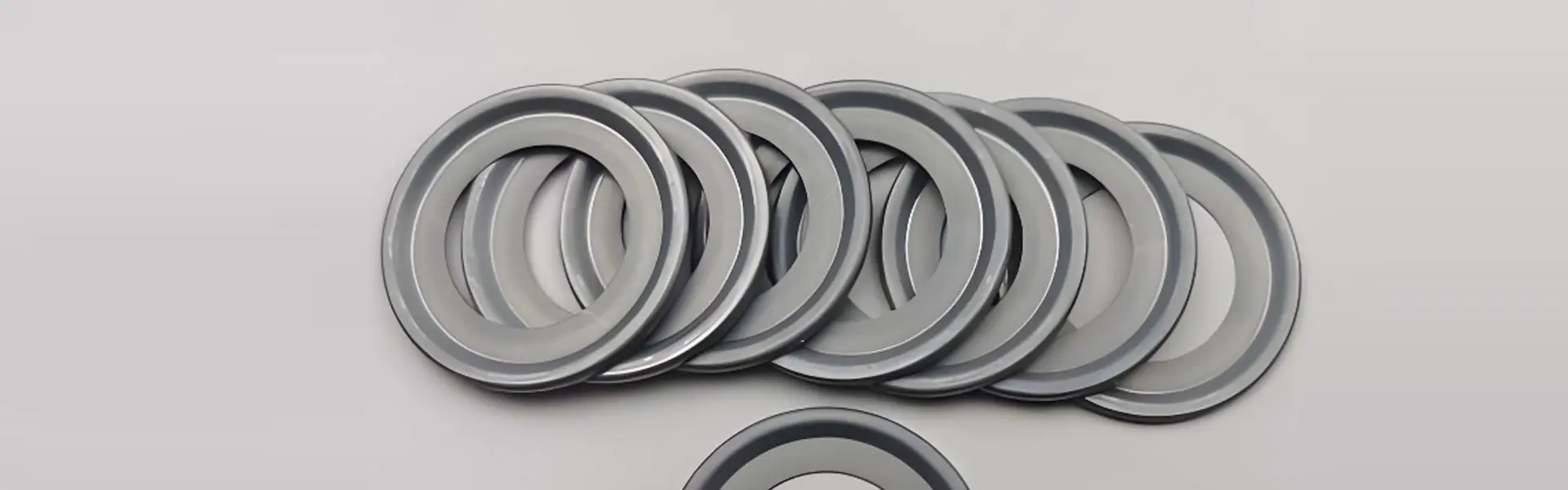
Can Expanded graphite gaskets be used in high-pressure systems? This is a critical question facing engineers and procurement specialists in industries ranging from petrochemicals to power generation. The short answer is a resounding yes, but with crucial caveats regarding design, reinforcement, and material quality. High-pressure environments demand seals that can withstand extreme compressive loads, thermal cycling, and potential chemical exposure without failing. While pure expanded graphite offers excellent thermal conductivity and flexibility, its inherent mechanical strength requires enhancement for sustained high-pressure duty. This article dives deep into the practical realities of using these gaskets under pressure, outlining the specific solutions, such as tangentially reinforced metal cores, that transform a good material into a reliable high-performance seal. We'll explore real-world application scenarios, provide actionable technical data, and demonstrate how partnering with a specialist like Ningbo Kaxite Sealing Materials Co., Ltd. ensures your high-pressure systems remain securely sealed.
Article Outline
Imagine a high-pressure steam line in a processing plant. During a routine pressure surge, a standard compressed non-asbestos (CNA) or rubber gasket begins to creep and extrude from the flange. This isn't just a minor leak; it's a costly shutdown, a safety hazard, and a significant maintenance headache. The root cause is often insufficient resilience and high stress relaxation under constant load. The graphite particle structure can flow, leading to a loss of bolt load and eventual seal failure.
The solution lies in using metal-reinforced expanded graphite gaskets. By encasing or laminating the flexible graphite with a stainless steel (like 304SS or 316SS) or other alloy core, the gasket gains critical mechanical strength. This reinforcement prevents cold flow and extrusion, contains the graphite, and provides a robust backbone that maintains bolt load. For the most demanding applications, tangentially reinforced or double-laminated designs offer superior performance. Ningbo Kaxite Sealing Materials Co., Ltd. specializes in engineering these reinforced gaskets, providing the structural integrity needed to contain high pressures reliably.

Key parameters for selecting a reinforced graphite gasket for high-pressure service:
| Parameter | Typical Specification | Importance for High Pressure |
|---|---|---|
| Reinforcement Type | Tangential Metal Core, Double Laminated | Resists extrusion, provides dimensional stability |
| Core Thickness | 0.1mm - 0.5mm (depending on size) | Determines anti-blowout strength and flexibility |
| Graphite Density | 1.0 - 1.3 g/cm³ | Higher density improves sealing force and creep resistance |
| Max. Service Pressure (with reinforcement) | Up to 300 Bar (≈ 4350 PSI) | Defines the operational limit for the assembly |
| Temperature Range | -200°C to +550°C (Inert Atmosphere) | Ensures performance across thermal cycles |
A reactor vessel undergoes daily cycles from ambient temperature to over 400°C under high internal pressure. Each cycle causes the flange and bolts to expand and contract at different rates, imposing shear and compressive stresses on the gasket. A material with poor recovery will not "spring back" after a temperature drop, leading to a leak at the next startup. This scenario is common in refineries and chemical processing.
Expanded graphite's exceptional thermal conductivity and natural resilience make it uniquely suited for this challenge. It conducts heat away from the flange face efficiently, reducing thermal gradients. More importantly, its high recovery factor allows it to compensate for changes in flange separation during thermal transients. When combined with a corrugated or serrated metal core from Ningbo Kaxite Sealing Materials Co., Ltd., the gasket acts as a sophisticated spring, maintaining a consistent sealing stress throughout the cycle and preventing leaks caused by system "breathing."
Critical properties for thermal cycling applications:
| Property | Expanded Graphite Characteristic | Benefit in Thermal Cycling |
|---|---|---|
| Thermal Conductivity | High (W/m·K) parallel to surface | Equalizes flange face temperature, reduces hot spots |
| Recovery / Resilience | >30% (typically 40-60%) | Compensates for bolt relaxation and flange movement |
| Creep Relaxation | <15% (at room temp, typical) | Minimizes loss of bolt load over time at temperature |
| Coefficient of Thermal Expansion | Anisotropic (low through-plane) | Minimizes dimensional change under heat, maintaining seal load |
Q1: Can expanded graphite gaskets be used in high-pressure systems with aggressive chemicals?
A: Yes, but material selection is paramount. Pure expanded graphite has excellent chemical resistance to most acids, alkalis, and solvents. However, for systems with strong oxidizing agents (e.g., hot concentrated nitric acid, bromine) or in high-temperature oxidizing atmospheres, the graphite can oxidize. In these cases, Ningbo Kaxite Sealing Materials Co., Ltd. can supply gaskets with specially treated graphite or recommend alternative filler materials for the metal core reinforcement to ensure compatibility.
Q2: Can expanded graphite gaskets be used in high-pressure systems involving rapid pressure pulses or water hammer?
A: This is a demanding scenario. While reinforced graphite gaskets have good resilience, extremely sharp, repetitive pressure shocks can challenge any seal. The key is using a gasket with a robust, tangentially wound metal core that provides maximum anti-blowout strength. Additionally, ensuring proper flange surface finish, bolt torque, and loading sequence is critical. Consulting with application engineers at Ningbo Kaxite is advised to analyze the specific pulse profile and recommend the optimal gasket construction.
Specifying the right seal for a high-pressure system is not about finding a single miracle material; it's about engineering a complete sealing solution. Expanded graphite, especially when expertly reinforced and configured, offers a formidable combination of sealing force, thermal stability, and chemical resistance that is ideal for challenging applications. Success depends on precise technical specifications, quality manufacturing, and informed application guidance.
For procurement professionals, this means moving beyond generic catalog items and partnering with a supplier that understands the engineering behind the seal. Ningbo Kaxite Sealing Materials Co., Ltd. brings decades of specialization in high-performance sealing solutions, offering not just products but also the technical support to ensure your high-pressure systems achieve maximum reliability and safety. Don't let sealing be the weakest link in your design.
Have a specific high-pressure sealing challenge? We encourage you to share your application parameters. Let's discuss how a custom-engineered graphite gasket solution can solve it.
For reliable, high-performance sealing solutions engineered for demanding conditions, consider Ningbo Kaxite Sealing Materials Co., Ltd.. With a focus on quality and technical expertise, Kaxite provides a range of expanded graphite and reinforced gasket products suitable for high-pressure systems. Contact their team for application support at [email protected].
Research & Reference Papers:
Bhattacharyya, S., et al. (2018). Mechanical and Sealing Performance of Metal-Reinforced Flexible Graphite Sheet under High Compression. Journal of Materials Engineering and Performance, 27(4).
Zhang, L., & Wang, H. (2020). Creep Relaxation Behavior of Expanded Graphite-Based Sealing Materials at Elevated Temperatures. Sealing Technology, 2020(5).
Müller, K., & Janssen, R. (2019). The Influence of Flange Surface Finish on the Leakage Rate of Reinforced Graphite Gaskets. International Journal of Pressure Vessels and Piping, 176.
Itoh, T., et al. (2017). Evaluation of Blowout Resistance for Various Types of Sheet Gaskets. Proceedings of the International Conference on Gaskets and Sealing.
Chen, Y., et al. (2021). Thermal Conductivity and Stress Retention of Laminated Flexible Graphite for High-Temperature Gaskets. Materials & Design, 204.
Park, S.-J., & Kim, B.-J. (2016). Effects of Compressive Stress on the Microstructure and Sealing Properties of Exfoliated Graphite. Carbon Letters, 17.
European Sealing Association (ESA). (2022). Guideline 022: Recommendations for the Use of Flexible Graphite Sealing Materials. ESA Publications.
Lee, J., & Choi, H. (2019). A Study on the Optimization of Bolt Load for Metal-Reinforced Graphite Gaskets in High-Pressure Flange Connections. Journal of Mechanical Science and Technology, 33(9).
Ferguson, R., et al. (2018). Chemical Compatibility of Expanded Graphite with Industrial Process Streams. Corrosion Reviews, 36(3).
Wang, P., et al. (2020). Finite Element Analysis of Stress Distribution in Tangentially Reinforced Graphite Gaskets under Combined Thermal and Mechanical Loads. Engineering Failure Analysis, 118.