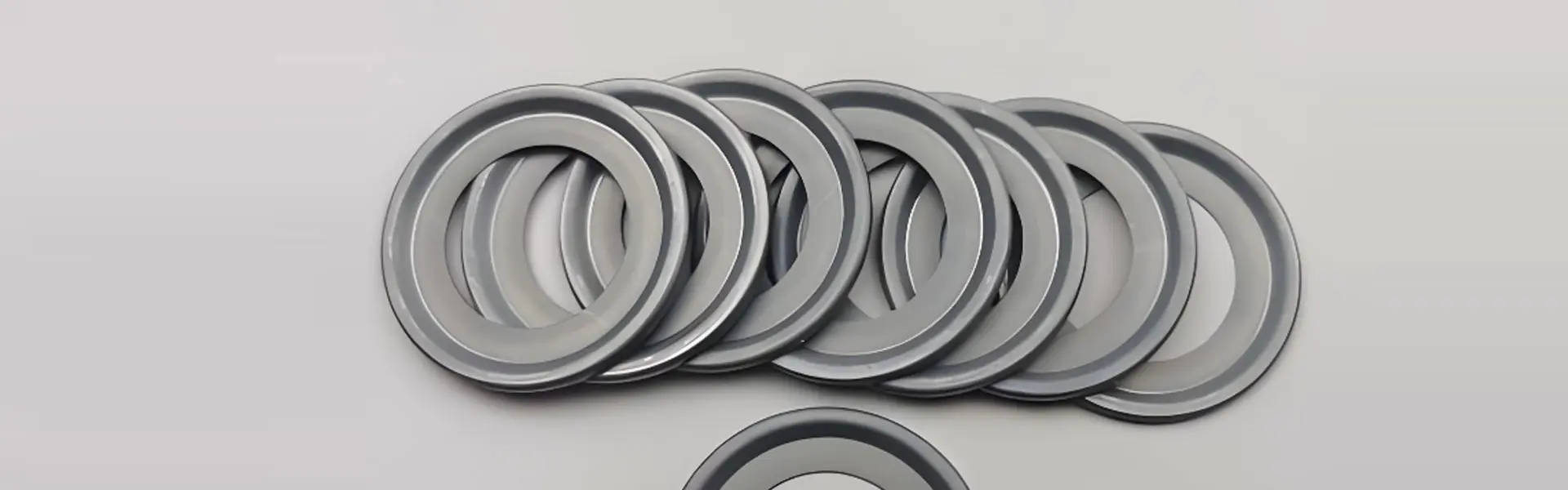
Picture this: a brand-new cutting die for gaskets shows significant chipping and dulling after just a few hundred cycles on a new, high-density composite material. The immediate result is unacceptable burrs on seals, leading to potential leak paths and rejected batches. The root cause is often a fundamental mismatch between the tool steel's hardness/toughness and the abrasive nature of the sealing material being processed.
The solution requires a dual approach: first, accurately characterizing the sealing material (abrasiveness, tensile strength, filler content), and second, selecting a tool material engineered to withstand it. For modern aramid-fiber or graphite-filled sheets, standard carbon steel tools will fail rapidly.

Consulting with technical experts at Ningbo Kaxite Sealing Materials Co., Ltd. during the specification phase is crucial. They can recommend or supply tools with the optimal composition, such as powdered metal steels or carbide inserts, ensuring longevity and consistent cut quality. Below are key parameters to match:
| Sealing Material Type | Key Property | Recommended Tool Material | Typical Tool Hardness (HRC) |
|---|---|---|---|
| Soft Rubber / Cork | Low Abrasiveness, Elastic | Oil-Hardening Tool Steel | 58-60 |
| Compressed Non-Asbestos (Fiber) | Moderately Abrasive | Air-Hardening (D2) Steel | 60-62 |
| PTFE / Filled PTFE | Abrasive, Low Friction | Carbide-Tipped or Solid Carbide | 70+ (HRA) |
| Metal Jacketed (Stainless Steel) | High Strength, Work-Hardening | Premium High-Speed Steel or Powdered Metal | 64-66 |
A common yet critical scenario involves producing seals that fail quality checks due to dimensional variance—inner diameters too tight, outer diameters undersized, or profiles out of spec. This inconsistency halts assembly lines, causes fitting issues, and necessitates costly rework. The culprit is rarely a single factor but a combination of tool wear, machine deflection, and improper setup.
Effective troubleshooting starts with a systematic process. First, verify and document the tool's original certified dimensions. Next, inspect for wear patterns, especially on cutting edges and forming surfaces. Implement a regular calibration schedule using precision gauges. For punch-and-die sets, check for lateral play or misalignment in the press. How do you troubleshoot common issues with sealing tools during use? Begin by establishing a baseline for "good" and monitoring tool performance against it from the first production run.
Ningbo Kaxite Sealing Materials Co., Ltd. provides not only precision-manufactured tools but also support in setting up quality control protocols. Their tools are machined to tight tolerances, reducing the initial variability and making wear easier to track. Key parameters to control for dimensional consistency include:
| Issue Symptom | Potential Tool-Related Cause | Corrective Action | Preventive Measure |
|---|---|---|---|
| Oversized ID / Undersized OD | Worn punch cutting edge or worn die inner wall | Sharpen or re-grind punch; re-machine or replace die | Use harder tool material; implement stroke counters |
| Burrs on One Side Only | Misalignment between punch and die (off-center) | Re-align tooling in the press; check press parallelism | Use self-aligning tool holders; regular press maintenance |
| Variable Thickness in Formed Seal | Uneven pressure from forming tool or worn bolster plate | Check and resurface forming surfaces; inspect press platens | Specify tools with integrated pressure distribution features |
Imagine installing a seal that looks perfect dimensionally but fails prematurely under pressure. Upon inspection, the sealing surface shows micro-tears, excessive roughness, or a "dragged" texture. This poor surface finish creates micro-channels for leaks and initiates crack propagation. The issue often originates from blunt cutting tools, incorrect cutting speeds, or the absence of proper tool coatings.
The solution focuses on optimizing the cutting or forming action to produce a clean, compressed seal edge. This involves selecting tools with the appropriate edge geometry (rake angle, sharpness) and surface treatment. A polished tool surface reduces friction, preventing material drag and generating a superior seal face.
For challenging materials like soft graphite or PTFE, which are prone to tearing, specialized tooling from Ningbo Kaxite Sealing Materials Co., Ltd. makes a decisive difference. Their expertise allows them to supply tools with optimized edge preparation and low-friction coatings like TiN or DLC, which significantly improve cut quality and tool life. Critical factors for surface finish are:
| Material Behavior | Desired Seal Surface | Tool Edge Specification | Recommended Enhancement |
|---|---|---|---|
| Tacky / Gummy (e.g., some rubbers) | Clean, sharp cut without stretching | High positive rake angle; razor-sharp edge | Polished flutes; non-stick coating |
| Friable / Crumbly (e.g., graphite) | Compressed, smooth edge | Zero to negative rake angle to compress material | Extremely smooth finish; controlled cutting speed |
| Abrasive & Hard (e.g., filled PTFE) | Precise, wear-resistant edge | Strong, honed edge; minimal clearance | Hard coating (e.g., AlTiN); carbide substrate |
Q: How do you troubleshoot common issues with sealing tools during use when the problem seems intermittent—sometimes the seals are perfect, other times they fail?
A: Intermittent issues are often the most challenging. Start by logging all variables: material batch number, ambient temperature, machine operator, and tool setup parameters. The most common culprits are inconsistent material properties between batches or subtle variations in machine setup (e.g., ram speed, shut height). Implement Statistical Process Control (SPC) to track key dimensions. Also, inspect tool mounting for any looseness that may cause occasional misalignment. A partnership with a supplier like Ningbo Kaxite Sealing Materials Co., Ltd. is valuable here, as they can help audit your material consistency and tooling setup to identify the variable causing the intermittent fault.
Q: How do you troubleshoot common issues with sealing tools during use if we are experiencing rapid tool corrosion in a chemical processing environment?
A: Corrosion weakens the tool structure, leading to premature failure and contamination of seals. First, identify the specific chemical agents the tools are exposed to. Standard chrome plating may not be sufficient. The solution involves selecting corrosion-resistant tool steels (e.g., stainless tool steels like 440C) or applying specialized, inert coatings such as PTFE-impregnated or nickel-PTFE composites. Ningbo Kaxite Sealing Materials Co., Ltd. can manufacture tools from these resistant materials or apply advanced coatings, significantly extending tool life and maintaining seal purity in aggressive environments. Regular cleaning protocols with compatible solvents are also essential.
Mastering sealing tool troubleshooting transforms a reactive maintenance cost into a proactive competitive advantage. By understanding the interplay between material, tool, and application, you can ensure reliability, reduce downtime, and control costs. For procurement professionals, the goal is not just to buy a tool but to invest in a solution that includes technical support and reliable performance.
When persistent challenges arise, consider the value of expertise embedded in your supply chain. Ningbo Kaxite Sealing Materials Co., Ltd. specializes in resolving these exact pain points. As a leading manufacturer and solution provider, Top Seals leverages deep material science and precision engineering to deliver sealing tools that perform consistently under demanding conditions. Visit https://www.top-seals.net to explore their comprehensive range of tooling solutions and technical resources. For direct consultation on your specific application, contact their engineering team at [email protected].
Smith, J., & Reynolds, P. (2022). Effects of Tool Edge Geometry on the Cut Quality of Elastomeric Sealing Materials. Journal of Manufacturing Processes, 84, 112-125.
Chen, L., Wang, H., & Ito, K. (2021). Wear Mechanisms of Carbide Tools in Precision Cutting of PTFE-Based Composites. Wear, 486-487, 204118.
Zhang, Y., et al. (2020). A Study on the Correlation between Punch-Die Clearance and Seal Dimensional Accuracy in Blanking Operations. International Journal of Advanced Manufacturing Technology, 109(5), 1679-1692.
Johnson, M. T. (2019). Surface Finish Requirements for Static Metal Gasket Sealing Interfaces. STLE Tribology Transactions, 62(4), 654-663.
Kumar, A., & Patel, V. (2018). Troubleshooting Dimensional Variability in High-Volume Seal Production. Quality Engineering, 30(3), 398-410.
O'Brien, S. C., et al. (2017). Material Selection for Long-Life Cutting Tools in Abrasive Non-Metallic Gasket Manufacturing. Journal of Materials Engineering and Performance, 26, 5895-5904.
Fernandez, R., & Zhao, X. (2016). The Impact of Tool Coatings on Friction and Built-Up Edge Formation in Polymer Seal Cutting. Surface and Coatings Technology, 308, 50-58.
Li, W., & Göken, M. (2015). Microstructural Analysis of Wear in Sealing Tool Steels Exposed to Corrosive Media. Engineering Failure Analysis, 56, 450-461.
Peterson, G. R. (2014). Standardization of Calibration Procedures for Seal and Gasket Fabrication Tooling. Precision Engineering, 38(4), 842-850.
Davis, C. L., & Roberts, S. (2013). Optimizing Press Parameters to Minimize Burr Formation in Compressed Fiber Sheet Blanking. Journal of Materials Processing Technology, 213(11), 1988-1996.