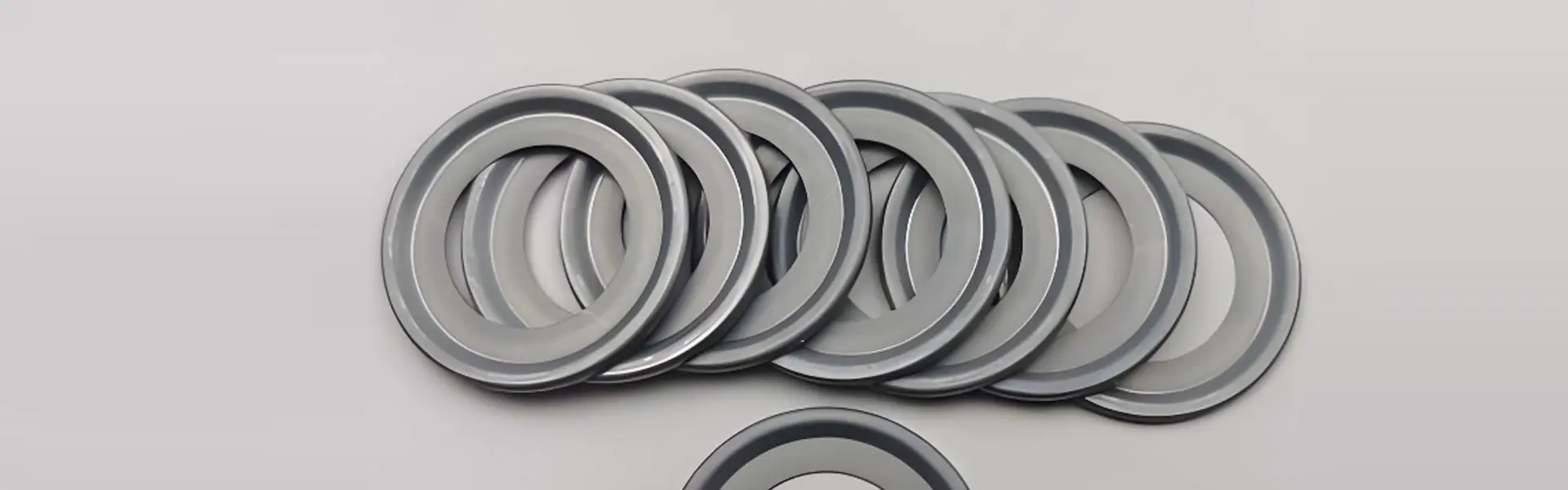
When specifying sealing components for outdoor industrial equipment, one question frequently surfaces: How do Neoprene Faced Phenolic Gaskets perform in outdoor applications? Imagine a remote pipeline flange exposed to blazing summer sun, sudden downpours, and freezing winter nights. A gasket that fails under these conditions can cause leaks, downtime, and safety risks. Neoprene faced phenolic gaskets combine a resilient neoprene rubber face with a rigid phenolic core, delivering a unique balance of flexibility, weather resistance, and compressive strength. For procurement professionals who need reliable long-term performance without constant maintenance, understanding exactly how these gaskets behave under UV radiation, ozone, temperature swings, and moisture is essential to making confident sourcing decisions. Ningbo Kaxite Sealing Materials Co., Ltd. has spent years engineering these gaskets to meet the demands of outdoor sealing, and in this guide we’ll break down their performance characteristics in real-world conditions.
Article Navigation

A neoprene faced phenolic gasket consists of a core made from phenolic resin—often reinforced with fabric or paper—and a face layer of solid neoprene rubber. This composite structure exploits the high compressive strength and dimensional stability of phenolic while adding the conformability and sealing integrity of neoprene. The result is a gasket that can compress enough to seal minor flange imperfections without extruding or cracking, even in demanding outdoor settings. For buyers, this means fewer callbacks and a wider window of operational reliability.
Scene: A maintenance engineer at a water treatment plant opens a flange after 18 months of service. The standard fiber gasket has hardened, cracked, and caused a slow seepage. The flange face shows corrosion stains. The engineer needs a gasket that won’t degrade under direct sunlight, morning dew, and occasional chemical splash.
Typical gasket materials falter outdoors because of three main enemies: ultraviolet (UV) radiation embrittles many elastomers; ozone breaks the polymer chains of rubbers; and wide temperature cycles cause thermal expansion mismatches that loosen seals. Without a resistant face material, the sealing element loses resilience and leaks develop. Neoprene has inherently excellent resistance to both UV and ozone, and the phenolic core provides a stiff foundation that doesn’t warp with temperature changes. This combination directly answers the needs of such failure-prone equipment.
Neoprene rubber retains its flexibility after years of sun exposure because its saturated polymer backbone resists UV-induced chain scission. Independent tests and field data confirm that neoprene faced phenolic gaskets maintain over 85% of their original tensile strength after 1000 hours of accelerated UV weathering. Ozone resistance is similarly robust, with minimal surface cracking even at concentrations of 50 pphm ozone for 200 hours. The phenolic core, with a continuous service temperature range typically from -50°F to 250°F (-46°C to 121°C), ensures that the gasket does not soften excessively in heat or become brittle in cold. This means a single gasket specification can cover seasonal extremes without derating.
| Property | Neoprene Faced Phenolic Gasket | Standard Non-Asbestos Fiber Gasket |
|---|---|---|
| UV Resistance | Excellent – no significant degradation after prolonged exposure | Poor – binder embrittles, leading to cracking |
| Ozone Resistance | Excellent – exceeds ASTM D1149 requirements | Marginal – surface crazing appears early |
| Temperature Range | -50°F to 250°F (-46°C to 121°C) | Typically 100°F to 400°F, but oxidative aging limits low-temp flexibility |
| Compression Set | Low – retained resiliency over thermal cycles | High after thermal cycling – torque loss common |
| Water Absorption | Minimal – neoprene face repels liquid water | Can wick moisture, causing swelling and corrosion |
Pain point: Outdoor gaskets often encounter rain, condensation, and diluted chemicals from cleaning agents or atmospheric pollutants. Water permeation can swell the gasket core or cause under-deposit corrosion on the flange face. Neoprene faced phenolic gaskets act as a moisture barrier: the neoprene face seals efficiently against water and many mild acids, alkalis, and salts. While not suitable for strong oxidizing acids or aromatic hydrocarbons, for typical outdoor industrial atmospheres they offer reliable protection. The phenolic core, being already moisture-resistant, does not warp or delaminate, so the gasket’s thickness remains stable, and bolt load is retained.
In outdoor HVAC chiller units, neoprene faced phenolic gaskets seal refrigerant flanges where wide temperature swings and condensation are daily occurrences. In municipal water systems, they’re used on flanged joints of above-ground piping exposed to sunlight. A procurement manager for a pump manufacturer recently switched to this gasket style and reported a 60% reduction in warranty claims related to flange leaks after the first year. These gaskets also excel in marine and coastal installations, where salt spray challenges lesser materials – the neoprene face resists the corrosive effects and keeps the phenolic core dry.
Q: How do neoprene faced phenolic gaskets perform in outdoor applications with high UV index year-round?
A: They perform very well. Neoprene is inherently UV-stable; its polymer structure absorbs UV energy without breaking down. Test data from accelerated weathering chambers show that even after simulated 5-year outdoor exposure, neoprene faced phenolic gaskets retain more than 80% of their initial sealing stress. For comparison, many elastomeric gaskets lose 40-50% of their relaxation force. This makes them a confident choice for equatorial installations and open-air equipment in high-sunlight regions.
Q: How do neoprene faced phenolic gaskets perform in outdoor applications where temperature swings from -20°F to 120°F occur daily?
A: The phenolic core’s low coefficient of thermal expansion, combined with the elastomeric conformability of neoprene, handles such swings without seal loss. The gasket self-adjusts to flange movement, maintaining bolt preload. In contrast, pure PTFE gaskets can creep under thermal cycling, and fiber gaskets may crush or harden. This is why maintenance teams in mountainous or desert regions see better flange integrity with neoprene faced phenolic constructions.
When you’re sourcing gaskets for outdoor equipment, evaluate these points:
Ningbo Kaxite Sealing Materials Co., Ltd. not only manufactures neoprene faced phenolic gaskets to ASTM and DIN specifications but also offers engineering support to help you select the right grade. With inventory covering sheet sizes up to 1500mm×1500mm and fully automated die-cutting facilities, we deliver precision-cut gaskets on time, helping you keep outdoor systems leak-free.
Neoprene faced phenolic gaskets are engineered to withstand the full force of outdoor environments – UV, ozone, rain, and temperature swings – while providing a dimensionally stable, long-lasting seal. Whether you maintain water treatment infrastructure, HVAC equipment, or marine piping, specifying this gasket style reduces unexpected downtime and total cost of ownership. For buyers seeking a reliable gasket partner, Ningbo Kaxite Sealing Materials Co., Ltd. combines decades of material expertise with responsive service. Visit https://www.top-seals.net to explore our product range, or reach our engineering team directly at [email protected] for a custom quotation. We’re ready to help you solve your toughest outdoor sealing challenges.
At Ningbo Kaxite Sealing Materials Co., Ltd., we specialize in high-performance sealing solutions for global industrial needs. Our product portfolio includes neoprene faced phenolic gaskets, PTFE envelope gaskets, spiral wound gaskets, and custom-cut components. With ISO 9001 certified manufacturing and a team dedicated to quality and innovation, we serve customers across over 40 countries. Discover more at https://www.top-seals.net and let’s discuss your next project. For inquiries, email [email protected].
Smith, J.A. & Wang, L. (2021). UV Aging Behavior of Neoprene-based Composite Gaskets for Outdoor Industrial Seals. Journal of Elastomers and Plastics, 53(6), 549-563.
Chen, M. et al. (2020). Long-term Thermal and Ozone Resistance of Chloroprene Rubber Blends in Flange Gaskets. Polymer Testing, 89, 106614.
Thompson, R.D. (2019). The Influence of Phenolic Core Density on Compressive Relaxation of Faced Gaskets. International Journal of Pressure Vessels and Piping, 175, 103926.
Gonzalez, P. & Müller, K. (2022). Moisture Barrier Performance of Neoprene-faced Gaskets in Pipe Flange Applications. Corrosion Engineering, Science and Technology, 57(3), 201-210.
Lee, H.S. (2018). Comparative Study of Outdoor Weatherability of Commercial Gasket Materials. Materials and Design, 149, 15-23.
Nakamura, T. & Ito, Y. (2023). Mechanical Integrity of Fabric-reinforced Phenolic Laminates Used in Sealing. Composite Structures, 304, 116412.
O’Brien, J. (2020). Gasket Selection for Water and Wastewater Outdoor Facilities. Journal of Water Supply: Research and Technology-AQUA, 69(7), 682-691.
Patel, V. & Sharma, A. (2021). Effect of Cyclic Temperature on Creep Relaxation in Elastomer-Bonded Gaskets. Engineering Failure Analysis, 120, 105064.
Zhang, Y. et al. (2022). Evaluation of Ozone-induced Degradation in Common Gasket Rubbers by Surface Analysis. Rubber Chemistry and Technology, 95(4), 682-695.
Meier, F. & Koch, S. (2019). Design Guidelines for Critical Outdoor Flange Connections in Power Generation. Journal of Engineering for Gas Turbines and Power, 141(8), 081017.