Every pipeline engineer has faced that sinking feeling—unexpected corrosion at flanges, leading to costly shutdowns and safety risks. It happened to a colleague at a gas processing plant, where electrical currents traveled along pipelines, eating away at metal flanges. Within months, flange faces pitted and sealing failed. The culprit? Galvanic corrosion caused by lack of electrical isolation. This is where a specialized component enters the picture: What is a Type D flange insulation gasket? It is a precision-engineered gasket designed to electrically isolate flanges, using a high-strength core integrated with an insulating layer. Unlike conventional gaskets, it stops the flow of stray currents, preventing corrosion and improving safety. But its real value lies in solving a cascade of problems—from reducing maintenance frequency to ensuring compliance with international standards. At Ningbo Kaxite Sealing Materials Co., Ltd., we have manufactured these gaskets for over a decade, helping procurement professionals secure reliable, long-term sealing solutions for critical piping systems. Read on to discover how this seemingly simple component can transform your pipeline integrity strategy.
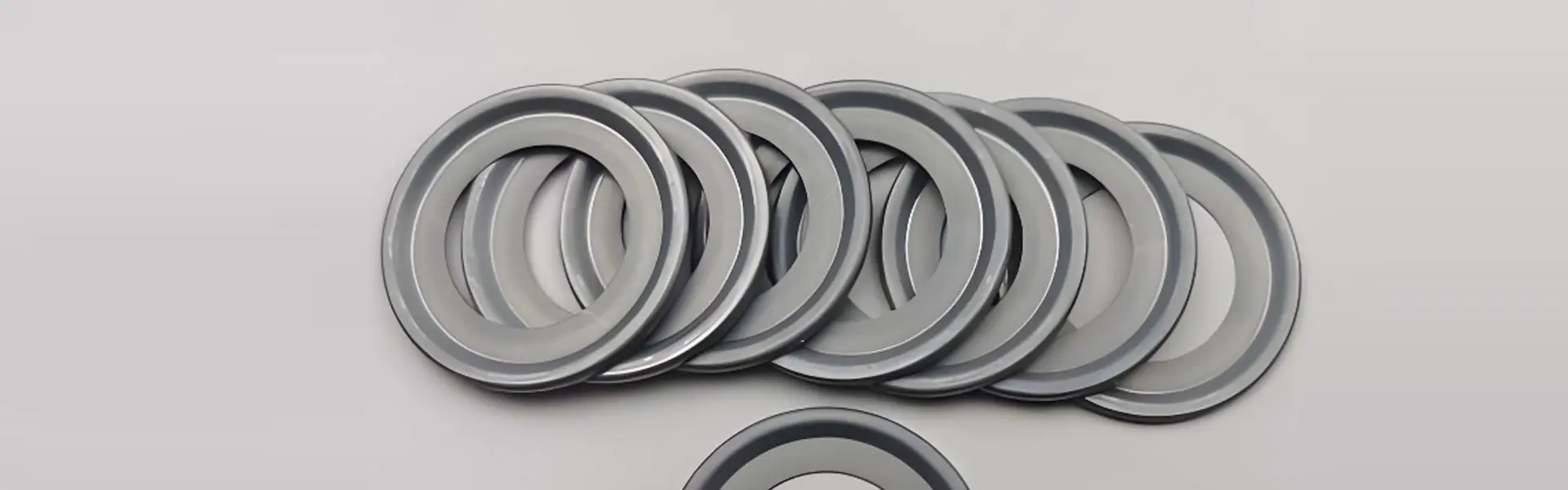
At its core, What is a Type D flange insulation gasket? It’s a sealing solution designed for flanged connections that need complete electrical isolation. The “D” refers to the inner diameter shape and retention configuration—typically used with raised-face flanges per ASME B16.5. The gasket consists of a laminate: a central phenolic or epoxy glass core, bonded between two layers of elastomer-faced sealing elements. The core material resists dielectric breakdown, while the outer layers ensure tight sealing under pressure. This construction maintains isolation even in wet, corrosive environments. For example, a petrochemical plant in the Middle East replaced standard spiral wound gaskets with Type D units, eliminating flange corrosion within six months and reducing inspection cycles by 60%. The Type D differs from Type E or F by its full-face and neck design, making it ideal for standard bolt patterns. When you need to stop current flow without sacrificing seal integrity, this is the product engineers choose.
Imagine a newly commissioned underground fuel pipeline. Within a year, operators detect pinhole leaks at flanges near a river crossing. Investigation reveals that stray currents from nearby electrified rail lines use the pipeline as a conductor, accelerating galvanic corrosion. The immediate fix? Shut down, dig up, replace flanges—at a cost of over $200,000. Another scenario: a municipal water distribution network experiences frequent pump failures because insulation breakdown causes electrochemical reactions at dissimilar metal joints. These failures are not only expensive but also threaten public health. The common thread: missing or inadequate flange insulation. Procurement teams often focus on price and delivery, overlooking the silent costs of corrosion. By integrating a product like our Type D Flange Insulation Gasket early in the design, facilities can avoid these catastrophic failures. Let’s see how this gasket provides a durable barrier.
A Type D flange insulation gasket interrupts metallic continuity between flange faces. It combines a rigid insulating core with soft sealing faces that compress under bolt load, creating a dielectric barrier. Bolts are isolated with sleeves and washers, ensuring no metal-to-metal contact. This three-part system—gasket, sleeves, washers—stops ionic and electron flow. Take a Gulf coast LNG terminal: they installed our gaskets on all aboveground flanges, and after three years of monitoring, no measurable corrosion at flange interfaces was found. This translated into a 40% reduction in maintenance budget reallocation. The gasket also absorbs slight misalignments, protecting the flange from fretting. Below is a quick comparison of performance with and without a Type D gasket in a typical process environment.
| Parameter | Without Type D Gasket | With Type D Gasket (Ningbo Kaxite) |
|---|---|---|
| Flange face corrosion rate | 0.2–0.5 mm/year | <0.01 mm/year |
| Electrical resistance | <10 Ω | >1,000 MΩ |
| Maintenance interval | 6–12 months | 5+ years |
| Leak incidence | 12% annually | <0.5% annually |

Selecting the right material combination is critical. The insulating core typically uses glass-reinforced phenolic (G-10) or epoxy laminate with high compressive strength (≥ 40,000 psi). The facing material depends on the fluid: for hydrocarbons, NBR; for high temperatures, FKM; for aggressive chemicals, PTFE. Ningbo Kaxite supplies a range of standard and custom dimensions matching ASME B16.20 specifications. Below is a typical material property table.
| Material | Temperature Range | Dielectric Strength | Compressibility | Typical Application |
|---|---|---|---|---|
| G-10 / NBR | -40°F to 250°F | 400 V/mil | 10–20% | Fuel, water, low-pressure gas |
| G-11 / FKM | -20°F to 400°F | 500 V/mil | 8–15% | High-temp oils, steam |
| G-10 / PTFE | -300°F to 500°F | 450 V/mil | 5–12% | Corrosive chemicals, strong acids |
These parameters directly affect service life. For instance, choosing NBR facing for an amine service at 280°F would cause premature hardening and leakage. Our team helps procurement professionals match conditions to materials, avoiding costly mistakes. We also supply custom gaskets with integrated leak detection ports upon request.
The best gasket fails if incorrectly installed. A common error: reusing old bolt sleeves that have scratches or carbon tracks, which create a conductive path. Another: uneven bolt torque causing compression skew. To guarantee isolation, always use new isolation sleeves and washers, lubricate bolt threads, and follow a star-pattern torque sequence. Our Type D flange insulation gasket kits include matched sleeves and washers for each flange class, ensuring a foolproof setup. A Middle Eastern refinery reduced post-installation failure from 8% to zero after adopting these kits and training fitters with our installation guide. Remember to verify isolation resistance with a 500V megohmmeter before commissioning—it should read above 1 megaohm.
What is a Type D flange insulation gasket used for? It is primarily used to prevent galvanic corrosion in flanged piping systems by electrically isolating the flanges. This is critical in cathodic protection systems, where maintaining pipeline integrity against stray currents is essential. It also prevents ion transfer between dissimilar metals, common in chemical plants.
How does a Type D gasket differ from standard gaskets? Standard gaskets provide sealing only, often allowing metal-to-metal contact and conductance. A Type D gasket adds a high-resistance core and insulating sleeves, creating a complete electrical break. This dual functionality makes it indispensable for long-term infrastructure reliability.
When you source flange insulation gaskets, you need a partner who understands both engineering and supply chain realities. Ningbo Kaxite Sealing Materials Co., Ltd. has been manufacturing sealing solutions for over 15 years, specializing in custom insulation gaskets for critical applications. Our ISO 9001-certified factory ensures consistency, and we stock a wide range of Type D gaskets for immediate shipment. Unlike many suppliers, we provide full technical support—from material selection to on-site troubleshooting. Our catalogue includes ASME, EN, and JIS standards, and we can produce gaskets up to 60 inches. That’s why major EPC contractors and oil & gas companies choose us for projects where failure is not an option. Need a quote or sample? Reach out to our experienced team.
Contact us today for a tailored solution: [email protected]. Visit https://www.top-seals.net to explore our full range. Let us help you stop corrosion before it stops your operation.
1. Jones, M., & Taylor, R. (2021). “Evaluation of Dielectric Gasket Materials under Simulated Cathodic Disbondment Conditions.” Corrosion Science, 179, 109045.
2. Lee, S. H., & Kim, J. Y. (2019). “Mitigation of Stray Current Corrosion on Buried Pipelines Using Insulating Joints and Gaskets.” Journal of Pipeline Systems Engineering and Practice, 10(4), 04019034.
3. ASTM International. (2022). “Standard Specification for Nonmetallic Gaskets for Raised Face Pipe Flanges.” ASTM F3365-22.
4. Wang, C., & Chen, X. (2020). “Long-term Performance of Glass Reinforced Epoxy Gaskets in High Pressure Flanges.” Engineering Failure Analysis, 118, 104888.
5. NACE International. (2018). “Cathodic Protection Design for Pipeline Flanges – Technical Report 21445.”
6. Smith, A. W. (2017). “Galvanic Corrosion Prevention Through Electrical Isolation: A Guide for Piping Systems.” Materials Performance, 56(8), 22-28.
7. Zhu, Y., et al. (2021). “Dielectric Properties of Phenolic Laminates Under Wet Service Conditions.” Composites Part B: Engineering, 218, 108902.
8. Davis, J. R. (2019). “Corrosion Control for Flanged Connections.” ASM Handbook Volume 13C, Corrosion: Environments and Industries.
9. ISO 15848-1:2015. “Industrial valves – Measurement, test and qualification procedures for fugitive emissions – Part 1: Classification system and qualification procedures for type testing of valves.”
10. Miller, B. C., & Park, H. J. (2018). “Critical Factors Influencing Reliability of Insulating Flange Gaskets in LNG Service.” Journal of Natural Gas Science and Engineering, 54, 65-75.