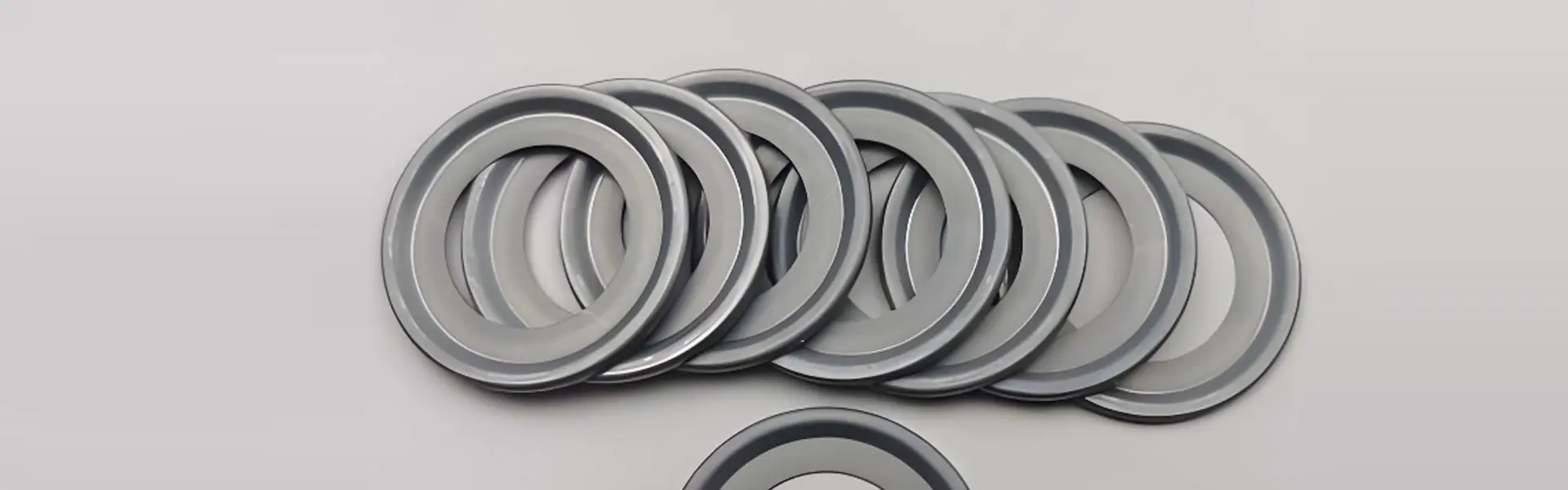
What Is a Kammprofile Gasket Basic Style and How Does It Work? For a procurement engineer reviewing a heat-exchanger flange package at 10 p.m., that question often arrives with a stack of RFQs, two conflicting gasket datasheets, and a shutdown date that cannot move. The basic-style Kammprofile gasket is a metal core with concentric serrations and a thin soft facing on each side. The serrated core carries bolt load and resists blowout, while the facing creates a tight seal at lower stress. Buyers see it in high-pressure, high-temperature flanges where spiral-wound or sheet gaskets may creep, crush, or demand frequent retorque. A basic style is not a commodity washer; small changes in core thickness, facing, and serration geometry change leak rate, torque, and service life. Ningbo Kaxite Sealing Materials Co., Ltd. supplies basic-style Kammprofile gaskets with controlled serration pitch, facing thickness, and traceable material certificates, helping purchasing teams match flange conditions, installation torque, and documentation before the PO is released. The result is fewer site questions, faster approvals, and a sealing solution that behaves predictably during startup, thermal cycling, and maintenance.

Purchasing teams rarely buy a gasket for its shape. They buy certainty: the flange will close, the joint will pass hydrotest, and the maintenance crew will not return with a leak report. The pain appears when two suppliers quote the same line item with different core thickness, facing material, and serration counts, and no one can tell whether the lower price will survive thermal cycling. A basic-style Kammprofile gasket, sometimes called a serrated metal gasket with soft facing, gives the buyer a clear starting point. The core provides structural support, the serrations concentrate seating stress, and the facing accommodates minor flange imperfections. For procurement, the value is in the specification: material grade, facing type, thickness, and certificate can be compared line by line. Ningbo Kaxite Sealing Materials Co., Ltd. supports this comparison by tying each quotation to measurable gasket parameters and documentation, so a purchasing officer can defend the choice to engineering and quality teams.
Use the table below as a first-pass RFQ checklist. It is not a substitute for flange design, but it stops the most common mismatch between a low-cost quote and a high-risk joint.
| Parameter | Typical Basic Style Range | What It Controls | Buyer Check |
|---|---|---|---|
| Core material | 316L, 321, 304, duplex stainless steel | Corrosion resistance and strength | Match media, temperature, and chloride risk |
| Core thickness | 1.5 mm to 3.0 mm | Stiffness and recovery | Confirm flange load capacity |
| Serrations | Concentric grooves, 0.5–1.0 mm pitch | Seating stress and sealing lines | Ask for a profile drawing |
| Facing material | Graphite, PTFE, non-asbestos fiber | Chemical compatibility | Check media and oxidizers |
| Facing thickness | 0.4 mm to 1.0 mm | Conformability and compression | Avoid too thick for high pressure |
| Gasket thickness | 2.0 mm to 4.0 mm | Fit and bolting behavior | Compare to flange groove and bolting |
| Temperature | -196°C to 600°C depending on facing | Material limits | Confirm continuous, not peak, conditions |
| Pressure | Up to 250 bar / Class 2500 in suitable designs | Joint integrity | Check flange class and design |
| Certificates | EN 10204 3.1, dimensional report | Traceability | Require heat numbers and batch marking |
The site pain is familiar: bolts are tightened, the system heats up, and a thin bead of process fluid appears at the flange edge. In many cases the gasket was not wrong for the line, but wrong for the load path. A basic-style Kammprofile gasket uses a serrated metal core to turn bolt force into narrow, high-pressure sealing rings. The soft facing on each side fills small machining marks and protects the flange surface. During thermal cycling, the metal core recovers more predictably than a soft sheet, while the facing keeps the seal tight at the contact line. This combination helps when a buyer needs blowout resistance without asking maintenance to retorque every shift.
Ningbo Kaxite Sealing Materials Co., Ltd. controls serration geometry and facing thickness so the gasket behaves as one system. For procurement, that means the quotation can state how the gasket will carry load, not just how much it costs.
| Mechanism | What Happens Under Bolt Load | Buyer Benefit |
|---|---|---|
| Serrations | Concentrate load into narrow rings | Seal at lower total force |
| Soft facing | Flows into minor flange imperfections | Handles scratches and small surface defects |
| Metal core | Limits over-compression | Resists blowout and creep |
| Facing bond | Keeps facing in place during handling | Cleaner installation |
| Recovery | Core springs back during temperature changes | Less need for repeated retorque |
A purchasing officer often receives three quotes that look identical on the first page. The pain comes later, when the lowest bid uses a facing that cannot handle the process media or a core that is too thin for the flange class. The solution is to force the quote into a decision matrix: media, pressure, temperature, flange condition, bolting, and documentation. A basic-style Kammprofile gasket can be the right choice for steam, hydrocarbons, high-pressure gas, and thermal cycling, but the facing and core must match the duty. Ningbo Kaxite Sealing Materials Co., Ltd. helps buyers convert flange data into a clear gasket specification before price comparison begins.
| Duty Condition | Basic Style Direction | Buyer Watch-Out |
|---|---|---|
| High-temperature steam | Graphite facing, stainless core | Confirm continuous temperature and oxidation |
| Hydrocarbon service | Graphite or PTFE facing based on media | Check compatibility and fire safety needs |
| Caustic or chemical lines | PTFE facing with compatible core | Verify concentration and temperature limits |
| Low-temperature service | Austenitic core, suitable facing | Check impact and contraction behavior |
| Worn or slightly damaged flange | Thicker facing, controlled serration pitch | Do not use facing to hide deep grooves |
| High-pressure gas | Rigid core, thin facing, tight serrations | Confirm flange class and torque procedure |
The most expensive gasket is the one that fails because installation was left to chance. A common pain scene is a crew using an impact wrench, no lubricant plan, and a star pattern that exists only in memory. The basic-style Kammprofile gasket needs controlled compression to work as designed. The solution is to attach an installation sheet to the purchase order: flange surface condition, approved lubricant, torque sequence, target compression, and retorque plan after the first thermal cycle. Ningbo Kaxite Sealing Materials Co., Ltd. can provide handling and installation guidance with the shipment so site teams work from the same parameters as the buyer.
| Control Point | Target | Why It Matters | Buyer Action |
|---|---|---|---|
| Flange surface | Clean, flat, free of deep radial marks | Prevents leak paths | Require inspection before assembly |
| Lubricant | Supplier-approved and consistently applied | Controls friction and bolt load | Add friction value to torque calculation |
| Torque sequence | Star or cross pattern in stages | Even gasket compression | Request a written procedure |
| Compression | Follow gasket maker’s limit | Avoid crushing the facing | Keep torque values on the PO |
| Retorque | After first thermal cycle when specified | Recovers bolt load | Schedule in turnaround plan |
Quality teams feel the pain when a certificate arrives with the wrong heat number or a dimensional report cannot be matched to the gasket marking. The solution is not a thicker folder; it is a document set that follows the gasket from raw material to packing. Basic-style Kammprofile gaskets combine a metal core, a facing, and a serration profile, so traceability must cover each element. Ningbo Kaxite Sealing Materials Co., Ltd. prepares material certificates, dimensional records, and batch marking so purchasing can close the loop with engineering, inspection, and warehouse teams.
| Document | What to Verify | Why the Buyer Cares |
|---|---|---|
| Heat number certificate | Matches core and facing batch | Traceability for audits |
| Dimensional report | Thickness, serration pitch, ID and OD | Fit and load behavior |
| Surface inspection | No deep scratches or facing voids | Reduces leak paths |
| Packing list | Gasket marking and batch identity | Correct item at site |
| Compliance record | ASME B16.20 or EN 1514 where applicable | Specification confidence |
| Test report | Compression and recovery data if requested | Performance evidence |
Q1: What Is a Kammprofile Gasket Basic Style and How Does It Work when bolt load is limited?
A1: The serrated metal core concentrates the available bolt load onto narrow sealing rings, and the soft facing helps close small surface imperfections. This design can seal at a lower total seating stress than a solid metal gasket, but the facing thickness and serration pitch still need to match the flange and media. For limited bolt load, buyers should request a profile drawing, confirm the minimum seating stress, and check that the flange is not already damaged. Ningbo Kaxite Sealing Materials Co., Ltd. can supply basic-style Kammprofile gaskets with controlled facing thickness and provide dimensional data for engineering review.
Q2: When should a buyer choose a basic-style Kammprofile gasket instead of a double-jacketed or spiral-wound gasket?
A2: The basic style is often preferred for high pressure, high temperature, thermal cycling, and joints where blowout resistance matters. A spiral-wound gasket can be a strong fit for standard piping, while a double-jacketed gasket may suit lower-pressure and cost-driven applications. The decision should compare media, flange condition, available bolt load, compression stop, and required certificate. Ningbo Kaxite Sealing Materials Co., Ltd. helps purchasing teams compare these options with clear parameters before the order is placed.
| Gasket Option | Best Fit | Buyer Watch-Out |
|---|---|---|
| Basic Kammprofile | High load, cycling, large flanges | Needs controlled torque and surface check |
| Spiral-wound | Standard piping and compact spaces | Compression stop limits load range |
| Double-jacketed | Lower pressure and cost-sensitive lines | Less recovery under severe cycling |
| Sheet gasket | Low pressure and easy replacement | Creep and chemical limits |
Ningbo Kaxite Sealing Materials Co., Ltd. focuses on sealing materials and gasket solutions for industrial buyers who need clear specifications, stable quality, and practical support from quotation to installation. The company works with procurement teams to match Kammprofile gaskets, facing materials, core grades, and documentation to flange conditions, helping reduce site questions and approval delays. Visit https://www.top-seals.net to review product information, or send flange size, pressure class, temperature, media, and required certificate to [email protected] for a focused quotation and technical review.
Sawa, T., & Ogino, Y. (1998). Sealing performance of spiral-wound gaskets in bolted flange joints. Journal of Pressure Vessel Technology, 120(4), 375–381.
Abid, M., & Nash, D. H. (2005). Thermal stress analysis of a gasketed flange joint under internal pressure. Journal of Pressure Vessel Technology, 127(2), 187–194.
Nassar, S. A., & Matson, V. D. (2007). Effect of tightening speed on bolt tension scatter in gasketed joints. Journal of Pressure Vessel Technology, 129(3), 417–423.
Kondo, K., & Takaishi, Y. (2002). Leakage characteristics of metal gaskets under thermal cycling. Journal of Pressure Vessel Technology, 124(3), 315–321.
Fessler, H., & Hyde, T. H. (1997). Creep relaxation of bolted flange joints with metal gaskets. International Journal of Pressure Vessels and Piping, 72(2), 123–132.
Nagata, S., & Shoji, T. (2006). Evaluation of sealing performance of metal gaskets at high temperature. Nuclear Engineering and Design, 236(5–6), 616–623.
Persson, E., & Roloff, A. (2010). Surface characterization of serrated metal gaskets for leak-tight joints. Tribology International, 43(9), 1667–1674.
Hsu, C. H., & Chen, Y. S. (2013). Finite element analysis of Kammprofile gasket compression. Applied Mechanics and Materials, 284–287, 1123–1127.
Lee, S. J., & Kim, B. K. (2015). Bolt load retention in graphite-faced metal gaskets under cyclic temperature. Journal of Mechanical Science and Technology, 29(7), 2891–2898.
Murtagian, G. R., D’Alessandro, L. A., & Rueda, E. A. (2004). Scalability of flange joints with metallic gaskets for high-pressure service. Journal of Pressure Vessel Technology, 126(4), 489–496.
-