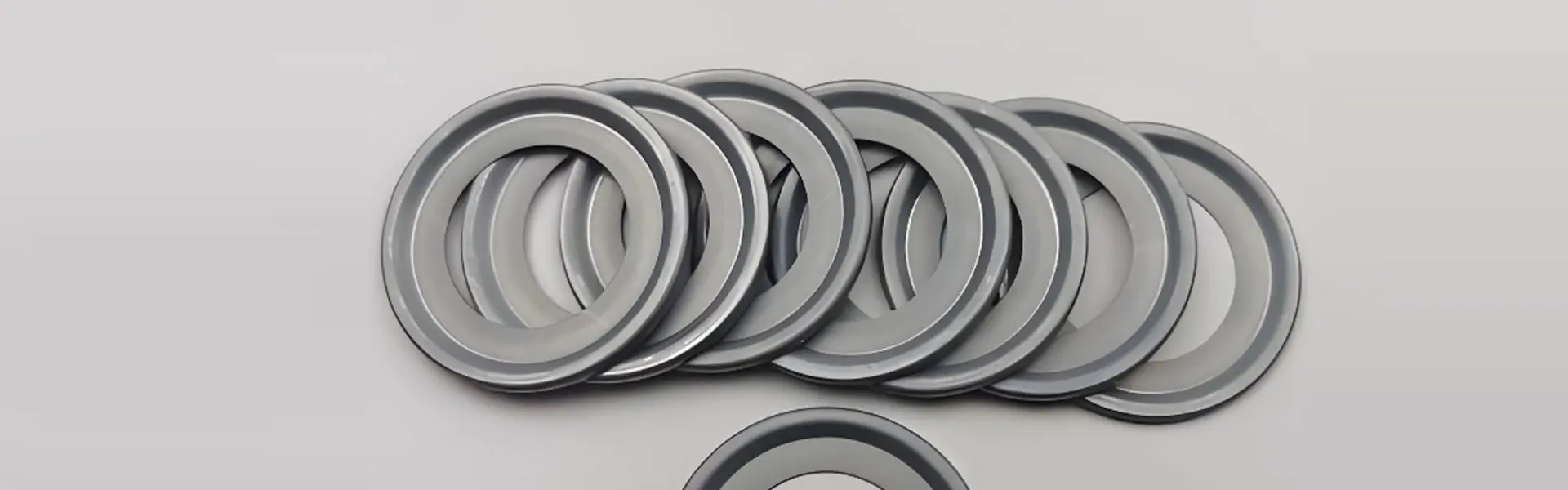
In the demanding world of industrial sealing, material selection is the cornerstone of reliability, efficiency, and safety. Where standard elastomers fail, high-performance polymers rise to the challenge. PTFE (Polytetrafluoroethylene) and PEEK (Polyetheretherketone) seals represent the pinnacle of sealing technology, engineered for applications where extreme temperatures, aggressive chemicals, and rigorous mechanical stress are the norm. At Kaxite, we specialize in manufacturing precision-engineered PTFE and PEEK seals that meet the most stringent requirements across global industries.
Understanding the unique properties and optimal applications of these materials is crucial for engineers and procurement specialists. This guide provides a comprehensive technical overview, detailed parameter comparisons, and answers to common engineering questions to inform your specification process.
PTFE and PEEK, while both high-performance thermoplastics, offer distinct property profiles that make them suitable for different challenges.
The following table provides a direct comparison of critical physical and mechanical properties for virgin (unfilled) PTFE and PEEK, based on standard ASTM test methods. Kaxite seals are available in both virgin and compounded formulations (e.g., glass-filled, carbon-filled, graphite-filled) to enhance specific properties.
| Property | Test Method | PTFE (Virgin) | PEEK (Virgin) | Notes & Implications for Sealing |
|---|---|---|---|---|
| Density (g/cm³) | ASTM D792 | 2.14 - 2.20 | 1.30 - 1.32 | PEEK is significantly lighter, beneficial for weight-sensitive applications. |
| Tensile Strength (MPa) | ASTM D638 | 20 - 35 | 90 - 100 | PEEK offers 3-5x greater strength, ideal for high-pressure sealing. |
| Elongation at Break (%) | ASTM D638 | 200 - 400 | 30 - 50 | PTFE is much more ductile and conformable. |
| Continuous Service Temp. | - | -200°C to +260°C | up to 250°C | PTFE has a wider low-end range; PEEK excels at sustained high heat. |
| Coefficient of Friction | ASTM D1894 | 0.05 - 0.10 | 0.30 - 0.40 | PTFE is inherently slipperier, reducing breakout torque and wear. |
| Water Absorption (24h, %) | ASTM D570 | < 0.01 | ~0.10 - 0.50 | Both are excellent; PTFE is virtually non-absorbent. |
Kaxite manufactures a comprehensive line of PTFE and PEEK seals in various forms to suit diverse applications. Our products are machined from high-quality, traceable polymer billets or rods to ensure consistency and performance.
| Industry | Primary Applications | Recommended Material (Typical) |
|---|---|---|
| Oil & Gas (Upstream/Downstream) | Wellhead equipment, Christmas tree components, valve seals, compressor rings, exposure to H2S, CO2, and hydrocarbons. | PEEK (high strength/heat), filled PTFE |
| Chemical Processing | Pump seals, reactor agitator seals, pipe gaskets, lining for vessels handling acids, alkalis, and solvents. | Virgin PTFE (ultimate chemical inertness) |
| Aerospace & Defense | Fuel system components, hydraulic actuators, engine peripherals, requiring lightweight, high-strength, and fire-resistant materials. | PEEK, High-performance PTFE compounds |
| Semiconductor Manufacturing | Wafer processing equipment, CVD chambers, gas delivery systems, requiring ultra-high purity and low outgassing. | High-purity Virgin PTFE, special-grade PEEK |
| Food, Beverage & Pharmaceutical | Sanitary fittings, pump seals in CIP/SIP processes, filling equipment, compliance with regulatory standards. | FDA-compliant Virgin PTFE, USP Class VI PEEK |
A: PTFE should be your primary choice when the dominant challenges are extreme chemical aggression, the need for the absolute lowest friction, or applications requiring FDA compliance for direct food or drug contact. Its unparalleled chemical inertness makes it the only option for many aggressive media. It is also preferred for static seals or low-pressure dynamic seals where its cold flow tendency can be managed.
A: Specify PEEK when the application involves high mechanical loads, continuous high temperatures (above 200°C/392°F), significant abrasion, or high-pressure dynamic sealing. Its superior strength, stiffness, and resistance to extrusion and creep make it ideal for demanding valve seats, compressor rings, and downhole tool components. It is also excellent for applications involving high-pressure steam or hot water.
A: Virgin polymers are often compounded with fillers to enhance specific properties. Common fillers include glass fibers (improves compressive strength and wear resistance), carbon/graphite (improves thermal conductivity, wear, and reduces friction), and bronze (improves thermal conductivity and load-bearing capacity). Kaxite offers a range of filled compounds to optimize seal performance for specific operating conditions, such as reducing wear in rotary shaft applications or improving extrusion resistance in high-pressure gaps.
A: PTFE is susceptible to cold flow under sustained load. Design strategies to mitigate this include:
A: Yes, both materials are suitable for vacuum service, but with important considerations. High-purity, virgin PTFE is excellent for its very low outgassing rates once properly degassed. PEEK, with its higher temperature capability and lower permeation, is often chosen for bakeable UHV systems. Kaxite can supply materials certified for low outgassing (meeting ASTM E595 standards) and can machine components to the precise surface finishes required to minimize virtual leaks.
A: While robust in service, proper handling ensures optimal performance:
A: Absolutely. Kaxite's core expertise lies in developing custom-engineered sealing solutions. Our engineering team can work with your specifications to design and manufacture seals in non-standard sizes, complex cross-sectional profiles, or from custom material formulations. We can also provide material test reports, including chemical compatibility data, mechanical property verification, and performance testing under simulated service conditions to validate seal design prior to full-scale deployment.