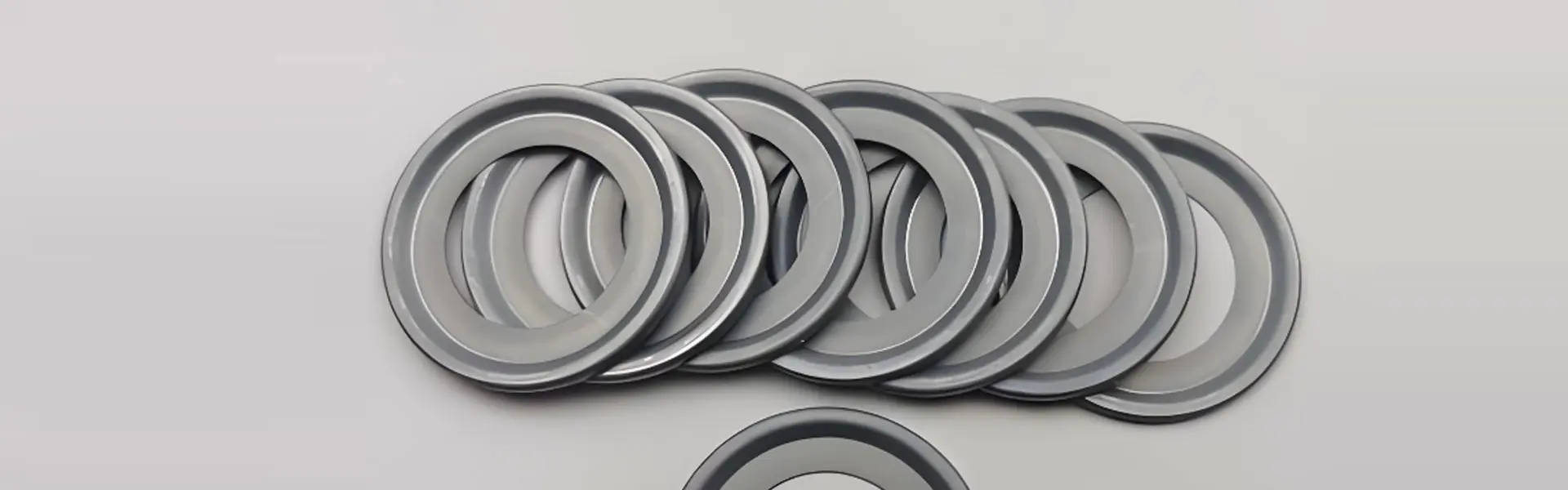
How are custom Rubber Gaskets manufactured? It's a question every procurement specialist sourcing for a critical project asks. Imagine a new product launch delayed because a standard gasket fails under extreme pressure, causing leaks and costly production downtime. This frustrating scenario is all too common when off-the-shelf components can't meet unique application demands. The answer lies in a precise, multi-stage custom manufacturing process designed to translate your specific requirements—from chemical resistance to temperature extremes—into a perfect sealing solution. This ensures reliability, longevity, and cost-effectiveness for your operations. For over two decades, Ningbo Kaxite Sealing Materials Co., Ltd. has specialized in transforming these complex needs into high-performance, custom-engineered rubber gaskets.
Article Outline:
You're procuring gaskets for a chemical processing plant. The existing seals are swelling and degrading rapidly, leading to frequent replacements, safety concerns, and unplanned maintenance halts. Standard EPDM or Nitrile gaskets simply can't withstand the aggressive solvents. This material mismatch is a major operational headache.
The solution begins with expert material selection. Custom manufacturing isn't just about shape; it's about chemistry. The process starts with a deep analysis of the operating environment. Engineers at Ningbo Kaxite Sealing Materials Co., Ltd. evaluate factors like fluid type, concentration, temperature range, and pressure. Based on this, they recommend a specialized compound—be it Fluorocarbon (FKM/Viton) for harsh chemicals, Silicone for extreme temperatures, or a proprietary blended formulation. This ensures the gasket's very composition is engineered for resilience.

Below are key parameters considered during the material selection phase for custom gaskets:
| Parameter | Consideration | Common Options |
|---|---|---|
| Chemical Resistance | Compatibility with acids, oils, fuels, solvents | FKM, FFKM, PTFE-coated rubber |
| Temperature Range | Continuous operating min/max temperatures | Silicone (-60°C to 230°C), FKM (-20°C to 200°C) |
| Pressure & Compression Set | Ability to maintain seal under load | High-durometer compounds, Fabric-reinforced sheets |
| Industry Standards | Compliance with FDA, NSF, UL, or MIL Specs | Specific grade certifications |
Another common pain point is receiving gaskets that don't fit perfectly. Perhaps they're slightly undersized, causing leaks, or oversized, making installation difficult and risking damage to flanges. This often stems from unclear drawings or a manufacturer's inability to hold precise tolerances. The result is wasted time, rejected shipments, and project delays.
This is where precision engineering and advanced manufacturing processes come in. How are custom rubber gaskets manufactured to overcome this? It involves sophisticated tooling and molding techniques. Once the material is finalized, custom molds are fabricated based on exact CAD drawings. Techniques like compression molding, injection molding, or precision die-cutting are then employed. For instance, at Ningbo Kaxite Sealing Materials Co., Ltd., CNC-controlled die-cutting ensures complex shapes and exact dimensions are replicated consistently, even for large production runs. This guarantees a perfect fit every time, eliminating installation issues and sealing failures.
Critical design and production parameters are meticulously controlled, as outlined below:
| Production Stage | Key Control Factor | Typical Tolerance |
|---|---|---|
| Tooling & Mold Making | Dimensional accuracy of mold cavity | ±0.05mm to ±0.15mm |
| Molding Process | Cure time, temperature, and pressure | Strictly per compound specifications |
| Die-Cutting | Sharpness of dies, material holding | ±0.13mm to ±0.25mm |
| Final Inspection | Dimensional check, visual defects, durometer | 100% batch sampling or full inspection |
Q1: What are the key steps in the custom rubber gasket manufacturing process?
A1: The process typically involves: 1) Requirement Analysis & Material Selection, 2) Prototype Design & Engineering, 3) Custom Mold/Tool Creation, 4) Precision Molding or Cutting, 5) Curing/Vulcanization, 6) Trimming & De-flashing, and 7) Rigorous Quality Inspection. Each step is crucial for ensuring the final product meets the exact specifications for performance and durability.
Q2: How long does it take to manufacture custom rubber gaskets, and what impacts the lead time?
A2: Lead times vary but generally range from 3 to 6 weeks. The primary factors are complexity of design (requiring new mold creation), material availability, quantity, and the level of certification/testing needed. Partnering with an experienced manufacturer like Ningbo Kaxite Sealing Materials Co., Ltd., which manages the process end-to-end, can streamline timelines and ensure reliable delivery.
We hope this guide demystifies the journey of how custom rubber gaskets are manufactured. Have you encountered specific sealing challenges in your procurement projects? Sharing your experience helps the entire community find better solutions.
For expert guidance and reliable custom sealing solutions, consider Ningbo Kaxite Sealing Materials Co., Ltd.. With over 20 years of industry expertise, we specialize in engineering and manufacturing high-performance custom rubber gaskets that solve real-world application problems. Visit our website at https://www.top-seals.net to explore our capabilities, or contact our team directly via email at [email protected] for a personalized consultation.
Smith, J. A., & Patel, R. (2021). Advanced Elastomer Compounds for Aggressive Chemical Environments. Journal of Applied Polymer Science, 138(45), 51234.
Zhang, L., et al. (2020). The Influence of Cure Systems on the Compression Set Behavior of Nitrile Rubber. Polymer Testing, 91, 106812.
Johnson, M. B., & Lee, K. (2019). Precision Die-Cutting Tolerances for Industrial Gasket Production. International Journal of Advanced Manufacturing Technology, 105(7-8), 2981-2992.
Chen, H., & Wang, F. (2018). Thermal Aging and Life Prediction of Fluorocarbon Elastomers in Sealing Applications. Polymer Degradation and Stability, 157, 50-58.
Brown, C. D., et al. (2022). Finite Element Analysis for Optimizing Gasket Design Under Fluctuating Pressure. Sealing Technology, 2022(4), 7-12.
Kumar, S., & Ito, Y. (2020). Adhesion and Compatibility of Rubber to Metal for Bonded Seals. Journal of Adhesion Science and Technology, 34(16), 1745-1763.
Garcia, P., et al. (2019). Evaluating the Performance of Fabric-Reinforced Rubber Sheets for High-Pressure Gaskets. Materials & Design, 183, 108154.
O'Connor, T., & Schmidt, R. (2021). Standardization and Testing Protocols for Food-Grade Rubber Gaskets. Journal of Food Engineering, 306, 110636.
Li, X., & Zhang, Y. (2017). Effects of Fillers on the Mechanical Properties and Sealing Performance of EPDM Rubber. Composites Science and Technology, 153, 252-259.
Williams, E. R. (2018). A Review of Molding Techniques for Complex Profile Rubber Seals. Rubber Chemistry and Technology, 91(3), 550-567.