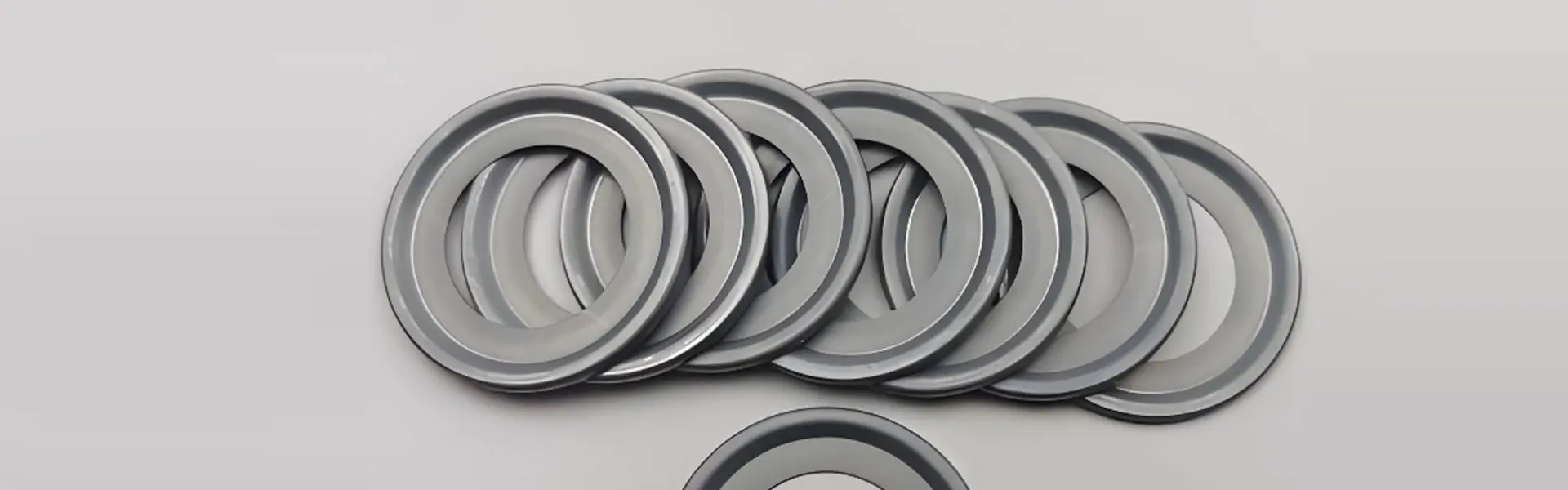
For engineers and procurement specialists navigating the demanding world of high-pressure, high-temperature sealing, the selection of the correct gasket is paramount. Among the array of specialized seals, Serrated Gaskets stand out as a robust and reliable solution for some of the most challenging flange connections. At Kaxite, we combine decades of metallurgical expertise with precision manufacturing to produce serrated gaskets that set the benchmark for performance and longevity in critical applications.
Also known as serrated metal gaskets or ring-type joints, these are solid metal seals designed to create a leak-tight barrier by deforming into the microscopic imperfections of flange faces. The unique serrated pattern—a concentric circle of sharp, raised ridges—bites into the flange material under high bolt load, creating multiple concentric seals. This mechanical interlock is exceptionally effective in preventing the leakage of gases and liquids, even under extreme cyclic conditions, thermal gradients, and high pressures.
Kaxite serrated gaskets are engineered to meet and exceed international standards. Our manufacturing process ensures precise tolerances, consistent hardness, and optimal surface finish for every gasket that leaves our facility.
| Material Grade | Common Designation | Typical Hardness (Brinell) | Primary Application / Service |
|---|---|---|---|
| Soft Iron | ASTM A842 | 90 max | General service, oil, water, steam. |
| Low Carbon Steel | AISI 1010, 1020 | 120-150 | General refinery and petrochemical service. |
| 304 Stainless Steel | ASTM A182 F304 | 160-210 | Corrosive services, food & pharmaceutical. |
| 316 Stainless Steel | ASTM A182 F316 | 160-210 | Enhanced corrosion resistance, chlorides. |
| Alloy 20 | UNS N08020 | 150-200 | Severe corrosive environments, sulfuric acid. |
| Monel 400 | UNS N04400 | 150-220 | Marine, hydrofluoric acid, caustic solutions. |
| Inconel 600 | UNS N06600 | 150-220 | High-temperature oxidation resistance. |
| Nominal Pipe Size (NPS) | Outside Diameter (OD) mm | Inside Diameter (ID) mm | Thickness (T) mm | Pitch (Serration Spacing) mm |
|---|---|---|---|---|
| ½" | 38.1 ± 0.25 | 21.8 ± 0.25 | 3.18 ± 0.10 | 0.71 |
| 1" | 54.0 ± 0.30 | 35.1 ± 0.25 | 3.18 ± 0.10 | 0.71 |
| 2" | 82.5 ± 0.30 | 60.5 ± 0.25 | 4.78 ± 0.10 | 0.71 |
| 4" | 127.0 ± 0.40 | 102.3 ± 0.40 | 6.35 ± 0.15 | 0.71 |
| 8" | 200.0 ± 0.50 | 173.0 ± 0.50 | 7.92 ± 0.15 | 0.71 |
| 12" | 273.0 ± 0.80 | 240.0 ± 0.80 | 9.53 ± 0.20 | 0.71 |
Note: Kaxite manufactures serrated gaskets in a full range of sizes from NPS ½" to 24" and beyond. Custom sizes, non-standard thicknesses, and special serration profiles (e.g., spiral, concentric) are available upon request for specific OEM applications.
The allowable pressure for a serrated gasket depends on the material, flange class (e.g., 150#, 300#, 600#), and temperature. As a guideline, Kaxite serrated gaskets are typically applied in the following ranges:
The sealing action is primarily mechanical. When the flange bolts are torqued, the sharp, hardened ridges (serrations) on both faces of the gasket plastically deform and embed themselves into the softer flange surface. This creates a series of intimate metal-to-metal contact lines. Any leakage path must now navigate a tortuous, maze-like route over these multiple concentric barriers, making it extremely difficult for the medium to escape.
Yes, they are specifically designed for use on raised face flanges. The gasket sits within the raised area, and the serrations bite into the facing of the raised portion. It is critical that the flange faces have a smooth finish (typically 125-250 µin Ra / 3.2-6.3 µm Ra) and are free of radial scratches or damage for optimal sealing. They are not intended for use on flat face flanges.
Material selection is a critical decision based on three main factors: the chemical compatibility with the process fluid (to prevent corrosion), the operating temperature (to maintain strength and oxidation resistance), and the required hardness relative to the flange material. The gasket material should generally be softer than the flange material to allow for proper embedding. Kaxite provides comprehensive material selection charts and our technical team can assist with specific service condition reviews.
While both are used for high-pressure services, they are fundamentally different. A spiral wound gasket is a composite of alternating metal windings and a soft filler (like graphite or PTFE), offering flexibility and resilience. A serrated gasket is a solid metal ring that relies on plastic deformation and mechanical biting. Serrated gaskets generally require higher bolt loads, have less tolerance for flange misalignment, but often offer superior leak tightness for specific high-integrity applications and can be more resistant to high temperatures where filler materials might degrade.
Proper installation is non-negotiable. First, ensure flange faces are clean, undamaged, aligned, and parallel. The gasket must be placed concentrically. Use a cross-bolt tightening pattern (star pattern) and achieve the target bolt stress in multiple incremental steps (e.g., 30%, 60%, 100% of final torque) to ensure even embedding of the serrations. Always refer to the specific torque values recommended by the flange standard (ASME PCC-1) or the equipment manufacturer, adjusted for bolt lubrication. Under-torquing will not engage the serrations fully, while over-torquing can crush the gasket or damage flanges.
Reuse is possible but must be evaluated carefully. If the gasket is removed and shows no signs of cracking, excessive flattening, or loss of serration height, and the flange faces are in perfect condition, reuse might be acceptable for the same service. However, for critical service, high-cycle, or safety-related applications, Kaxite strongly recommends using a new gasket every time to guarantee seal integrity. The serrations are designed to deform once; reusing them on a different sealing line can compromise performance.
Kaxite serrated gaskets are manufactured in compliance with major international standards, including ASME B16.20 (which covers dimensions, materials, and markings) and API 6A for wellhead equipment. They can also be produced to meet DIN, EN, JIS, and other customer-specified standards. Each Kaxite gasket is permanently marked with material grade, size, and heat number for full traceability.
The robust nature of these gaskets makes them the seal of choice across heavy industries where failure is not an option:
Choosing Kaxite means partnering with a supplier dedicated to precision, quality, and technical support. Our serrated gaskets are not just components; they are engineered sealing solutions built to ensure the safety, efficiency, and reliability of your most critical operations.