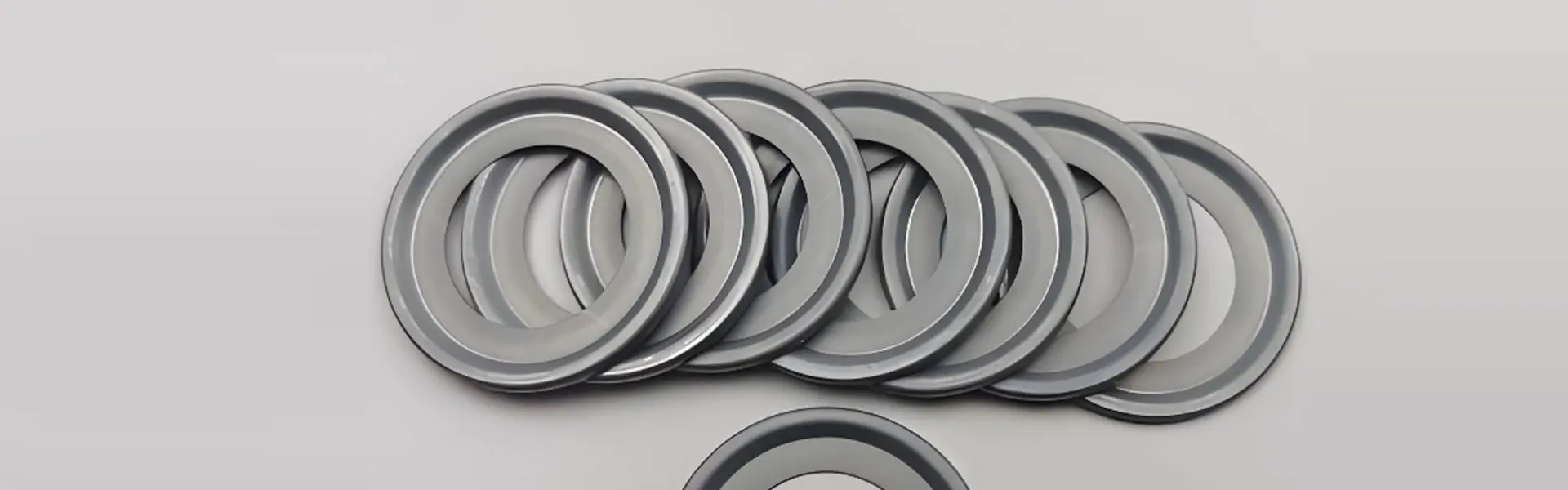
Manufacturing high-quality spiral wound gaskets demands precision, consistency, and reliability. The specialized
Machines For Spiral Wound Gaskets are engineered to meet these exacting requirements. These machines are the cornerstone of production for a critical sealing component used across industries like oil & gas, petrochemical, power generation, and pharmaceuticals. At Kaxite, we have dedicated decades to refining this technology, ensuring our equipment sets the global standard for performance, durability, and output quality.
The core function of these machines is to wind alternating layers of pre-profiled metal strip (typically V-shaped) and filler material (such as graphite, PTFE, or ceramic) into a precise, concentric spiral. This creates a gasket that offers excellent resilience, sealability, and adaptability to fluctuating pressures and temperatures. The sophistication of the machine directly influences the gasket's dimensional accuracy, winding tension consistency, and final sealing performance.
### Key Operational Advantages of Modern Spiral Wound Gasket Machines
* **Superior Precision Engineering:** Advanced CNC controls and high-precision servo motors ensure consistent winding pitch, perfect concentricity, and exact inner and outer diameters. This eliminates human error and guarantees every gasket meets stringent API 601, ASME B16.20, and DIN EN 1514 standards.
* **Enhanced Productivity & Automation:** Modern machines feature automated strip feeding, filler spool integration, and programmable logic controllers (PLCs). This allows for rapid changeovers between gasket sizes and specifications, minimizing downtime and maximizing output.
* **Unmatched Consistency & Quality Control:** Integrated tension control systems maintain uniform winding force throughout the production cycle. This is critical for creating gaskets with reliable density and compression characteristics, batch after batch.
* **Material Versatility & Flexibility:** A top-tier machine can handle a vast range of metal strip materials (304/316 stainless steel, Monel, Inconel, Titanium) and filler materials of varying thicknesses and widths without requiring extensive recalibration.
* **Robust Construction & Durability:** Built with heavy-duty frames and industrial-grade components, Kaxite machines are designed for continuous, 24/7 operation in demanding workshop environments, ensuring a long operational lifespan and low total cost of ownership.
### Detailed Technical Specifications of Kaxite Spiral Wound Gasket Machines
To understand the capability of professional-grade equipment, below are the detailed parameters of Kaxite's flagship SWG series models.
#### General Machine Specifications Table
| Parameter Category | Specification Details |
| :--- | :--- |
| **Machine Model Range** | Kaxite SWG-200, SWG-350, SWG-500, SWG-800 (Customizable) |
| **Gasket Inner Diameter (ID) Range** | From 15 mm (0.6") up to 2000 mm (80") depending on model |
| **Gasket Outer Diameter (OD) Range** | Up to 2200 mm (86") on largest models |
| **Metal Strip Width Range** | 3.0 mm to 4.5 mm (standard), customizable for special profiles |
| **Filler Material Width Range** | 3.2 mm to 4.8 mm |
| **Maximum Winding Speed** | 250 - 400 revolutions per minute (RPM), adjustable |
| **Control System** | Industrial PC with Touchscreen HMI & PLC (Siemens/Mitsubishi) |
| **Drive System** | AC Servo Motors with Precision Gearboxes |
| **Power Requirements** | 380V / 50Hz / 3-Phase or 440V / 60Hz / 3-Phase (Customizable) |
| **Machine Footprint (LxW)** | Approximately 2.5m x 1.8m to 4.0m x 2.5m (varies by model) |
| **Net Weight** | 2,500 kg to 6,500 kg |
#### Core Component & Feature List
* **Winding Head Assembly:**
* Precisely ground mandrels with quick-change system for different IDs.
* Dual feeding guides for metal strip and filler material.
* Individually adjustable tensioners for both metal and filler spools.
* Hardened tool steel forming rollers for precise V-shape formation (if integrated forming).
* **Control & Programming Suite:**
* User-friendly graphical interface for input of gasket parameters: ID, OD, number of windings, strip/filler specs.
* Memory storage for hundreds of gasket recipes.
* Real-time monitoring of production speed, tension, and count.
* Diagnostic alerts and error message display.
* **Safety & Construction Features:**
* Fully enclosed safety guarding with interlock switches.
* Emergency stop buttons at multiple locations.
* Heavy-welded, vibration-dampening main frame.
* Centralized lubrication system for critical moving parts.
### Frequently Asked Questions (FAQ) About Machines For Spiral Wound Gaskets
**Q: What are the primary factors to consider when selecting a spiral wound gasket machine?**
A: Key factors include the required production range (minimum and maximum gasket diameters), the variety of metal and filler materials you plan to use, desired level of automation (manual vs. CNC), required production speed, available factory floor space and power supply, and compliance with relevant industry quality standards for your target market.
**Q: Can one machine produce gaskets for all pressure classes (e.g., 150lb, 300lb, 600lb)?**
A: Yes, a capable machine like those from Kaxite can produce gaskets for all standard pressure classes. The difference lies in the gasket's cross-sectional density and the number of windings, which are programmed into the machine's controller. The machine must, however, be able to handle the specific strip and filler widths required for different class designs.
**Q: How important is tension control during the winding process?**
A: It is absolutely critical. Consistent and precise tension control on both the metal strip and filler material is what ensures the gasket has uniform density. Improper tension leads to loose or uneven winding, resulting in a gasket that may leak, have poor recovery, or fail under pressure cycling. Kaxite machines employ closed-loop servo tension systems for this purpose.
**Q: What is the typical maintenance required for these machines?**
A: Regular maintenance includes daily cleaning of the winding head and guides to prevent material dust buildup, weekly checks of tensioner components and guide alignment, and periodic lubrication as per the manual. The most critical aspect is the calibration of the winding system and tension sensors, which Kaxite recommends on an annual basis or after a high volume of production.
**Q: How does automation in a machine improve gasket quality and output?**
A: Automation minimizes human intervention in the winding process, which is a primary source of variation. Automated systems ensure the starting point of the wind is consistent, the overlap is precise, and the final outer diameter is exact every time. This leads to drastically reduced scrap rates, higher consistency, and the ability to run unattended cycles, significantly boosting overall equipment effectiveness (OEE).
**Q: Can your machines integrate with existing gasket production lines for tasks like outer ring attachment?**
A: Yes. Kaxite machines can be configured as a central winding station within a larger production cell. They can be interfaced with robotic arms for part handling, conveyor systems for transfer to a welding station for outer ring placement, or linked to vision inspection systems. We offer customization for seamless Industry 4.0 integration.
**Q: What kind of training and support does Kaxite provide with the machine purchase?**
A: Kaxite provides comprehensive support starting with detailed operational and maintenance manuals. We offer on-site installation and commissioning by our engineers, followed by hands-on training for your operators and maintenance staff on machine setup, programming, routine operations, and basic troubleshooting. We also provide remote support and a global network for spare parts and service.
**Q: Are your machines capable of producing special gasket designs, like kammprofile or double-walled gaskets?**
A: Our standard machines are optimized for classic spiral wound gasket production. However, Kaxite specializes in engineering custom solutions. With modifications to the winding head, feeding mechanisms, and control software, we can develop machines for specialized gasket designs, including those with unique profiles or multiple-layer configurations. This requires a detailed project consultation.