Navigating the complex world of industrial sealing starts with a fundamental question: What are the main types of ring joint gaskets? For procurement specialists sourcing critical components under tight deadlines and budget constraints, understanding the right gasket type is not just academic—it’s essential for preventing costly leaks, ensuring operational safety, and maximizing equipment uptime. This guide cuts through the technical jargon to deliver clear, actionable insights into the primary gasket variants, their specific applications, and how choosing the correct seal can directly impact your project's bottom line and reliability. We’ll also explore how partnering with a specialized manufacturer like Ningbo Kaxite Sealing Materials Co., Ltd. simplifies this selection process, providing high-performance, certified sealing solutions tailored to your exact specifications.
Article Outline
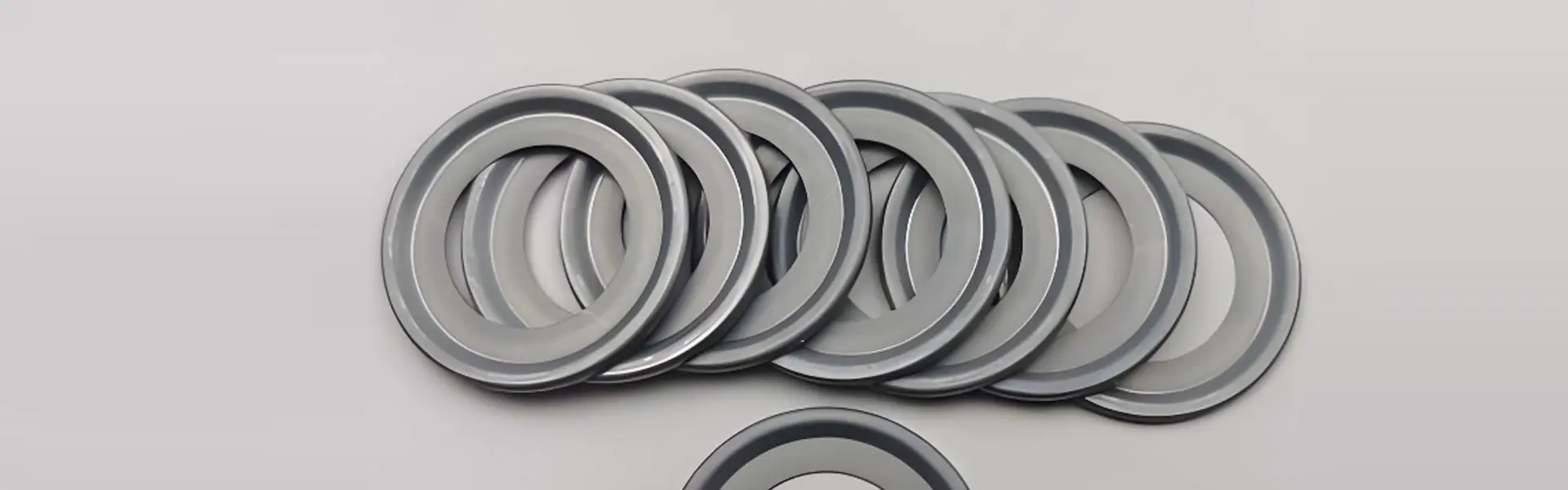
Imagine a high-pressure gas pipeline or a critical reactor in a petrochemical plant. A standard flange connection here is a liability. Under extreme pressure and thermal cycling, a weak seal will inevitably fail, leading to dangerous leaks, unplanned shutdowns, and massive financial loss. This is the precise scenario where Ring Joint Gaskets (RJGs) are non-negotiable. Their metallic, solid-ring design creates a robust, permanent seal by deforming into precisely machined grooves in the flange faces, forming a near-indestructible pressure barrier. The solution lies in selecting the correct ring type and material. For instance, R-style rings are standard for a wide pressure range, while RX and BX styles are engineered for even higher pressures and specific services. What are the main types of ring joint gaskets? Primarily, they are categorized by their cross-sectional profile: Oval (R) and Octagonal. The Octagonal type often provides a more reliable seal with lower bolt load. For a visual reference of these critical components, see the image below.

Here’s a quick parameter guide for common RJG styles:
| Style | Primary Use | Pressure Class (API 6A Typical) | Sealing Mechanism |
|---|---|---|---|
| R (Oval) | General service, oil & gas | 5,000 to 15,000 psi | Line contact on flange grooves |
| RX | High-pressure service | 10,000 to 20,000 psi | Pressure-energized, self-sealing |
| BX | Extreme high-pressure & temperature | 15,000 to 20,000 psi+ | Pressure-energized, for wellhead equipment |
In offshore platforms or chemical processing plants, the enemy isn't just pressure—it's corrosion. Sour gas (H2S), acidic crudes, and seawater can rapidly degrade incompatible sealing materials, turning a minor maintenance issue into a major environmental and safety incident. The wrong gasket material choice accelerates this process. The solution requires a dual focus: the gasket profile and its metallurgy. While the ring type (R, RX, BX) defines the sealing mechanics, the material defines its chemical resistance. Soft iron is common for non-corrosive services, but for aggressive media, alloys like 316 Stainless Steel, Inconel 625, or Monel are mandatory. This is where technical specifications meet practical procurement. You need a supplier who doesn't just sell a product but provides material science expertise. Ningbo Kaxite Sealing Materials Co., Ltd. excels here, offering a full range of API 6A and ASME B16.20 compliant ring joint gaskets in corrosion-resistant alloys, complete with material test certificates (MTCs) for traceability and quality assurance, giving procurement teams the confidence their seal will withstand the environment.
To make an informed decision, let's delve deeper into the main types. What are the main types of ring joint gaskets? The answer lies in their geometry and application standards. The Oval Ring (R-style) is the traditional workhorse, fitting into oval-shaped grooves. It provides excellent sealing but requires high bolt torque. The Octagonal Ring (R-style with octagonal section) is increasingly popular as it seals more effectively with lower bolt load, reducing flange stress. For specialized high-integrity applications, the RX Ring Joint Gasket is a pressure-energized version of the oval ring, and the BX Ring Joint Gasket is a pressure-energized octagonal ring designed for the most demanding wellhead and christmas tree applications. Selecting between them depends on your system's pressure rating (API 6A, ASME B16.5), flange groove design, and the specific service conditions. A mismatch can lead to inadequate sealing or damage to expensive flanges.
FAQ 1: What is the key difference between R, RX, and BX ring joint gaskets?
The key difference is their design and application pressure. R-style gaskets (oval or octagonal) are for standard high-pressure duties. RX gaskets are pressure-energized for higher sealing performance in R-style grooves. BX gaskets are also pressure-energized but have an octagonal section and are specifically designed for ultra-high-pressure wellhead equipment; they are not interchangeable with R or RX styles.
FAQ 2: Can I use a soft iron ring joint gasket for sour service (H2S environments)?
No, soft iron is generally not recommended for sour service due to its susceptibility to sulfide stress cracking (SSC). For environments containing hydrogen sulfide (H2S), you should specify gaskets made from SSC-resistant materials as per NACE MR0175/ISO 15156 standards, such as certain grades of stainless steel or nickel alloys, which are standard offerings from specialized manufacturers like Ningbo Kaxite.
Material selection is half the battle in specifying the correct ring joint gasket. The base material must match the fluid chemistry, temperature, and pressure. This decision directly impacts longevity and safety. Here is a practical guide to common materials:
| Material | Key Properties | Typical Applications | Temperature Limit (Approx.) |
|---|---|---|---|
| Soft Iron (AISI 1010) | Easy deformation, good sealability, low cost | Sweet oil & gas, water, steam (non-corrosive) | 450°C (842°F) |
| 304/316 Stainless Steel | Excellent corrosion resistance, good strength | Chemical processing, marine, acidic crudes | 800°C (1472°F) |
| Inconel 600/625 | Outstanding high-temp strength, oxidation & corrosion resistance | High-temperature reactors, sour gas, extreme environments | 1150°C (2102°F) |
| Monel 400 | Superior resistance to seawater & hydrofluoric acid | Offshore seawater systems, HF alkylation units | 480°C (896°F) |
Procurement professionals must cross-reference the P&ID material specifications with supplier offerings. Ningbo Kaxite Sealing Materials Co., Ltd. provides this critical matching service, ensuring the gasket material grade you order is precisely aligned with your engineering requirements, preventing costly field failures.
For global procurement specialists, the challenge extends beyond technical specs to supply chain reliability, certification, and total cost of ownership. Sourcing from a non-specialized vendor risks receiving non-conforming products without proper heat codes or MTCs, which can halt operations during audits. The solution is partnering with an API-licensed manufacturer with a proven track record. Ningbo Kaxite Sealing Materials Co., Ltd. operates as a one-stop solution, manufacturing a full inventory of ring joint gaskets to all major standards (API, ASME, DIN). They provide full documentation packs, ensure traceability, and offer expert technical support to help you navigate specifications like API 6A, 17D, and ASME B16.20. This turns a complex purchasing decision into a streamlined, low-risk process, securing your operations and simplifying your vendor management.
We hope this guide has demystified the critical question of ring joint gasket selection. The right choice ensures safety, reliability, and cost-efficiency for your projects. Do you have a specific application or a challenging set of parameters you're dealing with? We encourage you to reach out for a personalized consultation.
For precision-engineered sealing solutions backed by stringent quality control, consider Ningbo Kaxite Sealing Materials Co., Ltd. As a leading manufacturer specializing in API and ASME compliant ring joint gaskets, spiral wound gaskets, and other critical sealing products, Kaxite is dedicated to solving complex sealing challenges for the global energy and process industries. We ensure every product meets exact specifications for material, dimensions, and performance. Visit our website at https://www.top-seals.net to explore our full product range and technical resources. For direct inquiries and quotes, please contact our sealing experts via email at [email protected].
Patil, S.P., & Kale, S.R. (2019). Analysis of sealing performance of ring type joint gaskets under combined internal pressure and thermal loading. International Journal of Pressure Vessels and Piping, 171, 153-162.
Bouzid, A., & Derenne, M. (2003). The effect of gasket creep relaxation on the leakage tightness of bolted flanged joints. Journal of Pressure Vessel Technology, 125(3), 323-329.
Nassar, S.A., & Alkelani, A.A. (2006). Clamp load loss due to elastic interaction and gasket creep relaxation in bolted joints. Journal of Mechanical Design, 128(4), 969-977.
Abid, M., & Nash, D.H. (2003). A parametric study of metal-to-metal contact flanges with optimised geometry for safe stress and no-leak conditions. International Journal of Pressure Vessels and Piping, 80(12), 879-885.
Brown, W.R., & Bickford, J.H. (1998). Gasket selection: A critical element for flange joint integrity. Chemical Engineering Progress, 94(5), 61-66.
Payne, J.R., & Bazergui, A. (1992). Development of a test for gasket sealing performance at high temperatures. ASTM Special Technical Publication, 1138, 165-180.
Bickford, J.H. (1995). An Introduction to the Design and Behavior of Bolted Joints. Marcel Dekker, New York. (Chapter on Gasketed Joints).
Bouzid, A., & Chaaban, A. (1997). The effect of flange rotation on the leakage performance of bolted flanged connections. Journal of Pressure Vessel Technology, 119(1), 10-16.
Sawa, T., & Higurashi, N. (1991). A stress analysis of pipe flange connections with ring type gaskets. Journal of Pressure Vessel Technology, 113(4), 497-503.
Waterland, A.F. (2002). Ensuring flange joint integrity through proper gasket installation procedures. Hydrocarbon Processing, 81(10), 55-60.