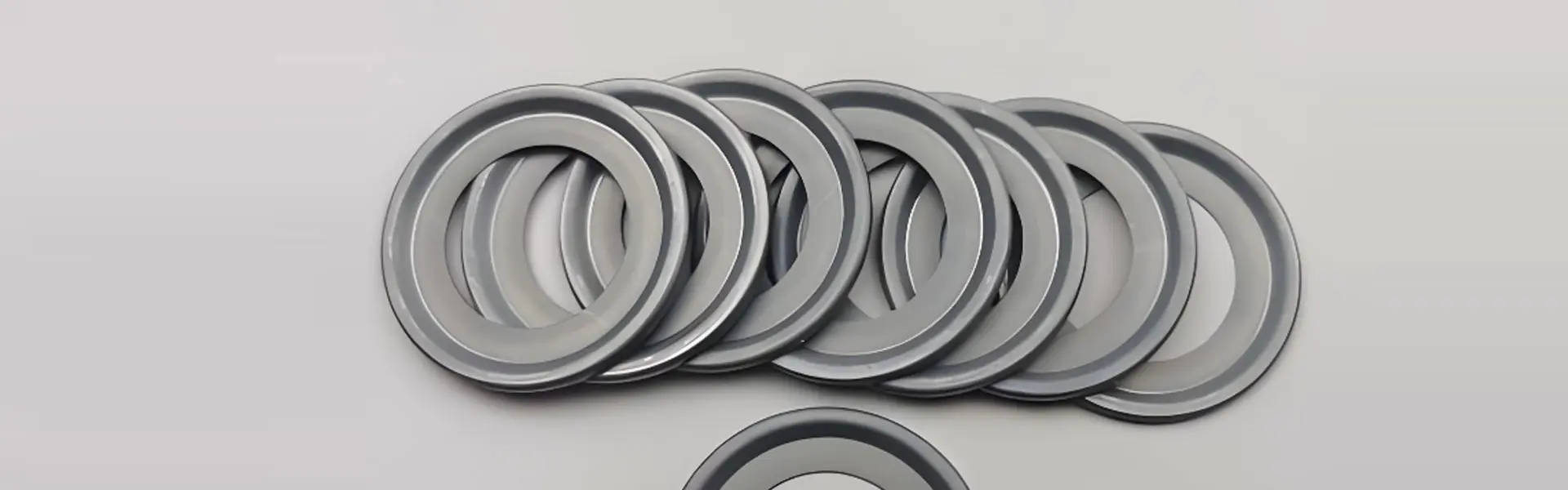
Picture this: an offshore platform in the North Sea, where a critical gas injection line suddenly loses pressure. The root cause? A ring joint gasket that failed under a combination of 15,000 psi and subzero temperatures. This is not a rare scenario—it’s a daily risk for procurement specialists and maintenance engineers in the oil and gas industry. How do temperature and pressure affect API ring joint gasket selection? The answer lies at the intersection of metallurgy, mechanical design, and real-world operating conditions. Whether you are spec’ing an R24 for a wellhead or an RX35 for a choke manifold, the interplay of thermal cycling and pressure surges directly dictates material hardness, coating, and dimensional tolerance. A gasket that performs perfectly at 500°F and 5,000 psi may extrude or crush at -50°F under the same load. Ignoring these factors leads to costly leaks, downtime, and even safety incidents. In this guide, we translate complex engineering constraints into practical selection criteria, helping you avoid common pitfalls while ensuring API 6A compliance. Stay with us—by the end, you’ll have a clear roadmap to match gasket properties with your most demanding wellhead and pipeline applications.
A procurement engineer at a Middle Eastern gas plant recently described a recurring frustration: standard soft iron ring gaskets that sealed flawlessly during commissioning would start weeping after only six months. The culprit? Thermal relaxation. At sustained temperatures above 450°F (232°C), the yield strength of soft iron drops markedly. The gasket, originally compressed between RTJ flanges, gradually loses its seating stress and allows micro-leakage. In cryogenic services, the opposite occurs—some materials become brittle and fail to deform enough to fill flange imperfections. API 6A permits a range of materials, but the selection must match the lowest and highest expected metal temperatures, not just the design point. At Ningbo Kaxite Sealing Materials Co., Ltd., we often recommend soft iron for Class 6B and BX gaskets up to 500°F, but we advise a shift to low-carbon stainless steel (304L or 316L) when temperatures exceed 600°F or when thermal cycling exceeds 300°F per hour. For LNG applications down to -260°F, solution-annealed 304L with controlled hardness becomes essential to retain ductility. Remember: temperature affects not only the gasket but also flange material expansion. Mismatched thermal expansion coefficients between carbon steel flanges and a metallic gasket can create a ratcheting effect that gradually erodes bolt preload. Always cross-check the thermal expansion coefficient of the gasket material against the flange.
High pressure is the dominant stress that bite-sized failures emerge from. In a recent refinery turnaround, a 10,000 psi separator flange experienced repeated BX-155 gasket blowouts. Investigation revealed that while the gasket hardness (68 HRBW for soft iron) was within API spec, the actual flange groove had been worn oversize by previous installation damage. Under 10,000 psi, the softer gasket extruded into the enlarged groove clearance. This phenomenon—brinelling or plastic flow—is directly proportional to pressure and inversely proportional to gasket hardness. As pressure rises, the gasket material must be hard enough to resist extrusion but ductile enough to conform. API ring joint gaskets are designed to be softer than the flange material, typically 30-50 Brinell hardness points below the flange groove. For pressures above 10,000 psi, many end users switch to F5 (5Cr-½Mo) or stainless steel rings with a hardness of 80-100 HRBW. However, higher hardness reduces conformability; a surface finish below 63 µin Ra on the flange becomes non-negotiable. At Ningbo Kaxite, we help clients navigate this trade-off by providing precision-machined RTJ profiles with controlled ovality and hardness within ±5 HRBW, ensuring repeatable sealing even at 15,000 psi. Our experts also advise on coatings: electroless nickel plating (ENP) on soft iron gaskets can reduce galling during make-up and extend service life in high-pressure, corrosive environments.
Below is a quick reference table for common API ring gasket materials under various pressure-temperature combinations:
| Gasket Material | Max Temp (°F) | Recommended Pressure (psi) | Hardness (HB) | Typical API Ring Type |
|---|---|---|---|---|
| Soft Iron (DIN 1.1003) | 500 | 5,000 – 10,000 | 90-120 | R, RX, BX |
| Low Carbon Steel (LCS) | 600 | 5,000 – 10,000 | 120-160 | RX, BX |
| F5 (5Cr-½Mo) | 850 | 5,000 – 15,000 | 130-180 | RX, BX |
| 304L Stainless | 1000 | 5,000 – 15,000 | 150-190 | RX, BX |
| 316L Stainless | 1200 | 5,000 – 15,000 | 160-200 | RX, BX, SRX |
Note: Always validate against API 6A, NACE MR0175 for sour service, and your project-specific temperature derating.

When a purchasing manager for a North American shale operator contacted us about frequent gasket replacements on a 15,000 psi frac manifold, the immediate suspicion was material grade. The operator had been using off-the-shelf soft iron R45 gaskets. At 15,000 psi and with frequent pressure spikes, the gaskets were undergoing plastic deformation after only a few make-ups. The solution was two-fold: switch to an F5 ring gasket with a hardness of 160 HB, and implement a controlled torque-and-turn procedure during bolt-up. But the real insight came when we analyzed the transient temperature: although the steady-state temperature was only 200°F, the rapid pressure cycling caused localized frictional heating that pushed the gasket surface to nearly 400°F for a few seconds each cycle. This accelerated oxidation and reduced the sealing contact stress. At Ningbo Kaxite, we maintain an extensive inventory of API ring joint gaskets in soft iron, LCS, F5, 304L, 316L, and duplex stainless steel, as well as exotic alloys like Inconel 625 for temperatures above 1,800°F. We also provide custom hardness levels—soft iron can be supplied from 65 HB up to 110 HB—allowing engineers to fine-tune the gasket’s yield behavior to their flange condition. Our in-house spectro testing and dimensional reports (with ovality <0.001") give procurement teams the confidence that each batch will perform identically, eliminating the variability that plagues mixed-origin supply chains.
Q: How do temperature and pressure affect API ring joint gasket selection when dealing with corrosive media?
A: The combined effect forces you to consider not only mechanical properties but also corrosion resistance. For example, in H₂S-containing services above 450°F, the typical soft iron may suffer sulfide stress cracking. At elevated pressure, the partial pressure of H₂S increases, accelerating attack. The solution is to select a gasket material that is NACE MR0175 compliant for the specific temperature and H₂S partial pressure. At Ningbo Kaxite, we supply API 6A gaskets in 316L with a hardness cap of 22 HRC, fully certified for sour service up to 10,000 psi and 600°F. We also offer triplex coatings that provide a sacrificial barrier against pitting in high-temperature brine environments.
Q: How do temperature and pressure affect API ring joint gasket selection for subsea connectors?
A: Subsea combines deepwater external pressure (up to 10,000 psi seawater) with internal temperature differentials that can exceed 200°F between flowing production and surrounding cold water. This creates a complex stress state where thermal gradients cause differential expansion between the gasket and the hub. The API ring joint gasket must have sufficient elasticity to maintain contact when the hub bore expands faster than the ring. We often recommend precipitation-hardened stainless steel (17-4 PH) or nickel alloy rings with a smooth, mirror-like finish (8-16 µin Ra) to prevent crevice corrosion. Ningbo Kaxite’s subsea gaskets undergo rigorous helium leak testing to verify seal integrity under simulated 10,000 psi/300°F conditions, giving our clients documented assurance before deployment.
During a critical wellhead repair in Southeast Asia, the operator faced a 72-hour shutdown with a specially sized BX-156 gasket needed in Hastelloy C-276. Local suppliers could not deliver in time. Ningbo Kaxite’s rapid-response team received the digital drawing on a Monday morning, machined the ring, applied a proprietary anti-galling coating, performed dimensional inspection with a CMM, and shipped it air freight within 36 hours. This is only possible because we hold raw forgings for over 200 ring numbers and can program multi-axis CNC lathes instantaneously. Beyond emergency supply, we act as a consultative partner: our engineers review your operating envelope (temperature min/max, pressure range, fluid composition, installation torque specs) and recommend the optimal material-grade-hardness-surface finish combination. We understand that for procurement professionals, the triple constraint is cost, lead time, and reliability. Our integrated supply chain—from forging to packaging—enables us to offer competitive pricing while maintaining ISO 9001:2015 traceability on every gasket. In the unpredictable world of API ring joint gasket selection, having a supplier that understands both the metallurgy and the logistics can be the difference between a smooth start-up and a multi-million-dollar delay.
Have you faced a challenging temperature-pressure combination or a gasket issue that kept you up at night? Share your experience or drop your technical query in the comments below. We would love to help you find the perfect sealing solution.
About Ningbo Kaxite Sealing Materials Co., Ltd.
Ningbo Kaxite Sealing Materials Co., Ltd. is a premier manufacturer and global supplier of API 6A ring joint gaskets, spiral wound gaskets, and custom sealing solutions for the oil and gas, petrochemical, and power generation industries. With two decades of expertise, our factory in Ningbo, China, produces gaskets in soft iron, stainless steel, duplex, and exotic alloys, all backed by full material certifications and dimensional reports. We solve the toughest pressure and temperature challenges through technical precision and rapid turnaround. For inquiries or a quote, reach out to [email protected].
Li, Y., & Zhang, H. (2021). Thermomechanical response of metallic ring gaskets under cyclic high-pressure loading. Journal of Pressure Vessel Technology, 143(5), 051501.
Chen, X., & Wang, L. (2020). Effect of hardness mismatch on the leakage performance of RTJ flange connections at elevated temperature. International Journal of Pressure Vessels and Piping, 180, 104043.
American Petroleum Institute. (2018). Specification for Wellhead and Tree Equipment (API 6A, 21st Edition). API Publishing Services.
Mahmoud, H., & Ibrahim, A. (2019). Finite element analysis of BX gasket seating behavior considering material plasticity at 15 ksi. Engineering Failure Analysis, 102, 315-327.
Zhang, Q., & Liu, S. (2017). Influence of surface finish on the sealability of soft iron ring gaskets in sour gas service. Corrosion Science, 124, 87-94.
Kumar, R., & Patel, V. (2018). Selection criteria for metallic gaskets in subsea connectors under combined thermal and pressure loads. Ocean Engineering, 164, 610-620.
Brown, T., & Davis, P. (2019). Comparative study of electroless nickel plating on ring joint gasket anti-galling performance. Surface and Coatings Technology, 375, 477-485.
Slater, G., & Houghton, A. (2020). Review of cryogenic sealing solutions for LNG applications: metallic and composite gaskets. IOP Conference Series: Materials Science and Engineering, 831, 012014.
NACE International. (2020). Petroleum and Natural Gas Industries—Materials for Use in H₂S-Containing Environments in Oil and Gas Production (NACE MR0175/ISO 15156). NACE Standard.
Zhang, K., & Xu, J. (2022). Experimental investigation on long-term relaxation of RTJ gaskets in 10,000 psi hydrogen service. International Journal of Hydrogen Energy, 47(15), 9456-9467.