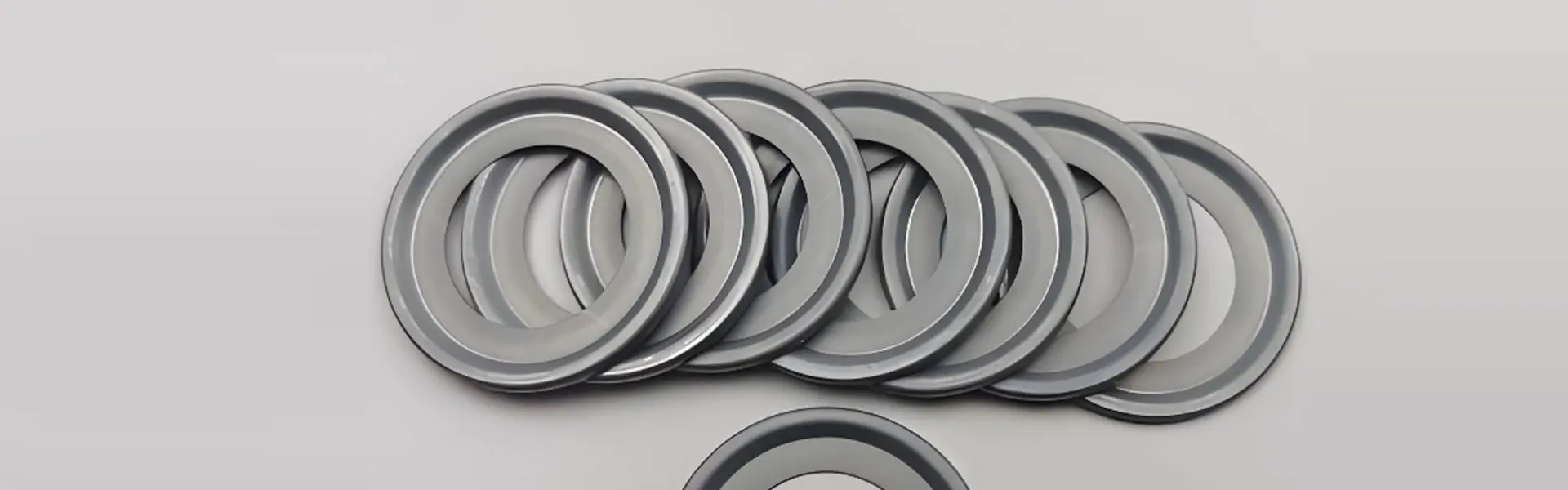
In the demanding world of industrial fluid and gas handling, the integrity of sealing systems is paramount. A Molded Packing Ring stands as a critical engineered component designed to create a reliable, leak-free seal in valves, pumps, agitators, and other rotating or reciprocating equipment. Unlike braided or extruded packing, molded rings are precisely formed under heat and pressure to achieve a homogeneous structure with consistent density and dimensional accuracy. This manufacturing process results in a product that offers superior performance in challenging applications involving high pressures, extreme temperatures, corrosive media, or stringent regulatory environments. As a foundational element in preventive maintenance and operational safety, selecting the correct molded packing ring directly impacts system efficiency, emissions control, and total cost of ownership.
Kaxite has dedicated years of research and advanced manufacturing to perfecting our line of molded packing seals. We understand that a one-size-fits-all approach is ineffective in industrial sealing. Therefore, our products are engineered with specific compound formulations and geometric profiles to meet the unique demands of various services. From standard water and steam applications to aggressive chemical services in pharmaceutical, petrochemical, and power generation industries, a Kaxite molded packing ring provides a dependable sealing solution backed by technical expertise and rigorous quality control.
The performance of a molded packing ring is defined by a set of critical parameters. Understanding these specifications is essential for proper selection and ensuring optimal service life. Below are the primary factors to consider.
Kaxite utilizes a variety of high-quality base materials and impregnations to tailor the ring's properties. The choice of material dictates compatibility and performance limits.
Precision in dimensions is non-negotiable for a proper seal. Kaxite molded packing rings are manufactured to exacting standards.
| Parameter | Description | Standard Tolerance |
|---|---|---|
| Inside Diameter (ID) | The inner bore measurement that fits onto the shaft or stem. | ±0.005 in. (±0.127 mm) |
| Outside Diameter (OD) | The outer measurement that fits inside the stuffing box or gland. | ±0.005 in. (±0.127 mm) |
| Cross-Section (Width) | The radial thickness of the ring (calculated as (OD-ID)/2). | ±0.003 in. (±0.076 mm) |
| Concentricity | Ensures the ID and OD share a common center point for uniform compression. | >95% |
| Squareness of Faces | Ensures end faces are perpendicular to the axis for even sealing contact. | ±0.001 in./in. |
Kaxite molded rings are tested and certified to meet global industry standards, ensuring reliability and regulatory compliance.
Choosing the right molded packing ring requires matching the ring's properties to the application's service conditions. The following table outlines Kaxite's primary product series and their recommended uses.
| Kaxite Series | Base Material | Max Temperature | Max Pressure | pH Range | Typical Applications |
|---|---|---|---|---|---|
| GraphoFlex® GX-100 | Reinforced Flexible Graphite | 1200°F / 649°C | 3000 psi / 207 bar | 0-14 (excluding strong oxidizers) | High-temperature steam valves, heat transfer fluids, exhaust flanges |
| AramiSeal® AS-200 | Aramid Fiber / PTFE Impregnated | 500°F / 260°C | 1500 psi / 103 bar | 2-12 | General chemical service, pulp & paper stock, hot water pumps |
| ChemiGuard® CG-300 | PTFE Filament / Premium Lubricants | 450°F / 232°C | 1200 psi / 83 bar | 0-14 (full chemical resistance) | Aggressive acids, caustics, solvents, pharmaceutical mixing |
| CarbonLok® CL-400 | Carbon Fiber / Graphite | 750°F / 399°C | 2500 psi / 172 bar | 4-10 | Boiler feed pumps, refinery valves, high-pressure hot oil |
| AquaPro® AP-500 | Food-Grade PTFE & Fibers | 400°F / 204°C | 1000 psi / 69 bar | 1-13 | Food & beverage processing, sanitizing systems, potable water |
Q: What is the primary advantage of a molded packing ring over braided style packing?
A: The primary advantage is consistency and structural integrity. Braided packing can have variations in density and may unravel or fray during installation or operation. A molded packing ring is formed as a single, homogeneous unit with uniform density throughout its cross-section. This ensures even compression in the stuffing box, predictable deformation under gland load, and superior extrusion resistance, leading to a more reliable and longer-lasting seal, especially in high-pressure or high-speed applications.
Q: How do I determine the correct size (ID, OD, Cross-Section) for my equipment?
A: The most reliable method is to measure the original component. For the shaft/stem, measure the diameter (this correlates to the packing ID). For the stuffing box, measure the bore diameter (this correlates to the packing OD). The cross-section is calculated as (Bore Diameter - Shaft Diameter) / 2. Always refer to the equipment manufacturer's manual for specified packing dimensions. If the old ring is available but worn, take measurements from multiple points and use the average. Kaxite provides detailed sizing guides and offers technical support for complex sizing scenarios.
Q: Can Kaxite molded packing rings be used in FDA or USDA-regulated applications?
A: Yes, specifically our AquaPro® AP-500 series and select ChemiGuard® compounds are engineered for this purpose. These series utilize FDA-listed ingredients per 21 CFR, are manufactured in certified clean environments, and are designed to be non-toxic, non-contaminating, and resistant to cleaning-in-place (CIP) chemicals. Documentation including Certificates of Compliance and Material Safety Data Sheets (MSDS) is available upon request to support validation processes.
Q: What is the proper installation procedure for a molded ring to prevent premature failure?
A: Proper installation is critical. First, ensure the shaft/stem and stuffing box are clean, smooth, and free of old packing and debris. Check for any shaft scoring or bore damage. Rings should be installed one at a time. Use a proper sizing mandrel or split die to gently stretch the ring—never cut or slice it—and carefully coil it onto the shaft. Stagger the joints of successive rings by 90 degrees. Tighten the gland nuts finger-tight only for initial startup. After the equipment has run for 30 minutes and reached operating temperature, perform a final adjustment: tighten the gland gradually until leakage is reduced to a slight weep (typically 1-2 drops per minute). Over-tightening causes excessive heat and rapid wear.
Q: How does temperature affect the selection of a molded packing material?
A: Temperature is a defining factor. Different materials have distinct thermal limits. For cryogenic services, PTFE-based rings like our ChemiGuard® series are suitable. For mid-range temperatures (up to 500°F), aramid or carbon/graphite blends perform well. For extreme heat (above 500°F), pure graphite or reinforced graphite rings like our GraphoFlex® series are necessary because they maintain sealing integrity and lubrication where organic binders would degrade. Always consider both the steady-state operating temperature and any potential thermal cycling or excursions.
Q: What does "fire-safe" packing mean, and which Kaxite products offer this feature?
A: Fire-safe packing is designed to maintain a seal or significantly limit leakage in the event of an external fire, even after the primary lubricants have burned away. This is a critical safety feature for hydrocarbon and chemical processing. Our GraphoFlex® GX-100 and CarbonLok® CL-400 series incorporate materials and designs that pass stringent fire tests such as API 607. They utilize inorganic materials and special weaves that char and expand to fill the gland, providing a temporary barrier against catastrophic fluid release during a fire event.
Q: My application involves frequent start-stop cycles and slight shaft runout. What type of ring is best?
A: Dynamic applications with cycling and runout require a packing with excellent resilience and low breakaway friction. We recommend our AramiSeal® AS-200 or CarbonLok® CL-400 series for such conditions. These materials combine high tensile strength fibers with advanced lubricants that allow the packing to flex and recover with shaft movement without causing excessive wear or hardening. The molded construction ensures it retains its shape, preventing gaps from forming during stops that could lead to sudden leakage upon restart.