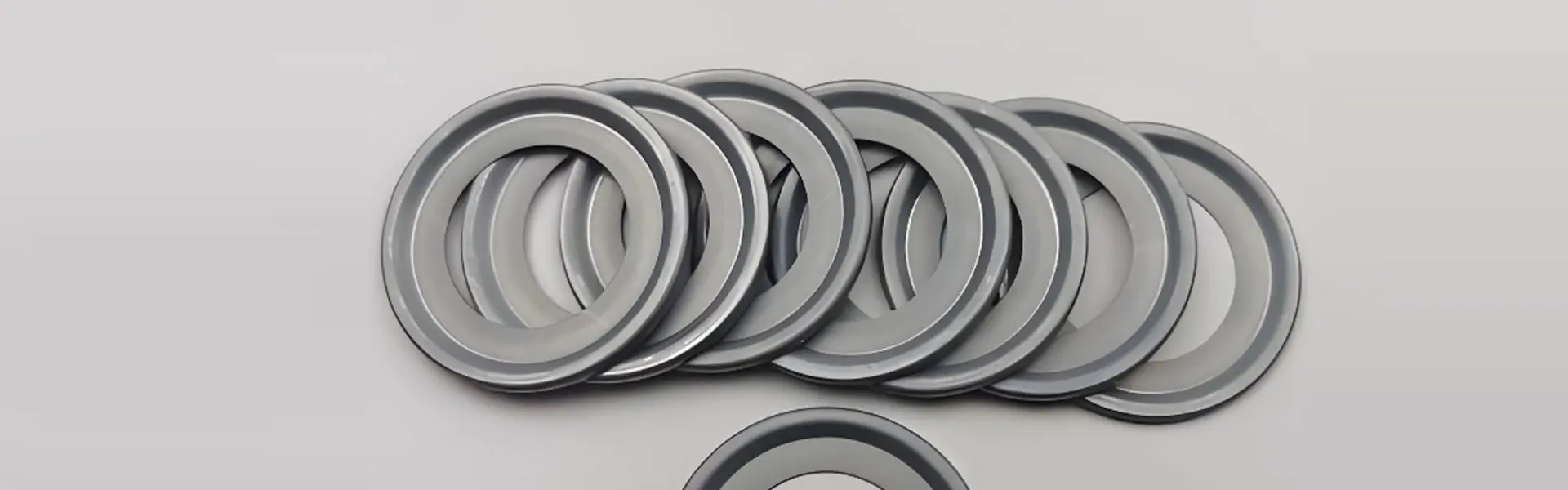
PTFE Rods represent the pinnacle of performance in high-demand industrial applications. As a leading manufacturer with decades of expertise, Kaxite delivers premium-grade PTFE rods that set the standard for reliability, chemical resistance, and thermal stability. Engineered for excellence, our rods are the go-to solution for engineers and procurement specialists across aerospace, semiconductor, food processing, pharmaceutical, and chemical handling industries.
### Unmatched Material Properties of Kaxite PTFE Rods
Polytetrafluoroethylene, or PTFE, is a synthetic fluoropolymer renowned for its exceptional properties. Kaxite utilizes advanced polymerization and processing techniques to ensure our rods exhibit these characteristics to their fullest potential:
* **Inert & Non-Toxic:** Completely chemically inert, making it safe for food, medical, and semiconductor use. It does not contaminate processes.
* **Extreme Temperature Resistance:** Performs consistently in a breathtaking range from -200°C (-328°F) to +260°C (+500°F).
* **Ultra-Low Coefficient of Friction:** The lowest of any solid material, providing excellent anti-stick and self-lubricating properties.
* **Superb Dielectric Strength:** An outstanding electrical insulator even in harsh environments.
* **Excellent Weatherability:** Unaffected by UV light and outdoor exposure, preventing degradation.
* **Non-Flammable:** Will not support combustion, meeting stringent safety standards.
* **Zero Moisture Absorption:** Dimensions and properties remain stable regardless of ambient humidity.
### Kaxite PTFE Rod: Technical Specifications & Data
Our rods are manufactured to precise tolerances, ensuring consistency and performance in every batch. Below are the detailed specifications for our standard virgin PTFE rod offerings.
**Standard Physical & Mechanical Properties Table**
| Property |
Test Method |
Metric Unit |
Imperial Unit |
Typical Value (Kaxite Virgin PTFE) |
| Density |
ASTM D792 |
g/cm³ |
lb/in³ |
2.14 - 2.20 |
| Tensile Strength |
ASTM D638 |
MPa |
psi |
25 - 35 |
| Elongation at Break |
ASTM D638 |
% |
% |
300 - 500 |
| Compressive Strength |
ASTM D695 |
MPa |
psi |
12 - 15 |
| Hardness, Shore D |
ASTM D2240 |
- |
- |
50 - 60 |
| Coefficient of Friction (Dynamic) |
ASTM D1894 |
- |
- |
0.04 - 0.1 |
| Continuous Service Temperature |
- |
°C |
°F |
-200 to +260 |
| Dielectric Strength |
ASTM D149 |
kV/mm |
V/mil |
19.7 |
**Standard Available Dimensions**
We stock a comprehensive range of sizes for rapid delivery. Custom diameters and lengths can be manufactured to order.
* **Standard Diameters:** 5mm, 6mm, 8mm, 10mm, 12mm, 15mm, 20mm, 25mm, 30mm, 40mm, 50mm, 60mm, 80mm, 100mm, 150mm, 200mm.
* **Standard Lengths:** 500mm, 1000mm (1m), 1500mm, and 2000mm (2m). Other lengths available upon request.
* **Tolerances:** Standard dimensional tolerance is ±1%. Precision-machined rods with tighter tolerances (e.g., ±0.1mm) are available for critical applications.
### Grades and Formulations of Kaxite PTFE Rods
To meet diverse application needs, Kaxite offers several specialized grades:
* **Virgin PTFE Rod:** The purest form, white in color, offering the best combination of electrical properties, chemical purity, and temperature resistance. Ideal for seals, gaskets, and insulating parts.
* **Glass-Filled PTFE Rod:** Reinforced with fine glass fibers (typically 5%, 15%, or 25% loading). This grade significantly improves compressive strength, creep resistance, and wear resistance while maintaining good chemical properties. Color is typically light brown.
* **Carbon-Filled PTFE Rod:** Filled with carbon or graphite (typically 5-25%). This formulation offers excellent wear resistance, higher thermal conductivity, and improved dimensional stability under load. Color is black.
* **Stainless Steel Filled PTFE Rod:** Filled with stainless steel powder for exceptional wear resistance, high load capacity, and excellent thermal conductivity. Used in high-load bearing applications.
* **Bronze-Filled PTFE Rod:** Filled with bronze powder, providing superior thermal conductivity, exceptional wear resistance, and reduced cold flow. Common in bearing and bushing applications.
**Comparison of Key Grades**
| Grade |
Primary Advantages |
Key Applications |
Color |
| Virgin PTFE |
Ultimate chemical resistance, best electrical properties, FDA compliant |
Seals, liners, insulators, labware, semiconductor |
White |
| 15% Glass Filled |
Improved stiffness, reduced creep, good wear resistance |
Bushings, bearings, thrust washers, valve seats |
Light Brown |
| 25% Carbon Filled |
Excellent wear life, high PV limit, static dissipative |
Piston rings, compressor rings, seals in dry environments |
Black |
| 40% Bronze Filled |
High thermal conductivity, excellent wear resistance |
Bearings, bushings, slides for high-load & high-speed |
Bronze/Brown |
### PTFE Rods: Frequently Asked Questions (FAQ)
**What are the main advantages of using a PTFE rod over metal or nylon rods?**
PTFE rods offer a unique combination of properties unmatched by metals or nylons: they are self-lubricating (reducing or eliminating the need for grease), completely corrosion-proof against almost all chemicals, can handle extreme temperatures without losing functionality, and are excellent electrical insulators. Metals corrode and gall, while nylon absorbs moisture and has a much lower temperature limit.
**Can Kaxite PTFE rods be easily machined into custom parts?**
Yes, PTFE is renowned for its excellent machinability. It can be turned, milled, drilled, and threaded using standard metalworking equipment, though sharp tools and proper fixturing are recommended due to its flexibility. Kaxite rods are produced with consistent grain structure, ensuring clean, predictable machining results for complex components like seals, bushings, spacers, and insulators.
**Is PTFE safe for use in food processing or medical applications?**
Absolutely. Virgin PTFE is biologically inert, non-toxic, and meets FDA and USP Class VI standards for food contact and medical device applications. Kaxite's virgin PTFE rods are produced in a controlled environment to ensure purity, making them suitable for direct contact with food, pharmaceuticals, and bodily fluids.
**What is "creep" or "cold flow," and how does it affect PTFE?**
Creep, or cold flow, refers to the tendency of a material to deform permanently under a continuous mechanical load, even at room temperature. PTFE has a relatively high creep compared to metals. For applications involving sustained high loads, a filled PTFE grade (like glass or carbon-filled) from Kaxite is recommended, as the fillers dramatically improve creep resistance and dimensional stability.
**How do I select the right PTFE rod grade for my application?**
The selection depends on your primary performance requirement. Choose Virgin PTFE for maximum chemical or electrical performance. Opt for Glass-Filled for better mechanical strength and reduced creep. Select Carbon-Filled for superior wear resistance and higher PV values. For applications requiring excellent wear resistance combined with high thermal conductivity, Bronze-Filled is the best choice. Kaxite's technical team can assist with specific recommendations.
**What are the limitations of PTFE rods?**
While exceptional in many areas, PTFE has limitations: it has lower mechanical strength and stiffness than metals (addressed with fillers), it can be susceptible to creep under heavy sustained load, and it has a high coefficient of thermal expansion. Proper design accounting for these factors is essential for long-term success.
**Can PTFE rods be used for bearings and sliding parts without lubrication?**
Yes, this is one of their most significant advantages. The extremely low coefficient of friction of PTFE makes it an ideal material for dry-running (unlubricated) bearings, slides, and guides. It prevents stick-slip motion and is perfect for applications where lubrication is undesirable or impossible.
**How does temperature affect the properties of a PTFE rod?**
PTFE retains its flexibility and mechanical properties remarkably well across its wide temperature range. It does not become brittle at cryogenic temperatures and does not melt but begins to soften above 260°C. Its thermal expansion is relatively high, so dimensional changes with temperature swings must be considered in design. Electrical and chemical resistance remain stable throughout.
**Are Kaxite PTFE rods resistant to all chemicals?**
Kaxite PTFE rods are resistant to virtually all industrial chemicals, solvents, and acids, including aggressive media like aqua regia, hydrofluoric acid, and concentrated sulfuric acid. The only known exceptions are molten alkali metals and certain fluorine compounds under extreme conditions. It is the most chemically resistant polymer commercially available.
**What finishes and tolerances are available for PTFE rods?**
Standard rods are extruded or molded with a commercial surface finish. Kaxite can supply centerless ground rods for applications requiring a smoother surface finish or very tight diameter tolerances. We work with customers to define the optimal balance of cost and precision for their specific component manufacturing process.