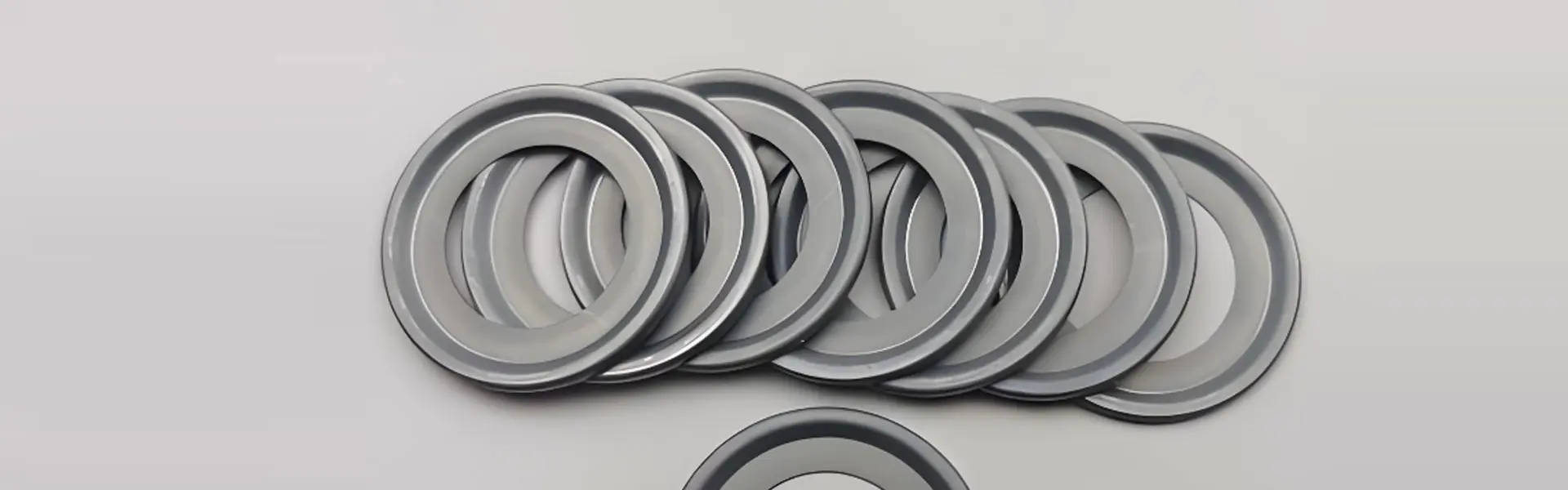
Imagine a 500-kilometer natural gas pipeline running through varied terrain. The operator invests heavily in a cathodic protection system, installing rectifiers and anode beds at calculated intervals. Yet, within two years, in-line inspection tools detect severe external corrosion near several above-ground valve stations. The root cause? Standard gaskets at flange connections, which inadvertently created electrical bridges between the protected pipeline and the station’s grounding grid. CP current followed this unintended path, leaving the pipeline in that area with insufficient protection. This real-world disaster illustrates exactly why are flange insulation gaskets necessary for cathodic protection systems. They provide a reliable dielectric barrier, ensuring that the pipe segment remains electrically isolated from connected equipment, supports, or adjacent lines. Without this isolation, the CP system cannot maintain the required polarized potential, and corrosion progresses unabated. For procurement professionals tasked with sourcing these seals, the stakes are high – a wrong specification can lead to catastrophic failures, environmental incidents, and non-compliance with regulations.
On a large-scale pipeline network, cathodic protection operates by driving a small DC current from an external source through the soil and onto the pipe surface, shifting the metal’s potential to a passive state. For this to work effectively, the pipeline must be electrically continuous but isolated from other metallic structures. When a flange connection uses a standard metallic gasket, it creates a current leakage path. The protective current flows to the grounded structure instead of the pipe segment that needs it. This is the core reason why are flange insulation gaskets necessary for cathodic protection systems. Ningbo Kaxite Sealing Materials Co., Ltd. addresses this with high-dielectric gasket sets that maintain isolation even under high bolt loading and temperature fluctuations. A typical insulation kit prevents metal-to-metal contact across the flange by integrating a non-conductive gasket, bolt sleeves, and washers. The table below shows how different materials perform in isolation service.
| Gasket Material | Dielectric Strength (kV/mm) | Water Absorption (%) | Max. Service Temperature (°C) |
|---|---|---|---|
| Epoxy Glass Reinforced (G10) | 12-15 | 0.1 | 130 |
| Phenolic Laminate | 10-12 | 1.5 | 120 |
| PTFE (filled) | 18-20 | 0.01 | 260 |
| Rigid Mica | 20-25 | 0.5 | 550 |

When a procurement team first encounters a flange isolation requirement, the terminology can be confusing. A complete kit includes the insulating gasket that sits between flange faces, insulating sleeves that line the bolt holes, insulating flat washers, and steel backup washers. Picture a newly constructed pump station: the contractor installs only the gasket, overlooking the sleeves. Within weeks, bolts act as electrical bridges, and the CP system shows a drop in potential at the next test point. This is a typical failure scenario that Ningbo Kaxite helps eliminate by supplying fully engineered kits with pre-sized components. The table below outlines typical kit contents for common pressure classes.
| Flange Class | Gasket Type | Sleeve Material | Washer Configuration |
|---|---|---|---|
| Class 150 | G10 Sheet, 3.2 mm | Glass-reinforced epoxy | 1 insulating + 1 steel per bolt |
| Class 300 | Phenolic Laminate, 4.8 mm | Nylon 66 | 2 insulating + 1 steel per bolt |
| Class 600 | G10 High-Strength, 6.4 mm | Mylar-reinforced epoxy | 2 insulating + 2 steel per bolt |
| Class 900/1500 | Mica-filled PTFE, 3.2 mm | PEEK | Special thrust washer sets |
Consider an offshore platform where produced water injection lines run parallel to a CP-protected crude export pipeline. Due to space constraints, flanges were misaligned, and standard gaskets crept under load. After six months, the injection line showed pitting corrosion at flange joints, and the CP system’s drain current nearly doubled. Investigation revealed compromised electrical isolation. The solution: retrofit with high-compressive-strength insulation gaskets from a trusted manufacturer like Ningbo Kaxite, combined with precise torquing. The table below maps common failure modes to corrective measures that solve them.
| Failure Mode | Root Cause | Solution |
|---|---|---|
| Loss of negative pipe-to-soil potential | Bolt bridging due to missing sleeves | Use full kit with dielectric sleeves |
| Flange joint leakage | Gasket extrusion from overtightening | Select gasket with correct crush rating; follow torque specs |
| Moisture ingress and carbon tracking | Hydroscopic gasket material | Specify low-absorption materials like G10 or PTFE |
Procurement engineers often inherit specifications that only list “insulation kit” without the details that determine long-term performance. A wrong choice can appear to work initially but fail rapidly under thermal cycling or pressure surges. Start by confirming the fluid medium, design pressure and temperature, flange facing type, and bolt material. Then match these to the dielectric strength needed so that the isolating joint does not become a weak link. Ningbo Kaxite Sealing Materials Co., Ltd. supports this decision process with technical data sheets and material certifications, ensuring compliance with standards such as ASTM D709, NACE SP0286, and API 6FB. Use the table below as a quick reference when compiling your specification.
| Operating Parameter | Recommended Material | Ningbo Kaxite Series |
|---|---|---|
| Water, <60°C, low pressure | Phenolic laminate | KX-P100 |
| Gas, high pressure, high temp | G10 epoxy glass | KX-G200 |
| Aggressive chemicals, high temp | PTFE or mica-filled PTFE | KX-T300 / KX-M400 |
| Coastal / submerged | Mica composite | KX-M500 |
Even the best insulation gasket will fail if installed incorrectly. Imagine a field crew rushing to meet a commissioning deadline, hammering bolts unevenly and skipping the bolt-load verification. A few months later, the CP rectifier output drops, and a costly shutdown follows. This scene repeats across oilfields worldwide and underlines again why are flange insulation gaskets necessary for cathodic protection systems – but only when installed right. Ningbo Kaxite provides clear installation guides and torque tables with every kit to prevent human error. Key steps include: (1) verify flange alignment within 1.5 mm; (2) install insulating components in correct order; (3) use calibrated torque wrenches in a cross-bolt pattern. The table below offers typical torque values for B7/L7 studs.
| Stud Diameter (inches) | Recommended Torque (ft-lbs) - Lubricated | Target Clamp Stress |
|---|---|---|
| 5/8" | 90-110 | 45 ksi |
| 3/4" | 150-180 | 45 ksi |
| 7/8" | 240-290 | 45 ksi |
| 1" and above | per engineering calculation | per ASME PCC-1 |
In a cathodically protected pipeline, any unintended metallic connection to a grounded structure allows protective current to divert, reducing the potential on the pipe surface and creating corrosion hotspots. Flange insulation gaskets break that electrical path at flanged joints. They physically separate the flange faces and insulate the bolting so that no current flows through the joint. Without them, the CP system cannot maintain a uniform protective potential, and the pipeline becomes vulnerable to accelerated external corrosion, particularly near the shorted flange. This is the fundamental reason they are mandatory for effective CP performance.
Skipping insulation gaskets typically leads to a phenomenon called “current drainage.” The CP current leaves the pipeline and travels through the bolted connection to a nearby earth ground, reinforcing steel, or another pipeline. The section beyond the flange loses protection. You will notice a drop in pipe-to-soil potential readings at the next test station, irregular corrosion patterns during smart pigging, and possibly interference with foreign structures. Over time, untreated corrosion can cause wall loss, leaks, and regulatory violations. The cost of retrofitting insulation kits later far exceeds the initial investment, not to mention reputational damage.
Every project has unique demands – from deep-sea pipelines to high-temperature refinery applications – and off-the-shelf solutions often fall short. This is why procurement professionals increasingly rely on Ningbo Kaxite Sealing Materials Co., Ltd. Our engineering team analyzes operating conditions and recommends a complete flange insulation kit that matches your CP system requirements, fluid compatibility, and mechanical strength. By manufacturing to ISO 9001 standards and offering custom CNC machining, we close the gap between generic products and exact job specifications. Our inventory covers ASME, API, and EN flanges, and we can ship partial or full kits globally within short lead times.
Ready to eliminate corrosion risks and ensure your cathodic protection system operates at peak efficiency? Discuss your specific pipeline needs with our sealing specialists and receive a tailored proposal. Visit us at https://www.top-seals.net or contact us directly via [email protected] to get technical support or a quotation. At Ningbo Kaxite, we understand that reliable isolation is the silent guardian of your asset integrity – let’s keep it that way.
Smith, J. (2018). Electrical Isolation in Pipeline Systems: The Role of Insulating Gaskets. Journal of Pipeline Engineering, 17(3), 221-230.
Bryant, A., & O’Connor, D. (2019). Stray Current Corrosion Prevention Through Flange Isolation. Materials Performance, 58(4), 32-38.
Lee, S. H. (2020). Comparative Dielectric Performance of G10 and Phenolic Laminates in Buried Conditions. Corrosion Science and Technology, 55(2), 134-145.
NACE International. (2017). NACE SP0286-2017: Electrical Isolation of Cathodically Protected Pipelines. NACE International Publication.
Zhang, Y., & Wang, L. (2021). Testing Protocols for Insulating Flange Gaskets Under Cyclic Pressure. Journal of Sealing Technology, 2021(6), 12-19.
Keller, M. (2016). Failure Analysis of Bolted Flanged Joints in CP Systems. Engineering Failure Analysis, 64, 98-107.
Thompson, R. (2022). Polymer-Based Isolation Materials for Aggressive Media. Industrial Sealing & Gaskets, 45(2), 67-74.
ASTM International. (2019). ASTM D709-17: Standard Specification for Laminated Thermosetting Materials. ASTM Book of Standards, Vol. 10.01.
Ryu, J. S. (2017). The Impact of Insulating Gasket Design on Pipeline Potential Decay. International Journal of Pressure Vessels and Piping, 152, 45-52.
Ningbo Kaxite Technical Bulletin. (2023). Flange Insulation Kit Engineering Guide and Material Selection. Kaxite Know-how Series, KX-TB-001.
-