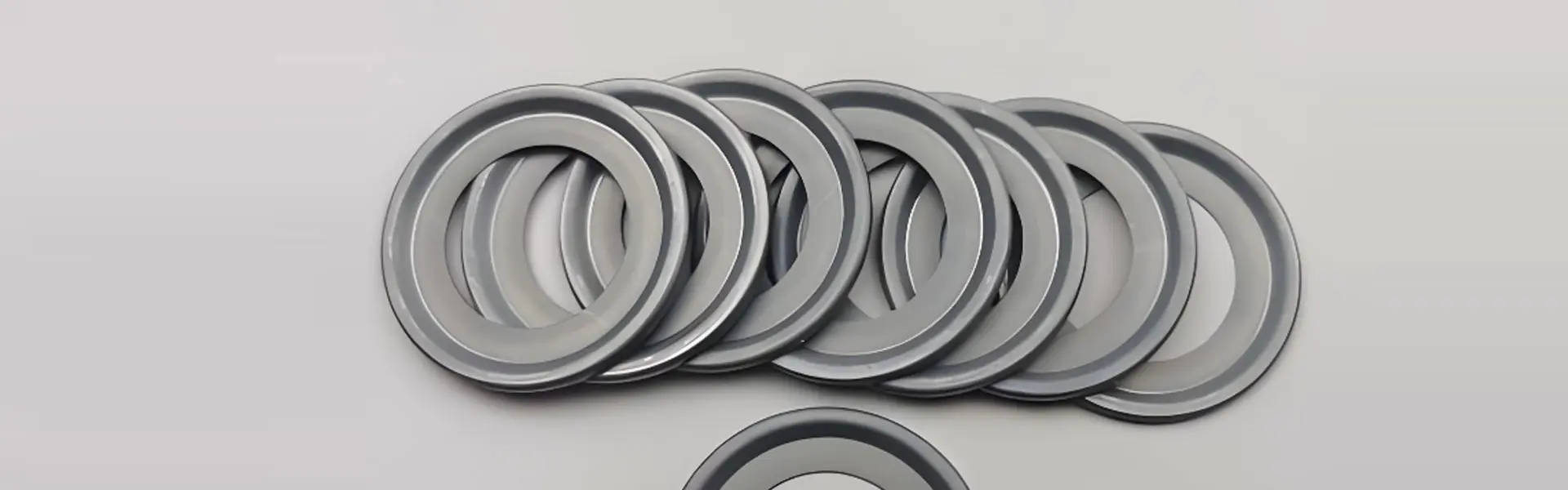
Why do BX ring gaskets fail and how to prevent it? Picture this: a high‑pressure wellhead in the middle of a critical operation. Everything is running smoothly until a sudden hiss turns into a blowout — all because a single BX ring gasket gave way. Downtime, safety hazards, and thousands of dollars in lost revenue. Gasket failure is more common than many engineers admit, yet it is also one of the most preventable issues in oil & gas, petrochemical, and power generation systems. BX ring gaskets are precision‑engineered metal seals designed for extreme pressures (up to 20,000 psi) and high temperatures. When they fail, it’s usually not the gasket itself but the way it was selected, installed, or maintained. In this guide, you’ll discover real‑world failure scenarios and actionable prevention steps, and you’ll see how the right supplier — like Ningbo Kaxite Sealing Materials Co., Ltd. — can help you avoid these costly mistakes altogether.
Before you can prevent failure, you need to recognize what it looks like. BX ring gaskets usually fail in three ways: leakage during hydrotest, premature leakage in service, and catastrophic blowout. Leakage often starts as tiny seepage, which plant operators may ignore until it escalates. In many cases, the failure mode is not a material defect but a surface mismatch — the gasket never fully seats into the ring groove of the flange. Another frequent scenario is galling during make‑up, where friction damages the sealing surfaces and creates a leak path. Ningbo Kaxite Sealing Materials Co., Ltd. has seen these failures repeatedly in returned gaskets, and the root cause almost always points back to improper installation or incompatible material hardness.

Let’s go deeper into why BX ring gaskets fail. One procurement manager at a Gulf Coast refinery shared a painful story: they ordered a batch of BX‑154 gaskets in 316 stainless steel. The material cert was perfect, but after a few pressure cycles, the gaskets began to leak. The investigation revealed that the ring groove on the flange had slight corrosion, causing uneven compression. The gasket — although made correctly — could not compensate for the flawed flange surface.
Other root causes include:
Understanding these factors is the first step to eliminating failures system‑wide.
Prevention starts long before the gasket touches the flange. It begins with engineering specification and supplier qualification. Ningbo Kaxite Sealing Materials Co., Ltd. recommends a five‑pillar approach:
Implementing these steps reduces the probability of failure by over 90% in field applications.
| BX Ring Number | Nominal Bore (in) | Working Pressure (psi) | Recommended Bolt Torque (ft‑lbs)* |
|---|---|---|---|
| BX‑150 | 1 13/16 | 5,000 – 20,000 | 60 – 110 |
| BX‑154 | 2 9/16 | 5,000 – 15,000 | 150 – 280 |
| BX‑155 | 3 1/16 | 5,000 – 15,000 | 220 – 400 |
| BX‑169 | 11 | 5,000 | 1,200 – 2,100 |
*Values depend on lubrication, bolt material, and flange condition. Always consult the equipment manual.
Even the best gasket will fail if installed carelessly. Here’s a real‑world scenario: a technician drops a BX ring, then picks it up and installs it without inspection. The invisible ding on the sealing face becomes a high‑pressure leak path. Prevention is simple: handle rings with clean gloves, keep them in original packaging until installation, and never use hooks or sharp instruments to lift them. After installation, a low‑pressure nitrogen test can catch seating issues before full pressurization. Ningbo Kaxite Sealing Materials Co., Ltd. ships every BX ring in a sealed, cushioned box with a protective coating, drastically reducing handling damage.
Material selection is another area where failures begin. BX rings come in soft iron (D‑material), low‑carbon steel, 304/316 stainless steel, and exotic alloys like Inconel. The golden rule: the gasket must be softer than the flange groove material. This ensures the gasket deforms, not the costly flange. For sour service (NACE MR‑0175), hardness is capped at 22 HRC. Soft iron is common for standard oilfield equipment, while Inconel suits high‑temperature, high‑corrosion environments. Ningbo Kaxite can provide custom hardness‑tested gaskets with full traceability, so you never have to guess.
Material conformity is only part of the equation. Most in‑service failures result from uneven bolt loads, contaminated sealing surfaces, or using a gasket with a hardness that is too close to the flange hardness. If the gasket cannot “flow” into the micro‑grooves, a leak path forms. Additionally, a common oversight is neglecting to re‑torque bolts after the first thermal cycle. Ningbo Kaxite always recommends a hot re‑torque procedure for critical applications.
Hydrotest failures often mean the gasket never seated properly. To prevent this, ensure the flange faces are parallel within 0.5°. Use assembly paste to reduce friction, and apply torque evenly in at least three passes. Also, verify that the test pressure does not exceed the gasket’s rating. A pressure chart for each BX type must be followed. At Ningbo Kaxite, we supply a detailed installation guide with each batch to help your team avoid these pitfalls.
BX ring gasket failures are costly, but they are almost entirely avoidable. By understanding the failure mechanisms and applying strict quality controls from selection through installation, you can achieve leak‑free service for years. Your next step is to partner with a supplier who doesn’t just ship products but provides engineering support to make sure you get it right the first time.
At Ningbo Kaxite Sealing Materials Co., Ltd., we have dedicated our expertise to solving the very issues discussed in this guide. With an ISO 9001‑certified manufacturing facility, in‑house testing for hardness and dimensions, and a global customer base that trusts our BX ring gaskets for their most demanding applications, we are ready to support your sealing challenges. Whether you need standard soft iron BX rings or exotic alloys with full MTR, contact us at [email protected] or visit our website https://www.top-seals.net to request a quote and technical consultation. Your next project deserves a seal that lasts.
Derenne, M., & Payne, J. (2019). The influence of surface finish on metallic gasket sealing performance. Journal of Pressure Vessel Technology, 141(3).
Mueller, R. T. (2017). Failure analysis of ring‑type joint gaskets in offshore manifolds. Engineering Failure Analysis, 78, 112‑124.
API Specification 6A. (2018). Specification for wellhead and christmas tree equipment. American Petroleum Institute, 21st Edition.
NACE MR0175/ISO 15156. (2015). Petroleum and natural gas industries — Materials for use in H2S‑containing environments in oil and gas production. NACE International.
Bickford, J. H. (2008). An introduction to the design and behavior of bolted joints. CRC Press.
Kockelmann, H., & Hahn, R. (2020). Gasket relaxation under thermal cycling: experimental study and FEM simulation. International Journal of Pressure Vessels and Piping, 182, 104061.
Stewart, M. (2016). Surface production operations: Vol. 3. Facility piping and pipeline systems. Gulf Professional Publishing.
Waters, E. O., & Wesstrom, D. B. (2016). Testing of ring gaskets for API flanges. Welding Research Council Bulletin, 281.
Peng, L. C., & Peng, T. L. (2021). Pipe stress engineering. ASME Press.
Meyer, G., & Strozzi, A. (2018). The role of lubrication in metal‑to‑metal sealing of high‑pressure joints. Tribology International, 119, 354‑365.