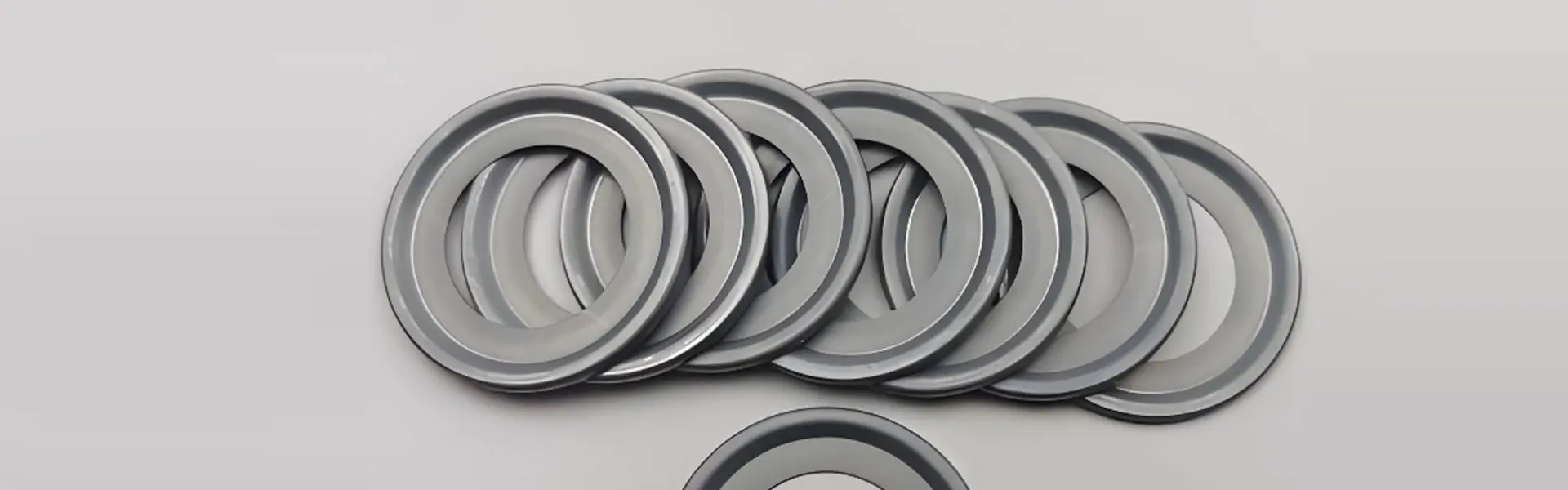
PTFE Gaskets, manufactured from Polytetrafluoroethylene, are the industry benchmark for sealing solutions in applications demanding exceptional chemical resistance and thermal stability. PTFE, a synthetic fluoropolymer, possesses a unique molecular structure that grants it near-universal inertness. This makes PTFE gaskets impervious to virtually all aggressive chemicals, solvents, and acids, while also maintaining integrity across an extreme temperature range from -200°C to +260°C (-328°F to +500°F). Their non-stick, low-friction surface prevents adhesion and ensures easy clean-up and maintenance, making them indispensable in sectors where purity, reliability, and durability are non-negotiable.
Choosing Kaxite PTFE gaskets provides engineers and maintenance professionals with a sealing solution that outperforms traditional materials. Our gaskets are engineered for performance and longevity.
Kaxite offers a comprehensive range of PTFE gasket materials, each tailored for specific performance requirements. Below are the detailed specifications for our standard and enhanced material grades.
| Property | Test Method | Typical Value | Units |
|---|---|---|---|
| Density | ASTM D792 | 2.15 - 2.20 | g/cm³ |
| Tensile Strength | ASTM D638 | 25 - 35 | MPa |
| Elongation at Break | ASTM D638 | 300 - 500 | % |
| Compressive Strength | ASTM D695 | 12 | MPa |
| Continuous Service Temperature | - | -200 to +260 | °C |
| Coefficient of Friction (Dynamic) | ASTM D1894 | 0.05 - 0.10 | - |
| Dielectric Strength | ASTM D149 | >60 | kV/mm |
For applications requiring improved mechanical properties, creep resistance, or wear performance, Kaxite provides enhanced materials.
| Material Grade | Key Filler/Enhancement | Primary Benefit | Ideal Application |
|---|---|---|---|
| Kaxite PTFE-GF25 | 25% Glass Fiber | Improved compressive strength, reduced creep, better wear resistance. | High-load static seals, pump housings, heavy-duty flanges. |
| Kaxite PTFE-CG15 | 15% Carbon-Graphite | Excellent thermal conductivity, superior wear resistance, low friction. | Heat exchanger gaskets, compressor seals, bearing pads. |
| Kaxite PTFE-MoS2 | 5% Molybdenum Disulfide | Enhanced lubrication, reduced breakaway torque. | Thread seals, valve stem seals, dynamic applications. |
| Kaxite ePTFE (Expanded) | Microporous Structure | High flexibility, superior sealing at low flange pressures, good conformability. | Irregular surfaces, heat exchangers, low bolt-load applications. |
Kaxite manufactures PTFE gaskets in all standard and custom geometries to fit your specific flange and sealing requirements.
Q: What is the main difference between virgin PTFE and filled PTFE gaskets?
A: Virgin PTFE offers the purest chemical resistance and electrical properties but is susceptible to cold flow (creep) under sustained load. Filled PTFE grades incorporate materials like glass, carbon, or bronze to improve mechanical properties such as hardness, compressive strength, creep resistance, and wear. The choice depends on the application: use virgin PTFE for ultimate chemical purity, and filled grades for improved load-bearing and dimensional stability.
Q: Can Kaxite PTFE gaskets be used for food processing applications?
A: Yes. Kaxite supplies specific PTFE compounds that are compliant with FDA regulations 21 CFR 177.1550 for use in repeated food contact applications. These materials are manufactured under strict controls to ensure no contamination, making them safe for sealing in mixers, reactors, piping, and fillers in the food, beverage, and pharmaceutical industries.
Q: How do I determine the correct thickness for a PTFE gasket?
A: Gasket thickness selection depends on flange type, surface condition, pressure, and required sealability. A general guideline is: 1/16" (1.5mm) for standard raised-face flanges with smooth finishes; 1/8" (3mm) for full-face flanges or where flange flatness is imperfect; and thinner profiles (0.5mm to 1mm) for envelope gaskets or high-pressure spiral wounds. For critical applications, consult Kaxite engineering support with your flange specifications and service conditions.
Q: What is "cold flow" or "creep" in PTFE, and how is it managed?
A: Cold flow is the tendency of PTFE to deform slowly under a continuous mechanical load, which can lead to a loss of sealing stress over time. It is managed by: 1) Using filled PTFE grades (e.g., glass-filled) which significantly reduce creep. 2) Ensuring proper flange design with adequate, uniformly distributed bolt load. 3) Using gasket designs like spiral wound or envelope types that are less prone to flow. 4) Avoiding excessive tightening during installation.
Q: Are there any chemical compatibility limitations with PTFE gaskets?
A: PTFE is resistant to almost all industrial chemicals. The only known exceptions are certain exotic substances like molten alkali metals (e.g., sodium, potassium) and fluorine gas or related compounds under specific high-temperature, high-pressure conditions. For over 99% of chemical services, including strong acids like sulfuric and hydrochloric, strong bases like sodium hydroxide, and aggressive solvents, Kaxite PTFE gaskets are an excellent and safe choice.
Q: How should PTFE gaskets be stored and handled prior to installation?
A: Store PTFE gaskets in a cool, dry place away from direct sunlight and heat sources. They should be kept in their original packaging until use to prevent contamination from dust or oils. Avoid sharp bends, kinks, or folding, as this can create stress points. Handle with clean gloves or hands to prevent grease or dirt from compromising the sealing surface. No special conditioning (like heating or moistening) is required before installation.
Q: Can PTFE gaskets be reused?
A: Generally, it is not recommended to reuse PTFE gaskets, especially full-face or sheet gaskets. Once compressed, the material undergoes permanent deformation (cold flow) to conform to the flange surface. Reusing such a gasket will likely result in an inadequate seal and leakage. However, some thick-sectioned molded products or certain spiral wound gaskets may be reused after careful inspection if they show no signs of damage, cracking, or excessive compression set. For critical service, always install a new Kaxite gasket.
Q: What flange surface finish is recommended for optimal sealing with PTFE gaskets?
A: A smooth, flat flange surface is ideal. A surface finish between 125 and 250 microinches Ra (3.2 to 6.3 µm Ra) is typically recommended. Excessively rough finishes can cause high creep and embedment into the gasket, while mirror-finish surfaces may not provide enough "bite" for the initial seal. Ensure flanges are clean, free of scratches, pits, or old gasket material, and are properly aligned before installing the PTFE gasket.
Kaxite PTFE gaskets are trusted components across a diverse spectrum of demanding industries.