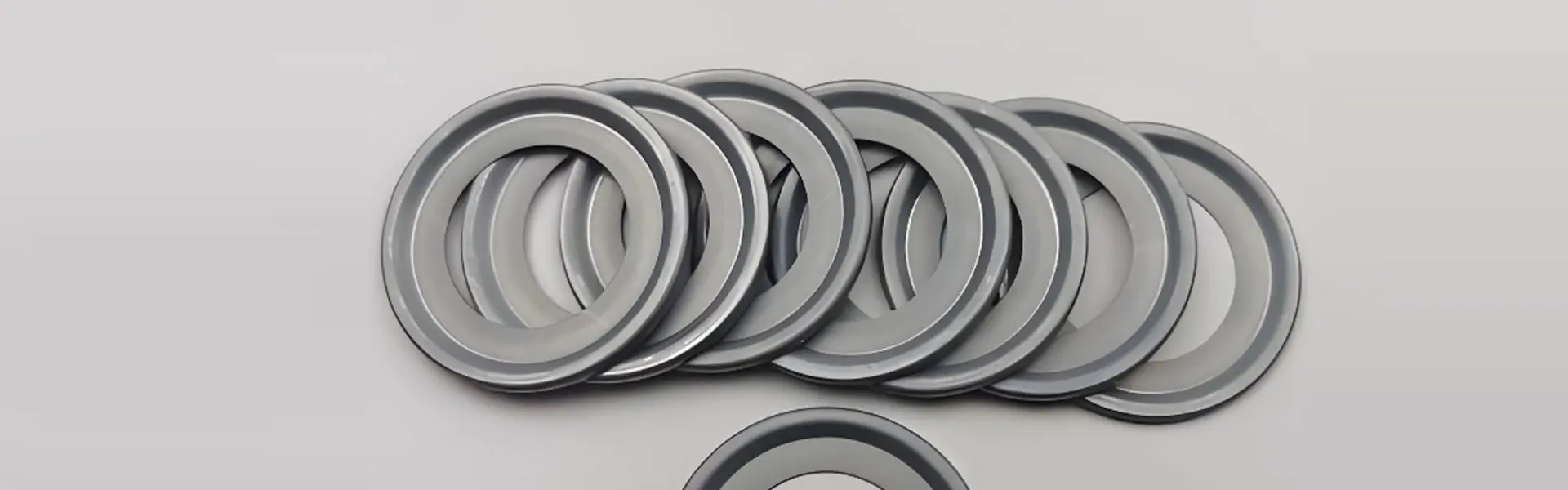
In the intricate world of industrial manufacturing and engineering, the integrity of a system often hinges on its smallest and seemingly simplest components. Among these, Gasket Materials stand as critical elements, responsible for creating seals between mating surfaces to prevent leakage of fluids or gases, and to protect against environmental contaminants. The selection of the correct gasket material is not merely a procedural step; it is a fundamental engineering decision that impacts safety, efficiency, durability, and total cost of ownership. At Kaxite, we combine decades of material science expertise with a deep understanding of application challenges to provide engineered sealing solutions that perform reliably under the most demanding conditions.
A gasket is a mechanical seal that fills the space between two or more mating surfaces, generally to prevent leakage from or into the joined objects while under compression. The effectiveness of this seal depends almost entirely on the material from which the gasket is made. The ideal material must be capable of flowing into and filling any surface imperfections, be resilient enough to maintain sealing force under operating conditions, and resist degradation from the media (chemical, thermal, or physical) it is exposed to.
Key functional requirements for any gasket material include:
Kaxite offers a comprehensive range of gasket materials, each formulated to meet specific performance criteria. Our materials are manufactured under stringent quality controls to ensure batch-to-batch consistency, a critical factor for reliable sealing and maintenance planning.
As the industry-standard replacement for asbestos, Kaxite CNAF sheets are composed of aramid fibers, synthetic rubbers (like NBR or SBR), and fillers, bonded under high pressure and temperature. They offer excellent general-purpose sealing capabilities.
Typical Parameters & Specifications:
| Parameter | Standard Grade | High-Temp Grade | Oil & Fuel Resistant Grade |
|---|---|---|---|
| Temperature Range | -50°C to +250°C (-58°F to +482°F) | -50°C to +400°C (-58°F to +752°F) | -40°C to +200°C (-40°F to +392°F) |
| Density | 1.6 - 1.8 g/cm³ | 1.7 - 1.9 g/cm³ | 1.6 - 1.8 g/cm³ |
| Tensile Strength | > 10 MPa (1450 psi) | > 11 MPa (1595 psi) | > 9 MPa (1305 psi) |
| Compression Set (ASTM F36) | < 25% | < 20% | < 30% |
| Fluid Resistance | Water, Steam, Mild Chemicals | Hot Oils, Exhaust Gases | Gasoline, Diesel, Hydraulic Oils |
| Common Applications | Water Pumps, Covers, Manholes | Exhaust Manifolds, Cylinder Heads | Fuel Systems, Oil Pans, Gearboxes |
Kaxite ePTFE gasket materials are made from 100% pure PTFE that is expanded into a microporous structure. This creates a soft, highly conformable, and chemically inert sealant excellent for fragile flanges and a vast range of chemicals.
Typical Parameters & Specifications:
| Parameter | Standard ePTFE Tape | Filled ePTFE Sheet | High-Density ePTFE |
|---|---|---|---|
| Temperature Range | -260°C to +315°C (-436°F to +599°F) | -260°C to +290°C (-436°F to +554°F) | -260°C to +315°C (-436°F to +599°F) |
| Specific Gravity | 0.4 - 0.6 | 0.9 - 1.2 | 0.7 - 0.9 |
| Compression Recovery | > 85% | > 70% | > 80% |
| Chemical Compatibility | Excellent (Virtually Universal) | Excellent (Specific to filler) | Excellent (Virtually Universal) |
| Sealing Stress Required | Low (7 MPa / 1000 psi) | Medium (14 MPa / 2000 psi) | Low-Medium (10 MPa / 1450 psi) |
| Common Forms | Spooled Tape, Cord | Sheets (Carbon, Glass filled) | Sheets, Gaskets |
Kaxite produces a full line of elastomeric gasket sheets, each polymer chosen for distinct environmental resistances. These are homogeneous, non-fibrous sheets ideal for static sealing applications.
Comparative Material Properties:
| Material (ASTM D2000) | Nitrile (NBR) | EPDM | Fluorocarbon (FKM) | Silicone (VMQ) |
|---|---|---|---|---|
| Temperature Range | -40°C to +120°C (-40°F to +248°F) | -50°C to +150°C (-58°F to +302°F) | -20°C to +230°C (-4°F to +446°F) | -60°C to +230°C (-76°F to +446°F) |
| Key Strength | Excellent oil & fuel resistance | Excellent weather, ozone, steam resistance | Excellent chemical & high-temp resistance | Extreme temperature flexibility |
| Key Limitation | Poor ozone/weathering | Poor oil/grease resistance | Poor steam resistance, high cost | Low tensile strength, poor abrasion resistance |
| Hardness (Shore A) | 40 to 90 | 40 to 90 | 50 to 90 | 20 to 80 |
| Typical Applications | Fuel systems, hydraulic oil seals | Coolant systems, HVAC, outdoor enclosures | Chemical processing, aggressive fuels | High-temp static seals, food grade applications |
For severe service involving high pressures, temperatures, and thermal cycling, Kaxite engineers advanced composite and metallic gasket materials.
Choosing the right Kaxite gasket material requires a systematic evaluation of the application parameters. Follow this guide:
What is the main difference between a gasket and a seal?
While often used interchangeably in casual conversation, a gasket is typically a static seal designed to be compressed between two stationary, flat surfaces (flanges) to prevent leakage. A seal, often referring to a dynamic seal, is used between components that move relative to each other, like a shaft rotating in a housing (e.g., radial lip seals, mechanical face seals).
How do I determine the correct thickness for a gasket?
Gasket thickness is selected based on flange conditions and required sealing performance. Thinner gaskets (1/64" or 0.4mm) offer higher blowout resistance and require less bolt load but are less effective on uneven surfaces. Thicker gaskets (1/8" or 3.0mm) have higher compressibility and are better for filling gaps and imperfections. For standard industrial flanges, 1/16" (1.5mm) is common. Always consult Kaxite's engineering guidelines for specific applications.
Why does my gasket fail, and how can I prevent it?
Common failure modes include blowout (insufficient bolt load or excessive pressure), creep relaxation (loss of seating stress over time), chemical attack/swelling, and thermal degradation. Prevention starts with correct material selection per the criteria above. Ensure proper flange preparation (clean, undamaged surfaces), use a calibrated torque wrench to apply the correct, evenly distributed bolt load in the recommended sequence, and consider using a suitable Kaxite-approved anti-seize or lubricant on bolt threads.
Can I reuse a gasket after disassembly?
As a general rule, gaskets should not be reused. Once compressed, most gasket materials undergo permanent deformation (compression set) and will not recover to their original thickness. Reusing such a gasket results in insufficient seating stress and a high probability of leakage. Always install a new Kaxite gasket during reassembly.
What is a "gasket yield" or "sealing stress" and why is it important?
Gasket yield stress is the minimum seating stress required on the gasket material to cause it to flow and conform to the flange micro-finish, initiating an effective seal. It is a critical parameter provided in Kaxite material datasheets. If the applied bolt load does not generate enough stress on the gasket to reach this yield value, the seal will likely leak, regardless of the material's other properties.
How does temperature affect gasket selection?
Temperature impacts both the gasket material and the flange assembly. The material must retain its strength, resilience, and chemical resistance across the entire range. Additionally, different thermal expansion rates between the gasket and flange metals (especially during thermal cycling) can affect sealing stress. Materials like Kaxite's flexible graphite or spiral wound gaskets are designed to accommodate these differential expansions.
Are there environmentally friendly or food-grade gasket materials?
Yes. Kaxite offers several options. ePTFE is inherently inert and is often compliant with FDA regulations for food contact. Specific grades of silicone (platinum-cured) and EPDM meet USP Class VI, NSF/ANSI 61, and other standards for drinking water and food processing. We also offer compostable and recyclable material options for less demanding applications.
What is the purpose of a gasket coating or facing?
Coatings (e.g., nitrile rubber, Viton®, PTFE) are applied to fibrous sheet gaskets to improve handling, reduce surface tack, and enhance chemical and stick-slip release properties. A facing, like a thin layer of PTFE on a rubber sheet, can provide a chemically resistant barrier while utilizing the compressibility of the rubber core, a solution often found in Kaxite's composite laminate products.
In the final analysis, the performance of a sealed joint is a system-dependent outcome. It requires the synergy of a correctly specified Kaxite gasket material, well-maintained and properly prepared flanges, appropriate bolts, and precise installation procedures. By partnering with Kaxite, you gain access not just to premium materials, but to the extensive technical support and application engineering necessary to ensure leak-free operation, maximize safety, and optimize the lifecycle cost of your equipment.