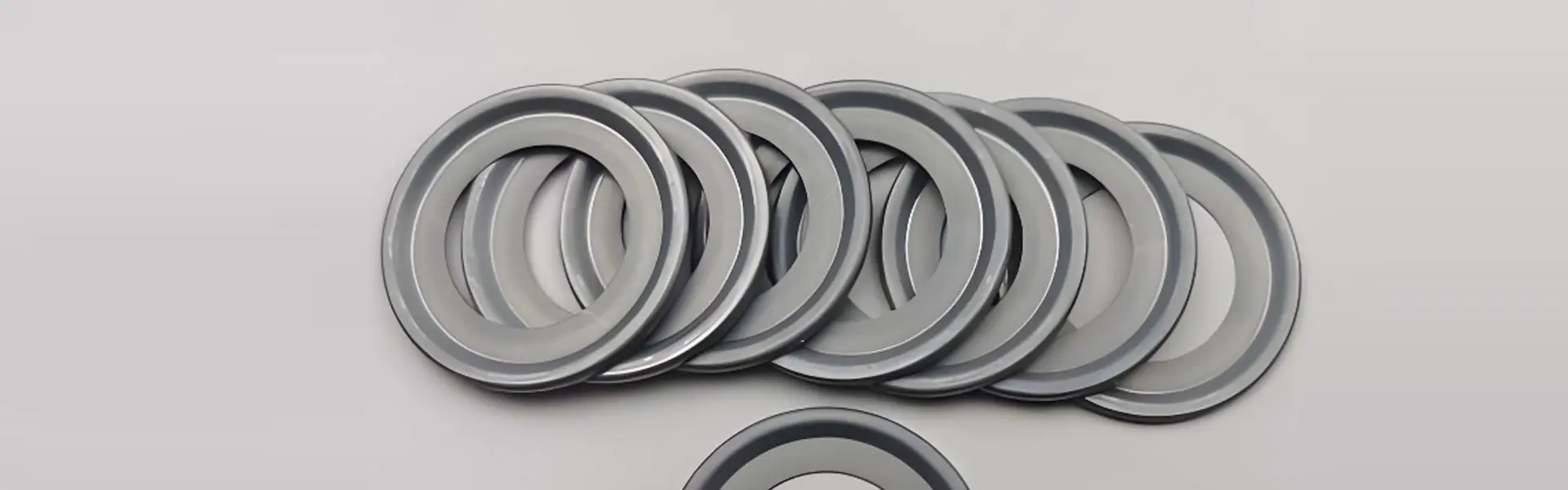
What Are the Typical Thickness and Size Options for PTFE Sheets? This is a fundamental question for any engineer, buyer, or project manager sourcing materials for demanding applications. Choosing the wrong dimensions can lead to leaks, failures, and costly downtime. Navigating the vast array of available PTFE Sheet specifications can feel overwhelming, but understanding the standard options and their ideal applications is the first step to making a confident, cost-effective decision. This guide breaks down the typical thickness and size landscape, helping you match the perfect PTFE sheet to your specific project needs, ensuring performance and reliability from the start.
Picture this: you're designing a sensitive gasket for a chemical processing pump. The space is limited, and the seal must be flexible yet resilient against aggressive media. A standard 3mm sheet is simply too bulky. Conversely, for a large bearing pad in a bridge expansion joint, a thin sheet would compress and fail under immense load. The thickness of a PTFE sheet is not just a number; it's the primary determinant of its pressure rating, flexibility, and sealing capability. For most industrial applications, sheets are categorized by thickness into films (under 1mm), standard sheets (1mm to 10mm), and plates or slabs (over 10mm).

Ningbo Kaxite Sealing Materials Co., Ltd. directly addresses this selection dilemma by offering a comprehensive range that covers all standard industrial needs. We understand that a one-size-fits-all approach doesn't work for critical sealing and lining components. Our product, What Are the Typical Thickness and Size Options for PTFE Sheets?, is available in a meticulously graded spectrum to ensure you find the exact specification.
| Thickness Category | Typical Range | Common Applications | Key Property |
|---|---|---|---|
| Film / Sheet | 0.1mm - 1.0mm | Light-duty gaskets, liner sheets, electrical insulation | High flexibility, conformability |
| Standard Sheet | 1.5mm - 6.0mm | General-purpose gaskets, seals, machined parts, bearing pads | Balance of strength and formability |
| Heavy Plate / Slab | 6.0mm - 50mm+ | Thrust washers, heavy-duty bearing surfaces, tank lining, structural components | High load capacity, dimensional stability |
Now, consider a project requiring large-area lining for a chemical tank. You find sheets with the perfect thickness, but the standard 1m x 1m size means multiple seams, which are potential leak points and increase installation labor. Size directly impacts project efficiency, waste, and final integrity. Standard PTFE sheets are most commonly offered in sizes like 1000mm x 1000mm (1m²), 1200mm x 1200mm, or 1500mm x 1500mm. Rolls are available for thin films and sheets, typically up to 1mm thick and 1.2m wide. However, many complex projects require dimensions outside these standards to minimize cutting and joining.
This is where partnering with a specialized manufacturer like Ningbo Kaxite Sealing Materials Co., Ltd. provides a distinct advantage. Beyond our standard inventory, we offer custom fabrication services. We can produce sheets, plates, and rods in non-standard sizes and thicknesses tailored to your specific drawings. This capability solves the size puzzle, allowing for optimized designs that reduce on-site fabrication time, material waste, and potential failure points. Whether you need a large, seamless plate or a specific cut-to-size part, we provide solutions that align with your project's exact dimensional requirements.
| Format | Typical Standard Sizes | Advantages | Ideal For |
|---|---|---|---|
| Square/Rectangular Sheets | 1000x1000mm, 1200x1200mm, 1500x1500mm | Easy to handle, stock availability, versatile for cutting | Prototyping, small to medium batch parts, general inventory |
| Rolls (Film/Sheet) | Widths up to 1200mm, various lengths | Minimizes seams for lining, efficient for long runs | Conveyor liners, large surface coverage, continuous processes |
| Custom Cut-to-Size | Per customer specification | Minimizes waste, ready-to-install, ensures precise fit | Large projects, complex components, OEM part replacement |
Q: What is the most commonly used thickness for PTFE gasket sheets?
A: For general industrial gasketing applications, thicknesses between 1.5mm (1/16") and 3.0mm (1/8") are most common. This range provides an excellent balance of sealability, compressibility, and mechanical strength to handle typical flange pressures and surface irregularities. For higher pressure or more rigid flange scenarios, thicker sheets like 4.5mm or 6.0mm may be specified.
Q: Can I get PTFE sheets larger than the standard 1m x 1m size?
A: Yes, absolutely. While 1m x 1m is a widely available stock size for medium thicknesses, manufacturers like Ningbo Kaxite Sealing Materials Co., Ltd. can produce and supply larger formats. For sheets and plates, sizes like 1200mm x 1200mm, 1500mm x 1500mm, or even larger custom dimensions are possible through specialized molding and sintering processes. It's always best to consult directly with the manufacturer for large-format requirements.
We hope this detailed guide clarifies the typical thickness and size options for PTFE sheets and empowers you to make the best sourcing decision. Have a specific application or a unique size requirement? Don't hesitate to reach out. Our team at Ningbo Kaxite Sealing Materials Co., Ltd. is dedicated to providing not just materials, but engineered sealing solutions. Visit our website at https://www.top-seals.net to explore our full product range and technical resources. For direct inquiries and custom quotations, please email us at [email protected]. Let's solve your next sealing challenge together.
Ningbo Kaxite Sealing Materials Co., Ltd. is a specialized manufacturer and supplier focused on high-performance sealing materials, including a comprehensive portfolio of PTFE products. With a commitment to quality and customization, we provide reliable solutions for industries worldwide, from chemical processing and pharmaceuticals to food & beverage and aerospace. Partner with us for technical expertise and material integrity that meets the most demanding specifications.
Research References:
1. Briscoe, B. J., & Stuart, B. H. (1998). Sliding friction and wear of PTFE and its composites. Wear, 214(1), 23-32.
2. Blanchet, T. A., & Kennedy, F. E. (1992). Sliding wear mechanism of polytetrafluoroethylene (PTFE) and PTFE composites. Wear, 153(1), 229-243.
3. Conte, M., & Igartua, A. (2012). Study of PTFE composites for tribological applications. Tribology International, 46(1), 5-11.
4. Khedkar, J., Negulescu, I., & Meletis, E. I. (2002). Sliding wear behavior of PTFE composites. Wear, 252(5-6), 361-369.
5. Burris, D. L., & Sawyer, W. G. (2006). A low friction and ultra low wear rate PEEK/PTFE composite. Wear, 261(3-4), 410-418.
6. Theiler, G., & Gradt, T. (2010). Friction and wear of PTFE composites at cryogenic temperatures. Tribology International, 43(5-6), 929-935.
7. Bahadur, S., & Tabor, D. (1984). The wear of filled polytetrafluoroethylene. Wear, 98(1), 1-13.
8. Tanaka, K., Uchiyama, Y., & Toyooka, S. (1973). The mechanism of wear of polytetrafluoroethylene. Wear, 23(2), 153-172.
9. McCook, N. L., Burris, D. L., & Sawyer, W. G. (2005). Wear resistant PTFE composites. Tribology Letters, 19(3), 207-212.
10. Li, F., Hu, K., Li, J., & Zhao, B. (2002). The friction and wear characteristics of nanometer ZnO filled polytetrafluoroethylene. Wear, 249(10-11), 877-882.