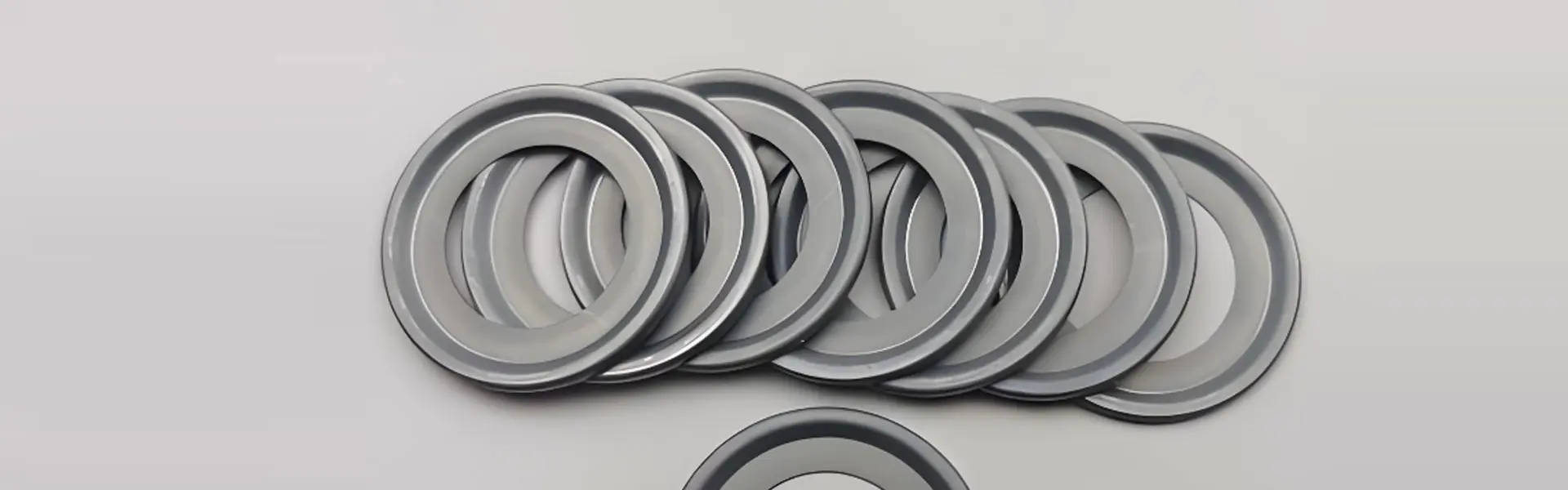
Imagine a gas processing plant in the North Sea. A flange on a 10,000 psi line starts emitting a faint hiss. The maintenance team isolates the line, pulls the joint apart, and finds a crushed spiral wound gasket that could not handle the pressure cycling. This is the moment engineers ask: How does an Octagonal Ring Joint Gasket work? Unlike flat or spiral wound gaskets, an octagonal ring joint gasket creates a high-integrity, metal-to-metal seal by being compressed into a machined groove on the flange face. The gasket’s octagonal cross-section bites into the groove as the bolts are torqued, producing a tight, self-energizing seal that resists blowout, vibration, and thermal cycling. For procurement teams, choosing the right RTJ gasket is not just about dimensions — it is about matching material hardness, coating, and dimensional tolerance to the flange. This is where Ningbo Kaxite Sealing Materials Co., Ltd. steps in as a reliable manufacturing partner that helps you avoid costly downtime through consistent quality and traceable production.

A procurement engineer at a gas compression station once ordered RTJ gaskets from a low-cost supplier. The gaskets arrived with hardness values above the flange specification. Within weeks, three flange grooves showed galling, and the maintenance budget blew past its quarterly limit. This is a common pain point: buyers focus on price and forget that an octagonal ring joint gasket only works correctly when its hardness is lower than the mating flange. In high-pressure systems, flange grooves are machined to tight tolerances. If the gasket is too hard or dimensionally off, the metal-to-metal contact becomes a metal-to-metal failure. The solution is to source rings that meet ASME B16.20 and API 6A dimensions, with certified hardness and surface finish. Ningbo Kaxite Sealing Materials Co., Ltd. addresses this by testing each batch and providing material traceability before shipment.
| Failure Mode | Root Cause | Solution |
|---|---|---|
| Blowout under pressure surge | Undersized ring or wrong material | Use API 6A R or RX octagonal ring with verified yield strength |
| Flange groove damage | Gasket hardness too high | Specify ring hardness lower than flange, e.g. 316L max 160 HBW |
| Leakage after thermal cycling | Poor dimensional accuracy | Use CNC-machined rings with surface roughness Ra ≤ 3.2 μm |
| Sour service corrosion | Unsuitable alloy | Choose Inconel 825 or 625 per NACE MR0175 |
At its core, the octagonal ring joint gasket does not rely on a soft filler material. Instead, it uses the controlled deformation of metal to seal a flange joint. Step one: the octagonal ring is placed into a precision-machined trapezoidal groove on the flange face. Step two: as the bolts are torqued, the ring is compressed between the two groove faces. Step three: the contact stress exceeds the yield strength of the ring, causing it to flow slightly into the groove surface. Step four: a continuous, high-pressure seal is formed around the circumference. Because the ring is fully confined in a groove, it cannot blow out even if the line pressure spikes. This is why API 6A wellhead and ASME B16.5 high-pressure flanges use RTJ gaskets in critical services.
| Step | Action | Sealing Result |
|---|---|---|
| 1 | Place ring into trapezoidal groove | Correct alignment |
| 2 | Apply bolt preload | Metal-to-metal contact starts |
| 3 | Torque to specified load | Ring yields slightly into groove |
| 4 | Line pressure increases | Self-energizing seal tightens |
Q: How does an octagonal ring joint gasket work when system pressure fluctuates?
A: The metal ring stays seated because the groove restrains it. Internal pressure pushes the ring outward against the groove wall, increasing contact stress. This self-energizing effect means the seal often becomes tighter as pressure rises, which is essential for pulsating gas and liquid lines.
Picture this: a maintenance crew in a refinery pulls a flange during a shutdown. They find an old octagonal ring that still looks shiny. One technician asks, "Why not reuse it?" Reusing a ring is one of the fastest ways to create a leak path. After compression, the ring has already deformed to match the groove. Once removed, it can never reseal reliably. The solution is simple: always install a new ring, clean the groove with a solvent, inspect for scratches, and apply an appropriate anti-seize compound. Follow the bolt tightening sequence from ASME PCC-1. These steps sound basic, but they prevent most field failures.
| Installation Parameter | Recommended Practice | Consequence if Ignored |
|---|---|---|
| Ring reuse | Never reuse deformed or corroded rings | Leak path and groove damage |
| Groove cleanliness | Degrease and inspect for nicks and rust | Poor metal-to-metal contact |
| Lubrication | Use anti-seize compatible with ring material | Galling and uneven torque |
| Bolt tightening | Follow ASME PCC-1 star pattern | Uneven compression and leakage |
When a buyer asks, "What material should I choose for this octagonal ring joint gasket?" the answer depends on the fluid, temperature, and flange material. A soft iron ring works for low-pressure utility lines, but it will corrode quickly in offshore sour gas. Carbon steel is economical for general oil and gas, while 316L stainless steel handles corrosive and cryogenic conditions. Duplex and Inconel alloys are specified for sour service, high chloride, or high-temperature applications. The key is hardness: the gasket must be softer than the flange groove to avoid groove damage. Ningbo Kaxite Sealing Materials Co., Ltd. supplies all these materials with full heat traceability and hardness reports.
| Material | Max Hardness | Temperature Range | Typical Application |
|---|---|---|---|
| Soft iron | 90 HRB | -29°C to 450°C | Low-pressure ASME flanges |
| Carbon steel | 120 HBW | -29°C to 500°C | General oil and gas |
| 316L stainless steel | 160 HBW | -196°C to 600°C | Corrosive and cryogenic |
| Duplex F51 | 235 HBW | -50°C to 300°C | Chloride and sour service |
| Inconel 825 | 180 HBW | -196°C to 650°C | Acid and high-temp sour gas |
Q1: How does an octagonal ring joint gasket work compared with an oval ring joint gasket?
A1: Both styles seal in a machined flange groove, but the octagonal profile provides a larger sealing contact area and is less likely to twist during installation. Modern API 6A and ASME flanges favor the octagonal shape because it offers more consistent stress distribution and easier centering.
Q2: How does an octagonal ring joint gasket work in corrosive environments?
A2: The ring material is selected to match or exceed the corrosion resistance of the flange and pipe. Because the seal is metal-to-metal, there is no soft filler to degrade. In H2S, CO2, or high-temperature steam, the right alloy such as Inconel 825 or 625 maintains a stable seal and prevents stress corrosion cracking.
| Feature | Octagonal Ring | Oval Ring |
|---|---|---|
| Sealing contact area | Larger | Smaller |
| Installation twist resistance | Better | Moderate |
| Common standard | API 6A, ASME B16.20 | Legacy API flanges |
Procurement teams often face three problems: inconsistent dimensional accuracy, missing material certificates, and long lead times from overseas middlemen. Ningbo Kaxite Sealing Materials Co., Ltd. operates its own sealing material factory in Ningbo, China, with CNC lathes, hardness testers, and a dedicated inspection line for RTJ gaskets. Every batch can be supplied with an EN 10204 3.1 material certificate, dimensional reports, and laser marking for full traceability. We accept custom sizes in R, RX, and BX configurations, and we support small trials before bulk orders. This direct factory model reduces cost without cutting corners.
| Inspection Stage | Method | Acceptance Criteria |
|---|---|---|
| Raw material | Spectrometer analysis | ASTM/ASME chemistry |
| Hardness | Brinell/Rockwell | Below flange hardness |
| Dimension | CMM and projection | ASME B16.20 tolerance |
| Surface defect | Visual + dye penetrant | No cracks or burrs |
| Marking | Laser marking | Heat number and standard |
Have you faced a sealing failure that shut down your line? Share your scenario with our engineers. We can help you select the correct octagonal ring joint gasket, verify groove compatibility, and avoid repeat failures.
At Ningbo Kaxite Sealing Materials Co., Ltd., we are not just a gasket supplier. We work as an extension of your procurement and engineering team, providing reliable octagonal ring joint gaskets, spiral wound gaskets, and sealing solutions for oil and gas, petrochemical, and power generation. Contact our export team today at [email protected] for a quote or technical support.
Abid, M., Nash, D. H. (2004). Comparative study of the behaviour of conventional gasketed and compact non-gasketed flanged pipe joints under bolt up and operating conditions. International Journal of Pressure Vessels and Piping, 81(10-11), 831-841.
Bazergui, A., Payne, J. R. (1984). Progress in gasket testing. Experimental Mechanics, 24(1), 79-88.
Bouzid, A., Beghoul, M. (2003). A simple model for predicting the leakage of gasketed joints. Journal of Pressure Vessel Technology, 125(2), 201-207.
Fessler, H., Hyde, T. H. (1997). Stress distribution in a gasketed pipe flange. Journal of Strain Analysis, 23(1), 35-42.
Kobayashi, T., Hamano, K. (2005). Effect of surface roughness on sealing performance of RTJ gaskets. Journal of High Pressure Institute of Japan, 43(6), 322-329.
Murali Krishna, M., Siva Kumar, R., Sreenivasulu, K. (2007). Leakage analysis of ring type joint gaskets in API flanges. International Journal of Pressure Vessels and Piping, 84(9), 647-654.
Nagata, S., Shoji, Y. (1999). Development of metal gaskets for high pressure applications. Journal of Pressure Vessel Technology, 121(4), 465-470.
Sawa, T., Maruyama, K. (2009). Sealing performance of metallic gaskets under internal pressure and thermal cycles. Journal of Mechanical Design, 131(11), 111402.
Webjörn, J. (2007). The bolted joint: a review of gasket technology and performance. Journal of Engineering Materials and Technology, 129(3), 365-372.
Zerres, H., Guérout, F. (2011). Corrosion resistance of ring joint gaskets in sour service. Corrosion Science, 53(4), 1450-1457.
-