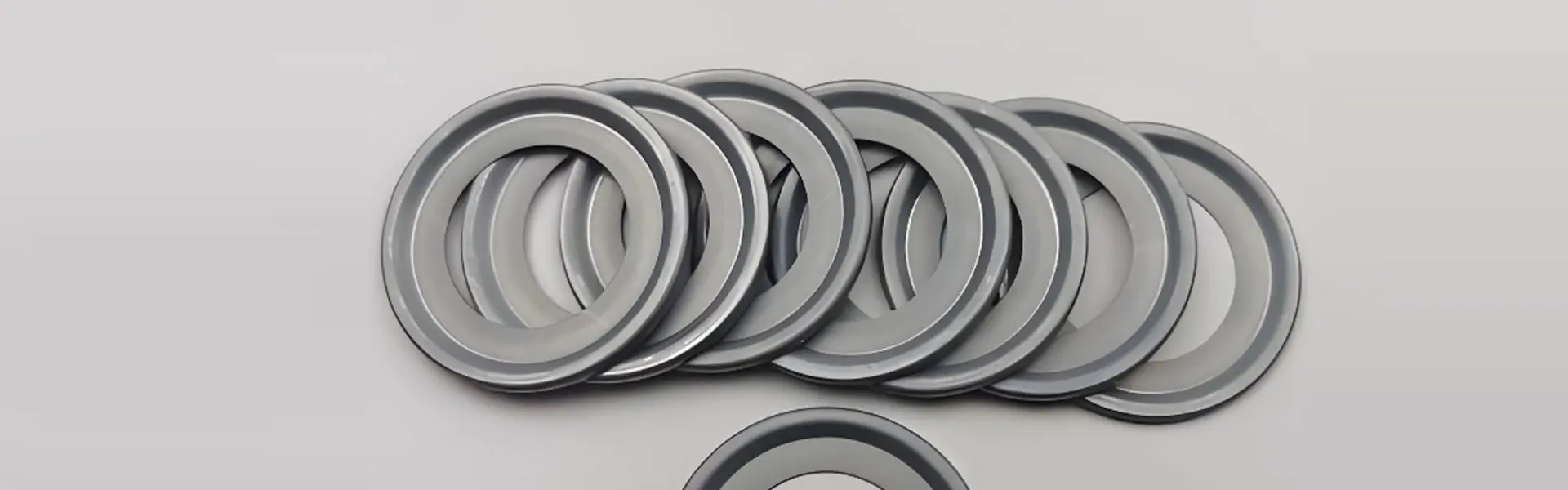
PTFE Film, or Polytetrafluoroethylene Film, is a high-performance fluoropolymer material renowned for its exceptional chemical resistance, outstanding thermal stability, and excellent dielectric properties. As a premier manufacturer, Kaxite specializes in producing advanced PTFE films that meet the rigorous demands of industries ranging from aerospace and medical to electronics and industrial fabrication. Our commitment to precision engineering and stringent quality control ensures that every roll of Kaxite PTFE Film delivers reliable, consistent performance in the most challenging environments.
This versatile material serves as an indispensable component in applications where failure is not an option. Its unique combination of properties makes it the material of choice for critical seals, high-frequency circuit substrates, release liners, and filtration media. At Kaxite, we understand these critical needs and tailor our film's properties—from thickness and tensile strength to surface treatment—to provide optimal solutions for specific engineering challenges.
The performance of Kaxite PTFE Film is defined by a precise set of material properties. Below are the core specifications that underpin our product's reliability.
For engineers and specifiers, detailed quantitative data is essential. The following tables provide a comprehensive overview of Kaxite PTFE Film's mechanical, thermal, and electrical characteristics across our standard thickness range.
| Thickness (mm) | Thickness (mil) | Tensile Strength (MD) MPa | Tensile Strength (TD) MPa | Elongation at Break (MD) % | Elongation at Break (TD) % |
|---|---|---|---|---|---|
| 0.025 | 1 | 25.0 | 20.0 | 200 | 300 |
| 0.05 | 2 | 30.0 | 25.0 | 250 | 350 |
| 0.10 | 4 | 35.0 | 30.0 | 280 | 380 |
| 0.25 | 10 | 40.0 | 35.0 | 300 | 400 | 0.50 | 20 | 42.0 | 38.0 | 320 | 420 |
Note: MD = Machine Direction, TD = Transverse Direction. Values are typical; specific data sheets are available upon request.
| Property | Test Method | Value / Rating | Conditions / Notes |
|---|---|---|---|
| Melting Point | ASTM D3418 | 327°C (621°F) | - |
| Continuous Use Temperature | - | -200°C to +260°C | No significant degradation |
| Coefficient of Linear Thermal Expansion | ASTM D696 | 12 x 10-5/°C | 20°C to 100°C |
| Thermal Conductivity | ASTM D5470 | 0.25 W/m·K | At 25°C |
| Dielectric Constant | ASTM D150 | 2.1 | 1 MHz, 23°C |
| Dissipation Factor | ASTM D150 | < 0.0002 | 1 MHz, 23°C |
| Volume Resistivity | ASTM D257 | >1018 Ω·cm | At 23°C, 50% RH |
What are the primary advantages of using Kaxite PTFE Film over other plastic films?
Kaxite PTFE Film offers a unique and unmatched combination of properties: extreme chemical resistance to almost all industrial chemicals, an exceptionally wide operational temperature range from cryogenic to high heat, outstanding electrical insulation with a low and stable dielectric constant, and superior non-stick and low-friction surfaces. No other single polymer film provides this full spectrum of performance, making it critical for demanding applications in aerospace, chemical processing, and high-frequency electronics.
Can Kaxite PTFE Film be heat-sealed or welded?
Pure PTFE film cannot be heat-sealed using conventional thermal methods because it does not melt and flow like thermoplastics. However, Kaxite PTFE films can be effectively bonded using specialized techniques such as thermal lamination with adhesive films (e.g., FEP or PFA), radio frequency (RF) welding for certain composite structures, or mechanical fastening. We offer pre-laminated composites with fusible fluoropolymers for applications requiring sealed seams.
Is Kaxite PTFE Film suitable for outdoor and UV-exposed applications?
Yes, Kaxite PTFE Film exhibits excellent weatherability and UV resistance. It is inherently stable against ultraviolet radiation and does not degrade or become brittle with prolonged sun exposure like many other plastics. This makes it an ideal material for architectural membranes, outdoor sensor protection, and long-term exterior applications where material integrity is paramount.
How does the dielectric performance of Kaxite PTFE Film benefit high-frequency electronic applications?
Kaxite PTFE Film possesses a very low and stable dielectric constant (Dk ~2.1) and an extremely low dissipation factor (Df <0.0002). This means it introduces minimal signal loss and distortion at high frequencies. These properties are crucial for the performance of high-speed digital circuits, microwave substrates, RF coaxial cables, and antennae, where signal integrity and speed are critical. Our film provides consistent electrical properties across a wide temperature and frequency range.
What are the available surface treatments, and when are they necessary?
The pristine surface of PTFE is chemically inert and has low surface energy, which can make bonding or printing difficult. Kaxite offers treated films to overcome this. Common treatments include sodium etching (chemical treatment) and plasma treatment. These processes modify the surface microscopically, increasing surface energy and enabling strong bonds with epoxies, adhesives, and inks. Treatment is recommended for applications like printed circuit board lamination, composite layer bonding, or when applying adhesive backing.
Can you provide PTFE Film with custom thicknesses or widths?
Absolutely. While we stock a range of standard thicknesses (from 0.0125mm to 0.5mm) and widths, Kaxite's manufacturing capabilities allow for the production of custom gauges and slit widths to meet specific project requirements. We work directly with clients to develop films that meet exact dimensional tolerances for specialized gaskets, seals, or insulating components.
What is the shelf life and proper storage method for Kaxite PTFE Film?
Kaxite PTFE Film has an essentially indefinite shelf life when stored correctly. It does not hydrolyze or degrade over time. For optimal storage, keep the film rolls in their original packaging in a cool, dry, and dark environment, away from direct sunlight and extreme temperatures. Avoid storing near sharp objects or under heavy weights that could cause deformation. Proper storage ensures the film retains its original mechanical and electrical properties.
How does Kaxite ensure the quality and consistency of its PTFE Film?
Kaxite implements a rigorous quality management system throughout the manufacturing process. We start with 100% virgin PTFE resin from certified suppliers. Our proprietary calendaring and sintering processes are precisely controlled. Every production batch undergoes extensive in-house testing for key parameters including thickness uniformity, tensile strength, elongation, dielectric strength, and purity. This commitment to quality control guarantees that our customers receive a high-performance product with batch-to-batch consistency they can rely on for their most critical applications.
The unique properties of Kaxite PTFE Film enable its use across a vast array of industries. Its reliability under stress makes it a foundational material in modern technology.