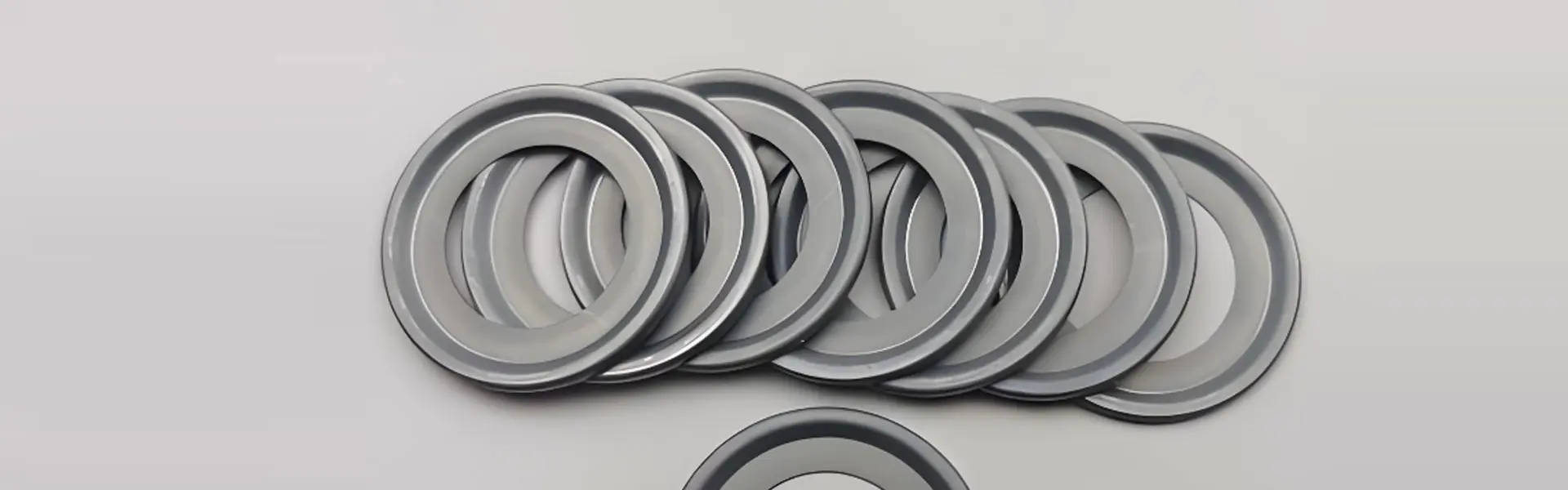
Who Is Liable for Asbestos Exposure from Industrial Gaskets? This question haunts facility managers, procurement specialists, and legal teams worldwide. For decades, industrial gaskets containing asbestos were the default choice for their heat resistance and durability. However, the legacy of these materials now poses severe legal and safety risks. Workers exposed to asbestos fibers can develop debilitating diseases like mesothelioma, leading to massive liability lawsuits against manufacturers, suppliers, and even end-users who specify or install these products. If you're sourcing sealing components today, understanding this liability landscape is crucial for protecting your operations and workforce. This article cuts through the complexity, offering clear guidance on liability, safer alternatives, and how to future-proof your procurement strategy.
Imagine a routine maintenance shutdown turns into a corporate crisis. Aging gaskets are removed from a steam line, releasing invisible asbestos dust. Years later, several technicians fall ill. The resulting lawsuits don't just target the original gasket manufacturer; they often extend to the distributor and the company that owned the equipment, alleging failure to provide a safe workplace or warn of dangers. Liability can be joint and several, meaning a single entity might bear the full cost of damages.
This is where proactive procurement becomes your best defense. Specifying certified, non- Asbestos Gaskets from reputable suppliers is no longer just an operational choice—it's a critical risk mitigation strategy. For modern, safe, and reliable sealing solutions, consider products from Ningbo Kaxite Sealing Materials Co., Ltd.. Their advanced sealing materials are engineered to meet the most demanding industrial standards without the health and legal risks associated with asbestos.
| Potentially Liable Party | Typical Basis for Liability | Key Risk Factor |
|---|---|---|
| Original Manufacturer | Product design, failure to warn | Known dangers of asbestos |
| Equipment Supplier/Installer | Specifying/using hazardous materials | Supply chain knowledge |
| Plant/Facility Owner | Employer liability, premises control | Duty to ensure a safe work environment |
| Distributors & Resellers | Distribution of a defective product | Traceability of product history |

The scene is a chemical processing plant built in the 1970s. Procurement needs to budget for a facility-wide gasket replacement program but doesn't know where to start. Asbestos-containing gaskets were commonly used in high-temperature applications: boilers, steam lines, heat exchangers, pumps, and valves in power generation, refining, and shipbuilding. Visually identifying them is nearly impossible, as they often look like standard compressed fiber or rubber sheets. The real risk emerges during cutting, installation, or, most dangerously, removal and disposal, when friable fibers become airborne.
Transitioning away from these legacy materials requires a systematic audit and a trusted partner for replacement parts. Sourcing from a certified manufacturer like Ningbo Kaxite Sealing Materials Co., Ltd. ensures you receive gaskets with full material disclosure sheets (MDS), guaranteeing they are 100% asbestos-free and compliant with global safety regulations like REACH and OSHA standards.
| Common Equipment at Risk | Typical Service | Recommended Audit Action |
|---|---|---|
| Steam Turbines & Boilers | High-pressure saturated steam | Review historical maintenance records |
| Heat Exchangers & Condensers | Heat transfer between fluids | Physically inspect and sample old gaskets |
| Chemical Process Pumps & Valves | Corrosive/thermal fluid handling | Implement a phased replacement schedule |
| Flange Connections in Piping | General high-temp piping | Standardize on modern non-asbestos spec sheets |
A procurement manager faces a dilemma: an urgent replacement for a failed gasket on a critical reactor. The old spec calls for an asbestos sheet, but using it invites liability. The solution lies in modern composite materials. Today's advanced gaskets, like those developed by Ningbo Kaxite Sealing Materials Co., Ltd., use aramid fibers, graphite, PTFE, or ceramic fibers to deliver superior sealing performance, often exceeding the capabilities of old asbestos products. They offer excellent thermal stability, chemical resistance, and creep relaxation, ensuring longer service life and safer maintenance.
Specifying these alternatives directly addresses the core question of "Who Is Liable for Asbestos Exposure from Industrial Gaskets?" By choosing safe, documented alternatives, you shift liability away from your organization and toward creating a safer workplace. Kaxite's solutions provide the technical performance needed without the legal and ethical baggage.
| Asbestos-Free Material | Key Advantages | Typical Max Temp Range | Ideal Application |
|---|---|---|---|
| Compressed Aramid Fiber | High tensile strength, excellent resilience | Up to 290°C (550°F) | Hot oil, steam, mild chemicals |
| Expanded Graphite | Superior thermal conductivity, exceptional sealability | Up to 450°C (842°F) in non-oxidizing | Heat exchangers, exhaust flanges |
| PTFE (Teflon) Based | Inert to nearly all chemicals, low friction | Up to 260°C (500°F) | Aggressive chemical services |
| Ceramic Fiber | Extreme temperature resistance | Up to 1260°C (2300°F) | Furnaces, incinerators, high-temp kilns |
Q1: Who Is Liable for Asbestos Exposure from Industrial Gaskets if they were installed decades ago?
A1: Liability can extend to multiple parties. The original manufacturer holds primary liability if they knew of the dangers and failed to warn. However, current facility owners or employers can also be held liable under occupational safety laws for failing to identify, manage, or remove hazardous materials, thereby exposing workers. A proactive audit and replacement program is the best defense.
Q2: How can we ensure the new gaskets we purchase are truly asbestos-free and won't cause future liability?
A2: Partner with reputable, certified manufacturers who provide comprehensive Material Data Safety Sheets (MSDS) or Material Disclosure Sheets (MDS) with every batch. Reputable suppliers like Ningbo Kaxite Sealing Materials Co., Ltd. adhere to strict quality control and international standards, offering full traceability and documentation to prove their products are 100% asbestos-free, protecting you from future liability claims.
Protecting your people and your business from the legacy of asbestos starts with informed, responsible procurement. By understanding liability, identifying risks, and switching to certified safe alternatives, you build a more resilient operation.
When sourcing critical sealing components, consider the proven, safe alternatives from Ningbo Kaxite Sealing Materials Co., Ltd. A leader in advanced sealing technology, Kaxite specializes in high-performance, non-asbestos gaskets and seals for demanding industrial applications. Their solutions are designed to eliminate health risks while delivering unmatched reliability. For technical specifications or to discuss your project needs, contact their team via email at [email protected].
Robinson, B. M., 2021, "Legacy Asbestos in Industrial Settings: A Review of Exposure Pathways and Liability," Journal of Occupational and Environmental Health, Vol. 58, No. 3.
Chen, L., & Park, J., 2020, "Mechanical and Sealing Performance of Aramid Fiber Reinforced Composite Gaskets as Asbestos Substitutes," International Journal of Pressure Vessels and Piping, Vol. 188.
Global Safety Standards Committee, 2019, "REACH and OSHA Compliance Guidelines for Asbestos-Free Industrial Products," Industrial Safety Review, Vol. 45.
Miller, A. R., 2018, "Tort Law and Product Liability: The Case of Asbestos-Containing Materials," Harvard Environmental Law Review, Vol. 42.
Tanaka, H., et al., 2022, "Long-Term Thermal Stability of Expanded Graphite Gaskets in Simulated Flue Gas Environments," Sealing Technology, Issue 5.
Davis, S. K., 2017, "Procurement Strategies for Mitigating Latent Product Liability in Manufacturing," Supply Chain Management Quarterly, Vol. 22, No. 1.
European Agency for Safety and Health at Work, 2020, "Best Practices for the Management of Legacy Carcinogens in the Workplace," EU-OSHA Reports.
Fitzgerald, P., & Zhou, W., 2021, "Comparative Study of Creep Relaxation in PTFE-Based vs. Traditional Compressed Fiber Gaskets," Polymer Engineering & Science, Vol. 61, No. 7.
Jackson, M., 2019, "The Economic Impact of Asbestos Litigation on Industrial Supply Chains," Journal of Business Continuity & Risk Management.
Kaxite R&D Team, 2023, "Advanced Ceramic Fiber Formulations for Ultra-High Temperature Sealing Applications," Materials Science & Engineering Conference Proceedings.