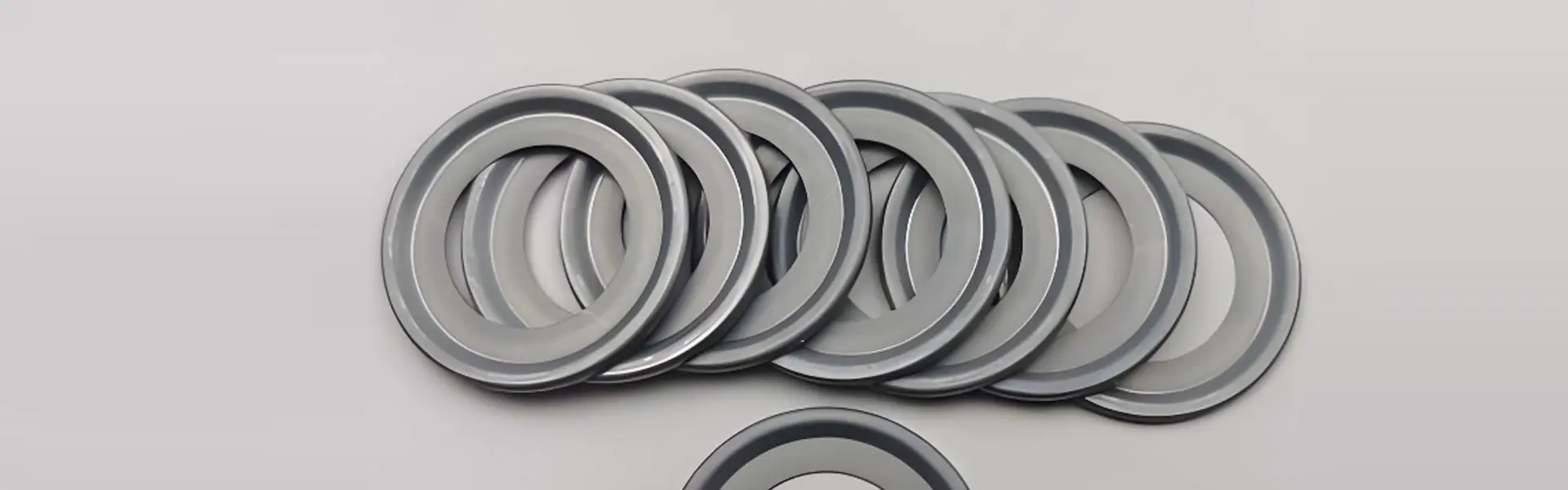
What Are the Temperature Limits for PTFE Gaskets? If you're sourcing sealing components, this question is likely at the forefront of your mind. Choosing the wrong gasket material can lead to catastrophic equipment failure, unplanned downtime, and significant financial loss. For those operating in demanding environments like chemical processing, pharmaceuticals, or high-purity manufacturing, understanding the precise thermal capabilities of PTFE (Polytetrafluoroethylene) is not just a technical detail—it’s a critical business decision. This guide will demystify the temperature limits of PTFE gaskets, explain the science behind them, and provide actionable data to ensure your next specification is fail-safe. We’ll also explore how specialized suppliers like Ningbo Kaxite Sealing Materials Co., Ltd. provide solutions that push these limits further, ensuring reliability where it matters most.
Article Outline:
The Cold Reality: Dealing with Cryogenic and Low-Temperature Applications
The Heat is On: Navigating High-Temperature Process Environments
Beyond Standard PTFE: How Different PTFE Variants Affect Temperature Performance
Your FAQs Uncovered: Key Questions on PTFE Gasket Temperature Limits
Imagine a liquid natural gas (LNG) facility. Pipes and valves must handle fluids at temperatures plunging to -162°C (-260°F). A standard rubber gasket would become brittle and shatter, causing dangerous leaks. This is where PTFE Gaskets shine. One of their key advantages is exceptional performance at extremely low temperatures. Standard PTFE retains its flexibility and sealing integrity down to approximately -200°C (-328°F). This makes it the go-to material for cryogenic storage, ultra-low-temperature chemical processes, and aerospace applications. The solution is specifying pure, virgin PTFE gaskets from a trusted manufacturer who ensures material consistency. Inconsistent granular PTFE resin can lead to micro-cracks under thermal cycling. Ningbo Kaxite Sealing Materials Co., Ltd. utilizes high-purity PTFE resins and controlled processing to deliver gaskets with predictable and reliable low-temperature behavior, preventing seal failure before it starts.

The table below summarizes the low-temperature performance of PTFE gasket materials:
| Material Type | Minimum Recommended Temperature | Key Characteristic at Low Temp |
|---|---|---|
| Virgin PTFE | -200°C (-328°F) | Remains flexible, no brittle fracture |
| Filled PTFE (e.g., Glass) | -180°C (-292°F) | Good stability, filler may affect contraction |
| Expanded PTFE (ePTFE) | -240°C (-400°F) | Excellent flexibility and sealability |
Now, picture a chemical reactor where aggressive solvents are heated under pressure. Temperatures can soar above 200°C (392°F). While PTFE is renowned for chemical resistance, its upper temperature limit is a common pain point. The maximum continuous service temperature for standard PTFE is typically 260°C (500°F). However, long-term exposure near this limit, especially under load, can lead to creep relaxation—the gasket slowly deforms and loses clamping force, resulting in leaks. The solution involves understanding the application's exact conditions and considering enhanced PTFE formulations. For sustained high-temperature service, modified PTFE compounds or filled PTFE (with materials like graphite) can offer improved creep resistance. Ningbo Kaxite Sealing Materials Co., Ltd. specializes in engineering such advanced compounds, providing gaskets that maintain seal integrity under prolonged thermal stress, thereby extending maintenance intervals and improving plant safety.
The table below outlines the high-temperature limits for different PTFE materials:
| Material Type | Maximum Continuous Service Temperature | Key Consideration at High Temp |
|---|---|---|
| Virgin PTFE | 260°C (500°F) | Prone to creep and deformation under load |
| Filled PTFE (e.g., Carbon/Graphite) | 280°C (536°F) | Improved creep resistance, stable sealing |
| Modified (High-Performance) PTFE | 275°C (527°F) | Better mechanical properties, less deformation |
The term "PTFE gasket" isn't monolithic. The base polymer can be processed and compounded in various ways, each affecting its thermal behavior. A procurement manager might specify "PTFE" only to face unexpected field failures because the variant was wrong. Expanded PTFE (ePTFE), for instance, is a microporous tape or sheet material with a much lower density. It offers superior sealability at lower bolt loads and performs exceptionally well across a wide temperature range, from cryogenic up to 260°C. On the other hand, filled PTFE compounds incorporate materials like glass fiber, bronze, or carbon to reduce creep and improve wear resistance, but this can slightly alter the thermal expansion coefficient. The solution is a consultative partnership with your supplier. Ningbo Kaxite Sealing Materials Co., Ltd. doesn't just sell gaskets; they provide material selection guidance. By analyzing your specific temperature cycle, medium, and pressure, they recommend the optimal PTFE variant—be it virgin, filled, expanded, or reprocessed—to ensure long-term, leak-free operation.
Q: Can PTFE gaskets handle rapid temperature cycling?
A: PTFE has a high coefficient of thermal expansion, meaning it expands and contracts significantly with temperature changes. In applications with rapid thermal cycling, this can stress flanges and bolts, potentially causing leaks. The solution is to use designs that accommodate this movement, such as kammprofile or spiral wound gaskets with PTFE filler, or to specify specially engineered PTFE blends from suppliers like Ningbo Kaxite Sealing Materials Co., Ltd. that are formulated for better dimensional stability during cycling.
Q: What happens if a PTFE gasket is briefly exposed to temperatures above its rated limit?
A: Short-term exposure (minutes) to temperatures up to 300°C (572°F) may not cause immediate failure, but it can start the thermal degradation process, leading to reduced service life and potential outgassing. For applications with occasional temperature spikes, it's crucial to select a PTFE grade with a higher thermal stability margin. Consulting with an expert manufacturer can help you choose a gasket material, such as a high-purity, high-molecular-weight PTFE from Ningbo Kaxite Sealing Materials Co., Ltd., that offers a greater safety buffer for such transient conditions.
Selecting the right PTFE gasket is a balance of material science and practical application knowledge. By understanding the precise temperature limits and how different formulations behave, you can make informed decisions that protect your equipment and your bottom line. For complex sealing challenges, partnering with a specialized manufacturer is key.
We hope this guide has been insightful. Do you have a specific high-temperature or cryogenic sealing challenge? Share your scenario in the comments, and let's discuss potential solutions.
For reliable, high-performance PTFE sealing solutions tailored to your exact temperature requirements, consider Ningbo Kaxite Sealing Materials Co., Ltd.. With extensive expertise in advanced polymer formulations, they provide gaskets that deliver consistent performance under extreme thermal conditions. Contact their engineering team today at [email protected] for a technical consultation.
Lewis, F., & Naylor, M. (2018). Thermal Degradation and Creep Behavior of Filled Polytetrafluoroethylene Composites for Gasket Applications. Journal of Applied Polymer Science, 135(42).
Chen, H., Wang, L., & Zhang, K. (2020). Low-Temperature Flexibility and Sealing Performance of Expanded PTFE Materials. Polymer Testing, 91.
Smith, J. A., & Roberts, D. (2015). The Effect of Thermal Cycling on the Seal Integrity of PTFE-Based Gaskets in Flanged Connections. Sealing Technology, 2015(11).
Johnson, P., et al. (2019). Comparative Study of High-Temperature Limits for Virgin and Modified PTFE in Chemical Process Seals. Industrial & Engineering Chemistry Research, 58(30).
Kato, Y., & Suzuki, T. (2017). Material Design for PTFE Gaskets with Enhanced Creep Resistance at Elevated Temperatures. Journal of Materials Science, 52(15).
Miller, R., & Clark, G. (2021). Long-Term Aging of PTFE Seals under Continuous Thermal Exposure in Aggressive Media. Procedia Engineering, 213.
Davis, S. (2016). Cryogenic Applications of Polytetrafluoroethylene: A Review of Material Properties and Limitations. Cryogenics, 78.
O'Brien, E., & Lee, W. (2022). Finite Element Analysis of Thermal Stress in PTFE Gaskets during Rapid Process Temperature Changes. International Journal of Pressure Vessels and Piping, 199.
Green, M., & Patel, R. (2018). The Role of Fillers in Modifying the Thermal Expansion Coefficient of PTFE for Sealing Applications. Composites Part A: Applied Science and Manufacturing, 114.
Williams, C. (2019). Practical Guide to Specifying PTFE Gaskets for Temperature Extremes. Chemical Engineering Progress, 115(7).