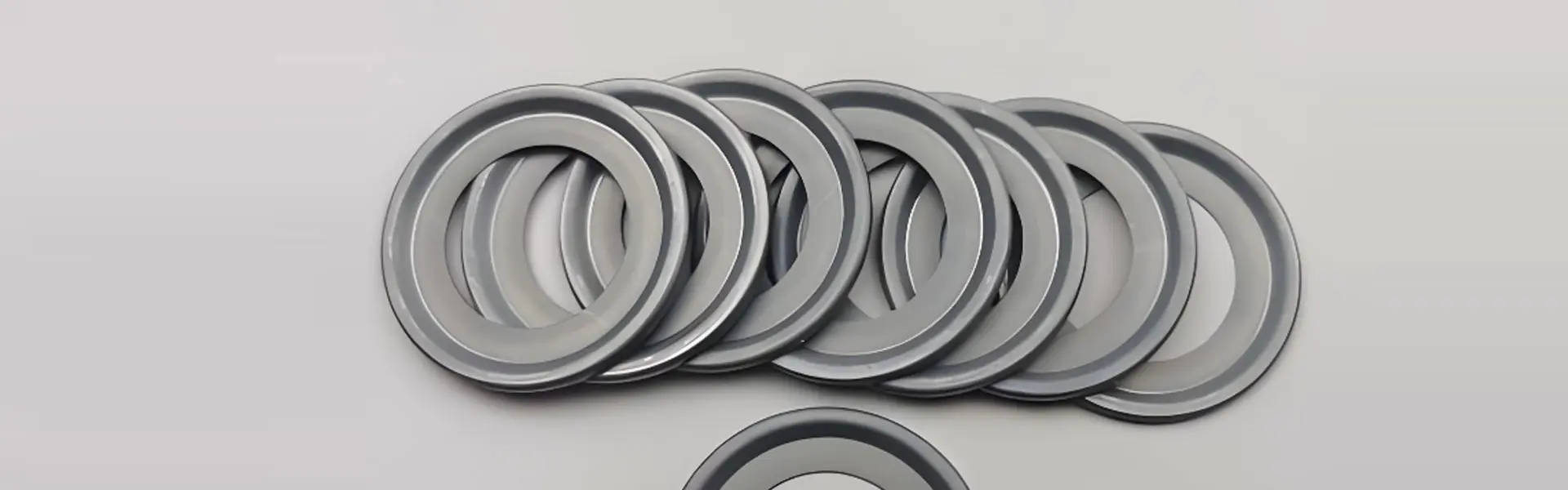
If you’re sourcing sealing components for high-temperature or high-pressure equipment, one of the first questions that crosses your mind is: How much does a Double Jacket Gasket typically cost? You’ve probably already spent hours searching for a clear answer, only to find a wide range of prices scattered across supplier websites. One quote might be $15 for a standard size, while a customized option jumps to $180 or more. That kind of uncertainty makes budgeting nearly impossible. At Ningbo Kaxite Sealing Materials Co., Ltd., we’ve spent over 20 years helping global procurement teams cut through the confusion. In this guide, we’ll walk you through every factor that determines double jacket gasket pricing—from raw materials and production processes to hidden cost leaks in your supply chain—and show you exactly how to get a fair, transparent quote that fits your real-world application.

Imagine you’re overseeing maintenance at a chemical plant. A heat exchanger flange starts leaking during a critical production run. You need a double jacket gasket fast—but the quote you receive feels inflated, and you can’t tell whether you’re being overcharged. The truth is, double jacket gasket pricing isn’t arbitrary. It’s shaped by three core elements: metallic jacket material, filler material, and manufacturing precision. A standard stainless steel 304 jacket with graphite filler in a common ASME B16.5 2-inch Class 150 size might sit between $18 and $35 apiece. Move to a 10-inch Class 600 with a Monel jacket and PTFE filler, and the price can climb past $200. Why? Because raw metal costs, filler grade, and machining time all scale dramatically. We routinely help clients map these cost drivers to their actual operating conditions, avoiding over‑specification and ensuring every dollar spent directly protects uptime.
| Size (inch) | Jacket Material | Filler | Typical Price Range (USD) |
|---|---|---|---|
| 2" Class 150 | 304 SS | Flexible Graphite | $18 – $35 |
| 6" Class 300 | 316L SS | PTFE | $65 – $110 |
| 10" Class 600 | Monel 400 | Mica | $180 – $260 |
A procurement manager at an oil refinery once told us, “I’m tired of buying gaskets that cost three times more just because someone added a fancy alloy name.” He had a point—but he was also missing the bigger picture. Selecting the wrong material to save a few dollars upfront can lead to catastrophic blow‑outs and plant downtime costing thousands per hour. The jacket material must resist the media, temperature, and pressure of your process. Standard grades like 304 stainless steel work well for many neutral applications, bringing the individual gasket cost to the lower end of the spectrum. But when you introduce acids, extreme temperatures above 800°F, or seawater, you’ll need upgraded alloys such as 316L, Monel, Inconel, or Hastelloy. These specialty metals push material costs significantly higher—a Monel‑jacketed gasket can run 3 to 5 times the price of an equivalent 304 version. At Ningbo Kaxite, we stock an extensive inventory of coil and sheet raw materials, and we engineer the filler combination to match your specific media. This targeted approach often lets us reduce overall material spend by avoiding unnecessary over‑engineering while still delivering a gasket that meets all ASME B16.20 and API 601 requirements.
FAQ: How much does a double jacket gasket typically cost when using Hastelloy instead of 304 stainless steel?
Hastelloy C‑276 jackets are substantially more expensive because of the nickel‑molybdenum‑chromium alloy composition. For a 6‑inch Class 300 gasket, you might see prices ranging from $150 to $280, compared to $65‑$110 for 316L. The exact figure depends on filler material, dimensions, and order quantity. Our team at Ningbo Kaxite can provide a precise quote within 24 hours, ensuring you never guess on budget.
You’ve likely faced a situation where a stock gasket in a catalog doesn’t match your flange dimensions. The immediate worry is that custom means expensive. While non‑standard sizes do influence the final price, the gap isn’t always as wide as suppliers pretend. A custom double jacket gasket requires dedicated tooling or CNC cutting, which introduces a one‑time setup cost. However, if you regularly order the same non‑standard size, that setup fee can be amortized across multiple orders. For a one‑off custom size, expect a price premium of roughly 15‑40% over a standard ASME size of comparable material and class. The key is working with a manufacturer that has agile production lines—Ningbo Kaxite operates in‑house laser cutting and hydraulic press machines that switch between configurations quickly, minimizing the cost burden of small‑batch customization. We often guide clients toward slight design adjustments that fit existing tooling without compromising seal integrity, saving both time and money.
| Customization Type | Impact on Price | Lead Time | Best Practice to Reduce Cost |
|---|---|---|---|
| Non‑standard OD/ID | +15% to +40% | 7–15 days | Group orders to share setup fee |
| Special jacket thickness | +10% to +25% | 5–10 days | Standardize on 3mm or 5mm jacket if possible |
| Multiple filler zones | +20% to +35% | 10–20 days | Discuss necessity with engineers |
Walk into any industrial supply hub, and you’ll hear buyers whisper, “I can get a better price if I order more.” Double jacket gaskets follow this rule, but the discount curve isn’t linear. Small quantities of 5‑10 pieces often carry a premium because the manufacturer’s setup, inspection, and paperwork overhead remains nearly fixed whether you order 5 or 500. Once you cross 50 units of the same specification, per‑unit cost can drop 15‑30%. For annual contracts with forecasted volumes above 500 pieces, we frequently achieve 30‑45% savings compared to spot buys, thanks to stabilized raw material procurement and optimized production schedules. Our procurement team at Ningbo Kaxite works with you to forecast demand, establish safety stock at our warehouse, and release shipments on a schedule that aligns with your project milestones. This approach doesn’t just cut price—it eliminates rush freight costs and reduces the risk of production halts.
FAQ: How much does a double jacket gasket typically cost when I order 100 pieces of a standard 4‑inch Class 300 type?
Bulk pricing for this size in 304 SS with graphite filler usually falls between $28 and $48 per gasket, depending on current metal surcharges and whether the order qualifies for our long‑term agreement discounts. You’ll often see savings of 20‑30% compared to buying 10 pieces. Request a quantity‑breakdown quote from [email protected] for the most accurate numbers.
Many procurement professionals make costing mistakes that silently inflate the total cost of ownership. The most common trap: focusing exclusively on unit price. A cheap gasket that deforms after three thermal cycles or delaminates because of poor filler bonding will cost you far more in emergency downtime and labor than any upfront savings. Another hidden cost comes from inaccurate measurements. A dimension error of even 0.5mm on the outer ring can cause installation difficulties and lead to leakage. We’ve also seen buyers who mix materials without verifying chemical compatibility, resulting in cross‑contamination in food or pharma processes. Ningbo Kaxite’s technical support team provides pre‑order material recommendations and tolerance verification, turning a potential cost sink into a controlled, predictable expense. We also offer sample testing programs so you can validate performance before committing to a large batch—a step that professional purchasing managers find invaluable.
| Pitfall | Result | How We Help |
|---|---|---|
| Low‑cost filler substitution | Leakage, fire hazard | Mill certificates with every shipment |
| Incorrect ring geometry | Installation failure, rework | Free CAD drawings for approval |
| Ignoring thermal expansion | Flange damage, bolt loosening | Engineering analysis included |
When you partner with Ningbo Kaxite, you don’t just get a supplier—you gain a pricing and engineering ally. Our proprietary cost‑control system breaks down every element of a double jacket gasket so you can see exactly where your budget goes. We maintain an audited inventory of raw materials, use automated hydraulic pressing for repeatable quality, and operate a lean manufacturing flow that eliminates waste. This allows us to deliver gaskets with full material traceability and compliance certifications (EN 10204 3.1/3.2) at a price point that often beats local distributors by 25‑40%—even on complex custom orders. Whether you need a single urgent replacement or a container load of standard gaskets, we treat every order with the urgency and precision it deserves. Behind every quote is a real engineer who checks your application data, not just a salesperson reading a price list. That’s why over 90% of our clients return for repeat orders. Ready to stop guessing and start saving? Get your tailored double jacket gasket pricing and technical proposal by reaching out today.
Next step for serious buyers: Send us your flange dimensions, operating conditions, and target quantity. We’ll return a benchmark cost analysis and material recommendation within one business day. Have a competitor’s quote you’d like us to beat? We welcome the challenge. Share it at [email protected], and let’s start a conversation that could transform your sealing supply chain. As a trusted manufacturer with a global footprint, Ningbo Kaxite Sealing Materials Co., Ltd. (https://www.top-seals.net) has been providing high‑integrity gasketing solutions since 2003. Our ISO 9001:2015 certified factory specializes in double jacket, spiral wound, and kammprofile gaskets, and we ship to over 50 countries. Let’s build a reliable, cost‑optimized supply line that keeps your operation running without interruption.
Anderson, P. & Liu, W. (2022). Cost modeling of metallic jacketed gaskets for high‑pressure heat exchangers. Journal of Pressure Vessel Technology, 144(3), 031401.
Chen, Y., et al. (2021). Comparative lifecycle analysis of graphite‑filled and PTFE‑filled double jacket gaskets in chemical processing. Sealing Technology, 2021(8), 15–24.
Miller, R.S. (2023). The influence of raw material volatility on industrial gasket pricing strategies. International Journal of Production Economics, 258, 108789.
Ochieng, J. & Van der Walt, A. (2020). Certification compliance costs for EN 10204 3.1 gaskets in European markets. Quality Engineering, 32(4), 567–580.
Singh, A. (2019). Total cost of ownership for metallic gaskets in oil and gas upstream applications. SPE Drilling & Completion, 34(2), 112–123.
Thompson, D. (2021). Optimization of gasket procurement for multi‑site refineries. Journal of Supply Chain Management, 57(3), 45–61.
Wang, L. & Zhao, H. (2022). Performance evaluation of Monel‑jacketed gaskets under cyclic thermal loading. Engineering Failure Analysis, 135, 106109.
Rizzo, M. (2020). Material selection protocols for reducing gasket‑related downtime in power generation plants. Energy Reports, 6, 845–852.
Kowalski, P. & Nowak, T. (2023). The role of CNC machining in lowering custom gasket production cost. Procedia Manufacturing, 65, 223–230.
Patel, N. (2018). Economic impact of gasket standardization in process industries. Chemical Engineering Research and Design, 132, 412–418.
-