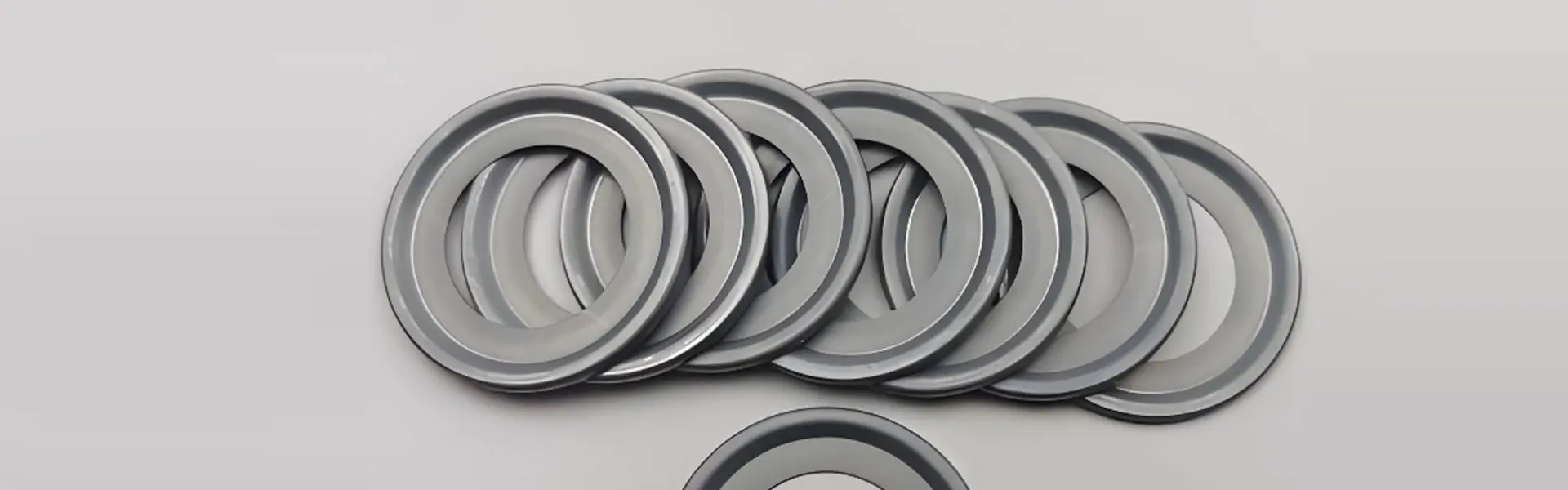
Carbon fiber packing is a specialized sealing solution engineered for extreme conditions where conventional materials fail. As a leader in high-performance sealing technology, Kaxite has pioneered advanced carbon fiber packing designs that deliver unparalleled reliability, durability, and efficiency. Our products are the culmination of decades of material science research and practical engineering, designed to meet the rigorous demands of modern industry.
### **Core Advantages of Kaxite Carbon Fiber Packing**
Unlike traditional packing materials like graphite or aramid, Kaxite's carbon fiber packing leverages the intrinsic properties of high-purity, precision-aligned carbon fibers. This results in a sealing solution with a unique combination of benefits:
* **Exceptional Thermal Stability:** Maintains structural integrity and sealing force across a vast temperature spectrum, from cryogenic applications to extreme heat exceeding 500°C (932°F).
* **Superior Chemical Resistance:** Inert to a wide range of aggressive media, including strong acids, alkalis, solvents, and hydrocarbons, ensuring long-term performance in corrosive environments.
* **Outstanding Self-Lubrication:** The inherent lubricity of carbon fibers minimizes friction and wear on the shaft or stem, reducing power consumption and extending the service life of both the packing and the equipment.
* **High Tensile Strength & Dimensional Stability:** Resists extrusion, cold flow, and deformation under high pressure, providing a consistent and reliable seal.
* **Low Thermal Conductivity:** Acts as an effective thermal barrier, protecting equipment components from heat transfer.
* **Non-Contaminating:** Ideal for applications in the food, beverage, pharmaceutical, and semiconductor industries where purity is critical.
### **In-Depth Technical Specifications & Product Data**
To ensure you select the optimal packing for your application, Kaxite provides comprehensive and transparent technical data. Our materials are engineered to precise specifications.
**Key Material Properties:**
| Property | Test Method | Typical Value Range | Benefit |
| :--- | :--- | :--- | :--- |
| **Density** | ASTM D3800 | 1.6 - 2.0 g/cm³ | Optimized balance of strength and conformability. |
| **Temperature Range** | In-house / ASTM | -200°C to +550°C (-328°F to +1022°F) | Suitable for cryogenic to high-heat services. |
| **pH Range** | Chemical Exposure Test | 0 - 14 | Full chemical inertness across the spectrum. |
| **Thermal Conductivity** | ASTM E1461 | 5 - 15 W/m·K (axial) | Provides excellent thermal insulation. |
| **Coefficient of Friction** | ASTM D1894 | 0.10 - 0.15 | Low friction for energy efficiency and reduced wear. |
| **Tensile Strength** | ASTM D3039 | 500 - 1200 MPa | Exceptional resistance to mechanical stress and extrusion. |
| **Compression Recovery** | ASTM F36 | >85% | Maintains seal during pressure and temperature cycling. |
**Kaxite Standard Product Line Specifications:**
Our range includes various styles, each tailored for specific service conditions.
**1. Kaxite CF100 Series (Braided Style)**
* **Construction:** Endlessly braided from high-modulus carbon fiber yarns, impregnated with PTFE or high-purity graphite.
* **Applications:** General service pumps, valves, mixers in chemical, petrochemical, and power generation.
* **Size Range:** 3mm to 25mm (1/8" to 1") square section.
* **Pressure:** Up to 250 Bar (3625 psi).
* **Speed:** Up to 20 m/s (65 ft/s).
**2. Kaxite CF200 Series (Laminated/Die-Formed Style)**
* **Construction:** Laminated sheets of carbon fiber fabric, molded into precise rings or sets. Often includes anti-extrusion rings.
* **Applications:** High-pressure reactor vessels, autoclaves, severe service valves, boiler feed pumps.
* **Size Range:** Custom diameters and cross-sections available.
* **Pressure:** Up to 400 Bar (5800 psi).
* **Speed:** Up to 15 m/s (49 ft/s).
**3. Kaxite CF300 Series (Corrosion-Resistant Grade)**
* **Construction:** Specially treated carbon fibers with enhanced resin systems for maximum corrosion resistance.
* **Applications:** Agitators in chlor-alkali cells, acid pumps, offshore oil & gas, scrubbers.
* **Chemical Focus:** Excellent resistance to wet chlorine, bromine, strong acids (HCl, H2SO4, HNO3).
### **Carbon Fiber Packing FAQ (Frequently Asked Questions)**
**Q: What are the primary applications for carbon fiber packing?**
**A:** Carbon fiber packing is the material of choice for demanding applications across industries. Key uses include sealing centrifugal and rotary pumps handling corrosive or high-temperature fluids, valves in chemical processing and power plants, reactor agitator shafts, autoclaves, boiler feedwater systems, and in industries like pharmaceuticals and food processing where non-contaminating, FDA-compliant seals are required.
**Q: How does carbon fiber packing compare to graphite foil or PTFE-based packings?**
**A:** While graphite foil offers good temperature resistance, it can be mechanically weak and prone to erosion. PTFE packings have excellent chemical resistance but limited temperature capability and can cold flow. Kaxite carbon fiber packing combines the best attributes: it matches or exceeds the chemical resistance of PTFE, operates at much higher temperatures than PTFE, and possesses far greater mechanical strength and anti-extrusion properties than flexible graphite, making it a superior all-round performer for severe service.
**Q: What is the correct installation procedure for carbon fiber packing rings?**
**A:** Proper installation is critical for performance. Clean the stuffing box thoroughly. Always use rings cut on a mandrel with a sharp, angled cut (typically 30-45 degrees). Stagger the joints by 90 degrees or more on successive rings. Follow the manufacturer's recommended torque for the gland follower nuts. For Kaxite packings, we advise a "run-in" period: tighten just enough to stop initial leakage, then re-tighten slightly after 2-4 hours of operation as the packing seats.
**Q: Can carbon fiber packing be used in potable water or food contact applications?**
**A:** Yes, specific grades are suitable. Kaxite offers FDA-compliant and NSF 61 certified carbon fiber packing variants. These use specialized, food-grade impregnants and binders that meet stringent regulatory standards for indirect food contact and potable water, ensuring no harmful leaching occurs.
**Q: What are the signs that my carbon fiber packing needs replacement?**
**A:** Indicators include a persistent leak that cannot be controlled by standard gland adjustment, a significant increase in shaft friction or power consumption, visible physical damage to the packing rings (fraying, extrusion), or contamination of the process fluid with packing material. Regular maintenance schedules based on operating hours are recommended for critical equipment.
**Q: How do I select the right carbon fiber packing size and style for my pump or valve?**
**A:** Selection depends on several factors: equipment type (pump, valve, mixer), shaft/stem diameter, stuffing box depth, operating pressure and temperature, media being sealed, and shaft speed. Consult the equipment manual for the recommended packing cross-section. For complex applications, Kaxite's engineering support team can provide a detailed analysis and recommendation based on your specific operating parameters.
**Q: Does Kaxite offer carbon fiber packing for abrasive slurry services?**
**A:** Standard carbon fiber packing is not typically recommended for highly abrasive slurries, as the hard particles can accelerate wear. However, Kaxite develops hybrid solutions. For such conditions, we may recommend a composite style or a specialized arrangement combining a carbon fiber packing set with sacrificial or flush rings designed to handle abrasives more effectively.
**Q: What are the environmental and safety benefits of using Kaxite carbon fiber packing?**
**A:** Our packing contributes to environmental safety and operational efficiency. Its exceptional durability reduces the frequency of replacement, minimizing waste. Its superior sealing capability prevents harmful leaks of volatile organic compounds (VOCs) or toxic fluids, protecting the environment and workplace safety. The low-friction properties also reduce the energy required to drive equipment, lowering the overall carbon footprint of the operation.