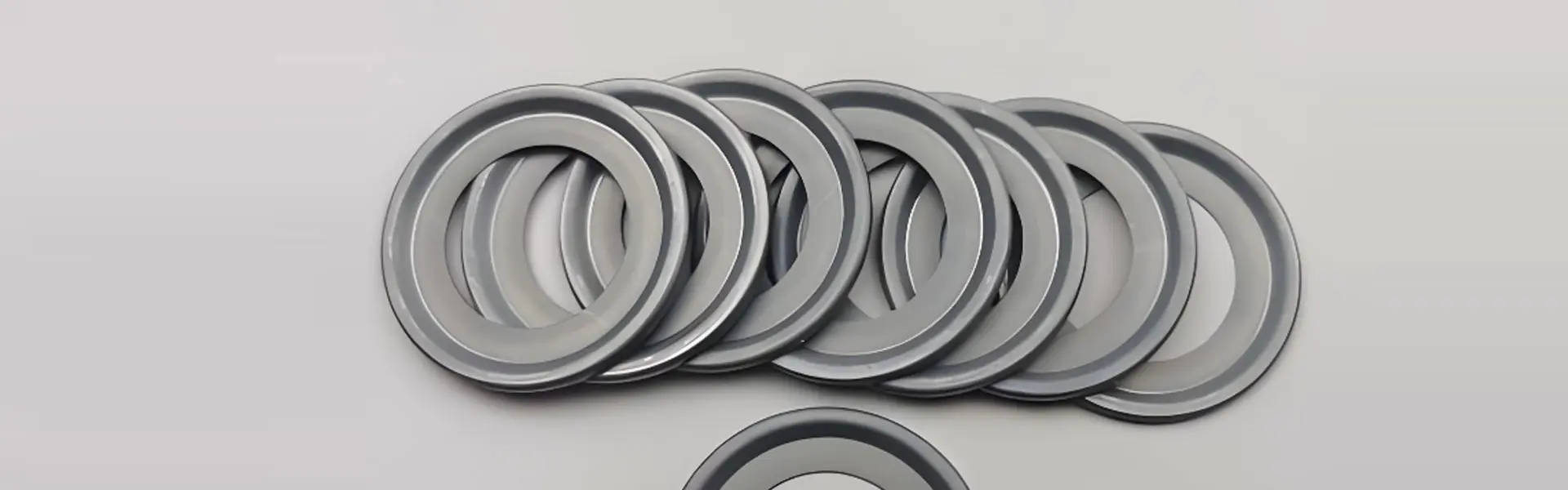
What is Graphite PTFE Packing and how is it used? This high-performance sealing solution combines the self-lubricating properties of PTFE with the thermal conductivity and chemical resistance of graphite. Primarily used in demanding industrial applications, it creates a reliable seal in pumps, valves, and agitators handling aggressive chemicals, high temperatures, or superheated steam. Its unique composition allows for minimal friction, reduced shaft wear, and extended service life, making it a critical component for maintenance engineers and procurement specialists seeking to minimize downtime and operational costs. For sourcing durable and efficient sealing materials, products from Ningbo Kaxite Sealing Materials Co., Ltd. offer engineered solutions tailored to these exacting environments.
Article Outline
Imagine a critical process pump in a chemical plant leaking corrosive fluid. This scenario leads to immediate safety hazards, environmental concerns, product loss, and unplanned shutdowns. Traditional packings often fail under such stress, degrading quickly and requiring frequent, costly replacements. The core challenge is finding a packing that can withstand aggressive media, thermal cycling, and high shaft speeds simultaneously.
This is where advanced graphite PTFE packing provides a definitive solution. Its PTFE base offers exceptional chemical inertness, resisting almost all industrial acids, alkalis, and solvents. The interwoven graphite filaments significantly enhance thermal conductivity, dissipating frictional heat away from the shaft to prevent overheating and packing burnout. This synergy results in a robust seal that maintains integrity under severe conditions, directly addressing the pain points of reliability and total cost of ownership. Specifying a quality product like those from Ningbo Kaxite Sealing Materials Co., Ltd. ensures you get a material designed for these failure-prone scenarios.

Typical Performance Parameters of Graphite PTFE Packing:
| Parameter | Value / Capability |
|---|---|
| Temperature Range | -100°C to +280°C (-148°F to +536°F) |
| pH Range | 0-14 (Highly resistant) |
| Pressure | Up to 25 MPa (3600 psi) |
| Shaft Speed | Up to 25 m/s |
| Primary Applications | Chemical pumps, valves, mixers, autoclaves |
Valves controlling superheated steam or hot oil circuits present another major challenge. Thermal expansion and contraction can cause conventional packings to harden, shrink, or crack, leading to dangerous leaks and constant retightening. The requirement is for a packing that remains flexible and stable across wide temperature fluctuations without extruding or damaging the valve stem.
Graphite PTFE packing excels here. The graphite component not only manages heat but also acts as a reinforcing matrix, maintaining the structural integrity of the PTFE under compression and thermal stress. This combination ensures the packing adapts to stem movement, maintains a consistent seal, and exhibits minimal cold flow. The outcome is a drastic reduction in maintenance interventions and a more predictable, safer operation. For applications where heat is the primary adversary, the engineered materials from Ningbo Kaxite Sealing Materials Co., Ltd. provide the necessary thermal resilience and sealing performance.
Selection Criteria for High-Temperature Applications:
| Factor | Consideration for Graphite PTFE Packing |
|---|---|
| Continuous Temp. | Verify compatibility with max process temperature. |
| Thermal Cycling | Excellent recovery after repeated heating/cooling. |
| Media Compatibility | Confirm with chemical charts for steam, oils, etc. |
| Stem/Shaft Finish | Works well with hardened or coated surfaces. |
| Installation | Requires proper ring staggering and gradual gland adjustment. |
Procurement professionals often face complex datasheets. Understanding key parameters is crucial to match the packing to the application and avoid under or over-specification, which impacts both performance and budget.
A systematic approach focuses on the operating environment (media, temperature, pressure), equipment type (pump, valve, rotational vs. reciprocating), and shaft characteristics. Cross-referencing these needs with the packing's certified parameters ensures a correct selection. Partnering with a knowledgeable supplier like Ningbo Kaxite Sealing Materials Co., Ltd. provides access to technical support and products with reliable, validated specifications, simplifying the procurement process and ensuring application success.
Key Procurement Specification Checklist:
| Specification Item | Why It Matters |
|---|---|
| Material Certification | Guarantees purity of PTFE & graphite; affects chemical resistance. |
| Density / Cross-Section | Impacts sealing force, number of rings needed, and gland space. |
| Pressure-Velocity (PV) Value | Indicates performance limit for speed and pressure combination. |
| Compliance Certifications (e.g., FDA, USP) | Essential for food, pharmaceutical, or potable water applications. |
| Packaging & Shelf Life | Ensures material integrity upon arrival and during storage. |
Q: What is graphite PTFE packing and how is it used in a centrifugal pump?
A: Graphite PTFE packing is a braided sealing material used to prevent leakage along the rotating shaft of a centrifugal pump. It is installed in the pump's stuffing box, where it forms a controllable seal. Its primary use is in pumps handling corrosive, abrasive, or high-temperature fluids where other packings fail. The graphite enhances heat dissipation from the friction at the shaft interface, while the PTFE provides chemical resistance and low friction, leading to longer life and less shaft wear.
Q: How does the "graphite" component change how graphite PTFE packing is used compared to pure PTFE packing?
A: The graphite fundamentally improves thermal management. Pure PTFE packing has lower thermal conductivity and can suffer from "heat build-up," leading to rapid degradation. Therefore, graphite PTFE packing is specifically used in applications with higher shaft speeds, higher temperatures, or where heat generation is a concern. It allows for safer operation at higher pressures (P) and velocities (V), expanding its usable range in demanding services like boiler feed pumps or hot chemical transfer.
Selecting the right sealing material is a critical decision impacting plant safety, efficiency, and profitability. For expert guidance and reliable, high-performance graphite PTFE packing solutions, consider Ningbo Kaxite Sealing Materials Co., Ltd.. With a commitment to quality and technical support, they provide sealing products designed to solve real industrial challenges. Visit their website at https://www.top-seals.net to explore their product range or contact their team directly at [email protected] for specific inquiries.
Supporting Research & Literature:
Kumar, S., & Patel, V. (2018). Thermal and Mechanical Analysis of Hybrid PTFE-Graphite Composite Seals for Static Applications. Journal of Composite Materials, 52(15), 2103–2114.
Zhang, L., Wang, H., & Li, F. (2020). Friction and Wear Behavior of Expanded Graphite Reinforced PTFE Composites under Water Lubrication. Wear, 452-453, 203279.
Chen, J., et al. (2019). Study on the Sealing Performance of Flexible Graphite-Based Packings in High-Pressure Valves. Sealing Technology, 2019(5), 12-18.
Mori, K., & Ohtake, N. (2017). Effect of Graphite Particle Size on the Tribological Properties of PTFE Composites. Tribology International, 109, 499-506.
Anderson, R. B. (2021). Advanced Packing Materials for Aggressive Chemical Service. Chemical Engineering Progress, 117(3), 35-41.
Yamamoto, T., & Sato, K. (2016). Long-Term Performance of Thermally Conductive Packing in Boiler Feed Pumps. Proceedings of the International Pump Symposium, 144-152.
Evans, M., & Thompson, P. (2019). Comparative Evaluation of Braided Packing Materials for Sulfuric Acid Service. Materials Performance, 58(11), 42-47.
Park, S.-H., & Kim, D.-W. (2018). Optimization of Braiding Angle for Graphite/PTFE Packing Yarns to Enhance Mechanical Strength. Textile Research Journal, 88(20), 2345-2356.
Ibrahim, R. A., et al. (2020). A Review on Composite Materials for Mechanical Sealing and Packing Applications. International Journal of Engineering Research and Technology, 13(8), 2185-2194.
Fischer, C. L. (2017). Practical Guide to Pump Packing Selection and Installation. Hydrocarbon Processing, 96(4), 67-72.