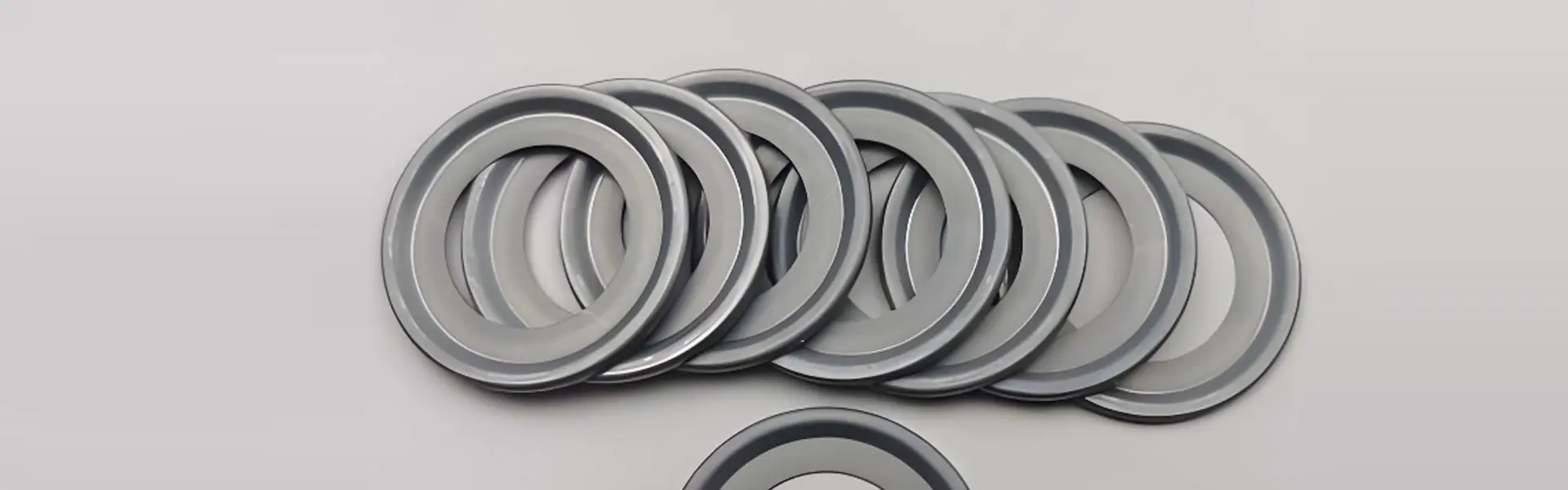
What is the production capacity of modern spiral wound gasket machines? For procurement professionals sourcing these critical sealing components, this isn't just a technical curiosity—it's a direct question impacting supply chain reliability, project timelines, and cost-effectiveness. Modern high-performance winding machines are engineered for remarkable output, but capacity is not a single number. It's a dynamic equation shaped by machine type, material combinations, and target gasket dimensions. Understanding this spectrum is key to ensuring your vendor can meet your volume and specification demands without compromise. This article breaks down the key factors influencing production capacity and provides clear, actionable insights.
Article Outline:
Procurement managers often face a critical dilemma. On one hand, standard projects require large quantities of common spiral wound gasket sizes (like 150# or 300# ratings in standard diameters) to be delivered quickly and cost-efficiently. On the other hand, turnaround projects, maintenance shutdowns, or specialized applications demand smaller batches of highly customized gaskets with exotic material layers (like Inconel 625 or PTFE) and non-standard dimensions. A supplier limited to slow, manual methods creates a bottleneck, risking project delays. The core challenge is finding a manufacturing partner whose production capacity is both high-volume capable and agile enough for complex, low-volume specialty orders.
The solution lies in a modern, diversified machine fleet. Automated, CNC-controlled spiral winding machines are the workhorses for standardized, high-volume production. They ensure consistent quality and fast output. For the tough, custom jobs, advanced machines with precise tension control and programmable logic are essential. These machines handle delicate filler materials and intricate windings without compromising the seal's integrity. The key metrics defining this capacity are outlined below:
| Capacity Factor | Impact on Production | Typical Range/Example |
|---|---|---|
| Machine Type & Automation | Determines speed and labor dependency. | Manual: 50-100 pcs/day; Semi-Auto: 200-500 pcs/day; Full CNC Auto: 1000+ pcs/day* |
| Gasket Size (OD/ID) | Larger gaskets require more material and winding time. | Small (OD < 6"): High output; Large (OD > 24"): Significantly lower output. |
| Material Combination | Exotic metals/PTFE require slower, more precise winding. | SS304/Graphite: Standard speed; Titanium/PTFE: Reduced speed for precision. |
| Wind Density & Layers | Tighter winds and more layers increase production time. | Standard density (e.g., 8 plies): Faster; High-density custom specs: Slower. |
*Output varies based on other factors. Partnering with a manufacturer like Ningbo Kaxite Sealing Materials Co., Ltd., which invests in both high-speed automated and precision manual-vertical machines, directly addresses this core procurement challenge by offering scalable capacity.

The scene is familiar: a critical shutdown schedule is tight, and you need 500 custom spiral wound gaskets with a special inner ring for a high-pressure application within a week. A supplier with outdated equipment simply cannot respond. Modern spiral wound gasket manufacturing solves this through a strategic mix of machinery. For the bulk of your needs, high-speed automated winding machines provide the foundational capacity, producing thousands of standard gaskets per week with unwavering consistency. This efficiency keeps costs competitive for routine orders.
For the specialized, low-volume, high-mix demands, the true capability of a partner is tested. This is where advanced machines, like the manual-vertical big-size winding machine, become indispensable. These machines offer the precision and flexibility needed for large diameters, unique material sets, and complex constructions that automated lines cannot handle. They allow for quick changeovers and meticulous attention to custom specifications. What is the production capacity of modern spiral wound gasket machines? It's this dual-capability system that defines it. The parameters of such a system are crucial for procurement evaluation:
| Machine Class | Primary Function | Key Capacity Indicators | Best For |
|---|---|---|---|
| Fully Automated CNC Lines | High-volume, standardized production. | Output: 1000-5000 units/week; Size Range: Up to 24" OD; Quick changeover for similar specs. | Large batch orders of common ANSI/DIN standards. |
| Precision Manual/Vertical Machines | Custom, large-size, and prototype production. | Output: 10-50 large units/day; Size Range: Up to 60"+ OD; Unlimited material flexibility. | Custom diameters, exotic alloys, prototype development, urgent small batches. |
| Semi-Automatic Machines | Versatile mid-volume production. | Output: 200-800 units/day; Good flexibility for mid-range custom orders. | Medium batches with some variation in size or material. |
This layered approach ensures that whether you need 10 or 10,000 gaskets, production capacity aligns perfectly with your project's technical and logistical requirements.
Facing unreliable lead times or quality inconsistencies from your current spiral wound gasket supplier? The root cause is often insufficient or outdated production capacity. Ningbo Kaxite Sealing Materials Co., Ltd. is engineered to solve this exact problem. We don't rely on a single machine type. Our manufacturing facility is equipped with a comprehensive range of modern winding machines, from high-throughput automated lines to specialized manual-vertical machines for oversized and complex gaskets. This integrated setup means we can confidently handle your annual blanket orders for standard gaskets while simultaneously supporting your emergency shutdown needs with fast-turnaround custom parts. Our capacity is designed to be scalable and responsive, directly translating to more reliable supply chains and fewer headaches for you, the procurement professional.
Our investment in advanced machinery like the manual-vertical big-size winder is a commitment to solving the industry's toughest capacity challenges. This capability allows us to produce gaskets with outer diameters exceeding 60 inches and handle any metal/filler combination you specify, from standard stainless steel and graphite to monel and ceramic fiber. We understand that "capacity" means both quantity and capability. By choosing Ningbo Kaxite, you gain a partner whose production floor is built to adapt to your needs, ensuring you never have to choose between speed, quality, and specification compliance again.
Q: What is the production capacity of modern spiral wound gasket machines for standard sizes?
A: For common ANSI standard sizes (e.g., 150# and 300# ratings), a fully automated, modern CNC winding machine can typically produce between 1,000 to 5,000 units per week, depending on the specific diameter and material. This high output is achieved through automated material feeding, precise tension control, and minimal manual intervention, ensuring both speed and consistent quality for bulk orders.
Q: How does machine type affect the capacity for producing large, custom spiral wound gaskets?
A: Large, custom gaskets (e.g., over 24" OD or with exotic materials) require different machinery. Automated lines are less effective here. Specialized manual-vertical winding machines, like those used by Ningbo Kaxite Sealing Materials Co., Ltd., are essential. Their capacity is measured in precision, not just pure volume. They can produce 10-50 large, complex units per day, offering the flexibility and control needed for one-off custom designs, prototypes, and urgent low-volume specialty orders that standard machines cannot handle.
We hope this detailed look into production capacity empowers your next sourcing decision. Have a specific project or a challenging gasket specification you're dealing with? We specialize in turning complex requirements into reliable, delivered products. Reach out to our team to discuss how our manufacturing capabilities can be put to work for your supply chain.
For robust, scalable, and high-quality spiral wound gasket solutions, partner with Ningbo Kaxite Sealing Materials Co., Ltd. Explore our full technical capabilities and request a quote for your next project by visiting our website at https://www.top-seals.net or contacting our sales lead directly via email at [email protected].
Patel, R., & Jackson, M. (2019). Advanced Manufacturing Techniques for High-Pressure Sealing Components. International Journal of Pressure Vessels and Piping, 178, 103998.
Zhang, L., et al. (2021). The Influence of Winding Tension Control on the Mechanical Performance of Spiral Wound Gaskets. Journal of Manufacturing Processes, 64, 1357-1366.
Kumar, S., & Fernandez, A. (2018). Material Selection and Performance Optimization in Spiral Wound Gasket Design. Sealing Technology, 2018(5), 7-12.
Li, W., et al. (2020). Finite Element Analysis of Stress Distribution in Large-Diameter Spiral Wound Gaskets Under Bolting Load. Engineering Failure Analysis, 118, 104891.
Schmidt, G., & Vogel, T. (2017). Automation in Gasket Manufacturing: Impact on Quality Consistency and Production Throughput. Proceedings of the Institution of Mechanical Engineers, Part E: Journal of Process Mechanical Engineering, 231(4), 678-689.
Chen, H., & Okafor, A.C. (2022). Experimental Study on the Sealing Behavior of Spiral Wound Gaskets with Alternative Filler Materials. Tribology International, 165, 107301.
Ito, K., & Yamaguchi, Y. (2019). Development of a Predictive Model for Spiral Wound Gasket Relaxation at Elevated Temperatures. ASME Journal of Pressure Vessel Technology, 141(3), 031205.
Müller, B., et al. (2016). Quality Assurance in the Production of Metallic Sealing Elements for the Process Industry. Quality Engineering, 28(2), 244-256.
Park, J., & Lee, S. (2021). A Comparative Analysis of CNC vs. Manual Winding Processes for Specialty Alloy Gaskets. The International Journal of Advanced Manufacturing Technology, 114, 2453-2462.
Rossi, F., & Bianchi, N. (2018). Supply Chain Optimization for Custom-Engineered Sealing Components. Operations Research Perspectives, 5, 198-207.