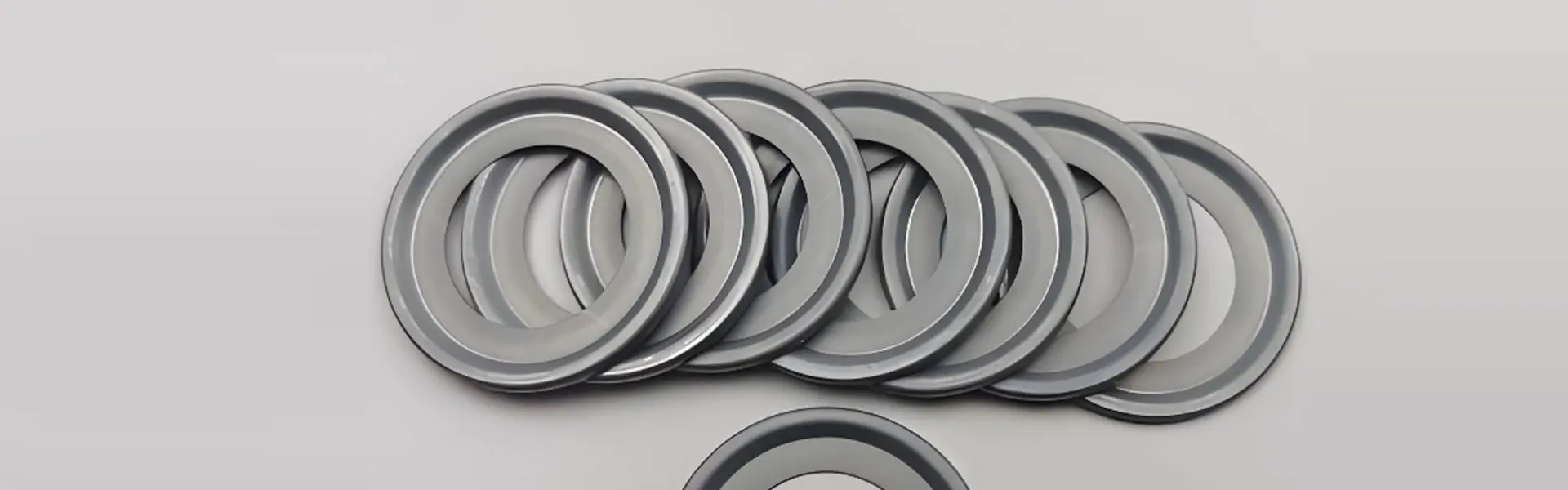
In the demanding world of industrial sealing, finding a gasket that combines resilience, flexibility, and reliable performance under extreme conditions is paramount. Corrugated gaskets stand out as a premier solution for a wide array of applications. At Kaxite, we have engineered our corrugated gaskets to meet the highest standards of quality and durability, providing a critical seal for pipelines, pressure vessels, heat exchangers, and other essential equipment. Their unique design, featuring a series of concentric grooves or corrugations, allows for superior sealing force distribution and exceptional recovery under varying pressures and temperatures. This guide delves into the specifications, benefits, and applications of Kaxite corrugated gaskets, providing the detailed information you need to specify the perfect seal for your project.
Our gaskets are manufactured with precision to deliver unmatched performance. The key benefits include:
Kaxite offers a comprehensive range of corrugated gaskets tailored to specific operational demands. Below are the critical parameters that define our product line.
The choice of material is crucial for gasket performance. Kaxite provides options for every application.
| Material Grade | Common Designation | Continuous Service Temperature | Key Properties & Typical Applications |
|---|---|---|---|
| 304 Stainless Steel | AISI 304, SS304 | -250°C to 400°C (-418°F to 752°F) | Excellent general corrosion resistance. Ideal for water, steam, food processing, and mild chemicals. |
| 316 Stainless Steel | AISI 316, SS316 | -250°C to 450°C (-418°F to 842°F) | Superior chloride and acid resistance due to molybdenum content. Used in chemical, marine, and pharmaceutical industries. |
| 321 Stainless Steel | AISI 321, SS321 | -250°C to 800°C (-418°F to 1472°F) | Stabilized with titanium for enhanced intergranular corrosion resistance at high temperatures. Common in aircraft and exhaust systems. |
| Inconel 600 | Alloy 600, UNS N06600 | -250°C to 1150°C (-418°F to 2102°F) | Exceptional oxidation and carburization resistance. Used in furnace components, heat treating, and chemical processing. |
| Titanium | Grade 2, UNS R50400 | -250°C to 350°C (-418°F to 662°F) | High strength-to-weight ratio, outstanding corrosion resistance in chlorides and oxidizing acids. Used in aerospace and seawater applications. |
| Carbon Steel with CRF* | CS, CRF Filler | -40°C to 500°C (-40°F to 932°F) | Economical choice for non-corrosive services like hot oil, hydrocarbons, and water. Often furnished with a Corrosion Resistant Foil (CRF) coating. |
Kaxite corrugated gaskets are produced to exacting dimensional standards to ensure a perfect fit.
| Parameter | Standard Range | Notes |
|---|---|---|
| Standard Thickness | 0.015" (0.38 mm) to 0.125" (3.18 mm) | 0.062" (1.57 mm) and 0.125" (3.18 mm) are most common. |
| Corrugation Pitch (Width) | 0.1" (2.5 mm) to 0.25" (6.35 mm) | Finer pitch offers more sealing lines; wider pitch offers higher crush resistance. |
| Corrugation Depth | 0.015" (0.38 mm) to 0.04" (1.02 mm) | Deeper corrugations generally provide better spring-back characteristics. |
| Outer Diameter (OD) | 1/2" (12.7 mm) to 120" (3048 mm) and larger | Custom sizes available upon request. |
| Inner Diameter (ID) | As per ASME B16.20, B16.21, DIN, JIS, or customer drawing | Precision-machined to match flange bore. |
| Facing / Filler Options | Plain Metal, Graphite Foil, PTFE, Ceramic, Mica | Soft facings fill micro-imperfections for enhanced sealability in low-stress applications. |
| Property | Test Standard | Typical Value (SS316 Core with Graphite Facing) |
|---|---|---|
| Maximum Recommended Seating Stress | ASME PCC-1 | 20,000 - 30,000 psi (138 - 207 MPa) |
| Leak Rate (Helium) | ASTM F37 | < 1 x 10⁻⁴ std cm³/sec |
| Thermal Conductivity | ASTM E1225 | 15 - 20 W/m·K (core dependent) |
| Compression Set | ASTM F36 | < 15% |
| Density | -- | ~7.9 g/cm³ (for SS core) |
Q: What is the primary functional difference between a corrugated metal gasket and a spiral wound gasket?
A: While both are high-performance metallic gaskets, their sealing mechanism differs. A corrugated gasket creates seal through multiple concentric rings (corrugations) that concentrate bolt load into high-pressure sealing lines. It is typically a single, corrugated metal layer, sometimes with a soft facing. A spiral wound gasket is a V-shaped metal strip wound concentrically with a soft filler material. It seals through a combination of the metal winding's spring action and the filler's conformability. Corrugated gaskets often require lower bolt load and are excellent for heat exchangers, while spiral wound gaskets are highly adaptable to pressure fluctuations and are a standard for raised face flanges.
Q: Can Kaxite corrugated gaskets be used for flanges with low bolt load capabilities?
A: Yes, this is one of their significant advantages. The design of a corrugated gasket, with its distinct crests and troughs, requires significantly lower seating stress to achieve an effective seal compared to a solid flat metal gasket. This makes Kaxite corrugated gaskets an excellent choice for older flanges, brittle materials like glass-lined steel, or applications where high bolt loads are impractical or could damage the flange.
Q: How do I select the right facing material (like graphite or PTFE) for my corrugated gasket?
A: The choice depends on your service media, temperature, and required sealability. Expanded Graphite facing offers superb thermal conductivity, excellent chemical resistance (except strong oxidizers), and operates from cryogenic temperatures up to 450°C (842°F) in non-oxidizing atmospheres. It provides exceptional sealability. PTFE (Teflon) facing is chosen for its unparalleled chemical inertness against corrosive fluids and ease of installation, but it is limited to a lower temperature range (typically -200°C to 260°C / -328°F to 500°F). For ultra-high temperatures without a soft facing, a plain metal corrugated gasket is used.
Q: Are corrugated gaskets reusable?
A: High-quality corrugated gaskets from Kaxite are often capable of limited reuse, provided they have not been overheated, crushed beyond their yield point, or chemically attacked. Before reusing, inspect the gasket thoroughly for any cracks, flattened corrugations, or damage to the facing material. The flange surfaces must also be clean, undamaged, and properly aligned. For critical services or where leak integrity is paramount, installing a new gasket is always the recommended best practice.
Q: What are the most critical factors to specify when ordering a custom corrugated gasket from Kaxite?
A: To ensure you receive the optimal gasket, provide the following information: 1) Flange Standards & Dimensions: Include the flange standard (ASME B16.5, B16.47, DIN, etc.), nominal size, pressure class (e.g., 150#), and raised face/groove depth if applicable. 2) Service Conditions: Specify the fluid media, maximum operating temperature and pressure, and any thermal or pressure cycling. 3) Material Preference: Indicate the core metal and desired facing material based on chemical compatibility. 4) Special Requirements: Note any need for special coatings, non-standard thickness, or unique outer/inner diameters.
Q: How does the performance of a corrugated gasket change at cryogenic versus high-temperature applications?
A: Kaxite corrugated gaskets perform reliably across a vast temperature spectrum, but material selection is key. For cryogenic services (down to -250°C / -418°F), austenitic stainless steels like 304, 316, or 321 are preferred as they retain ductility and toughness. A graphite or PTFE facing remains functional. In high-temperature services (above 500°C / 932°F), the choice shifts to alloys with high oxidation resistance like 321 SS, Inconel 600, or Incoloy 800. At these extremes, soft facings may not be used, and the seal relies entirely on the metal-to-metal contact of the corrugation crests, making flange surface finish critically important.