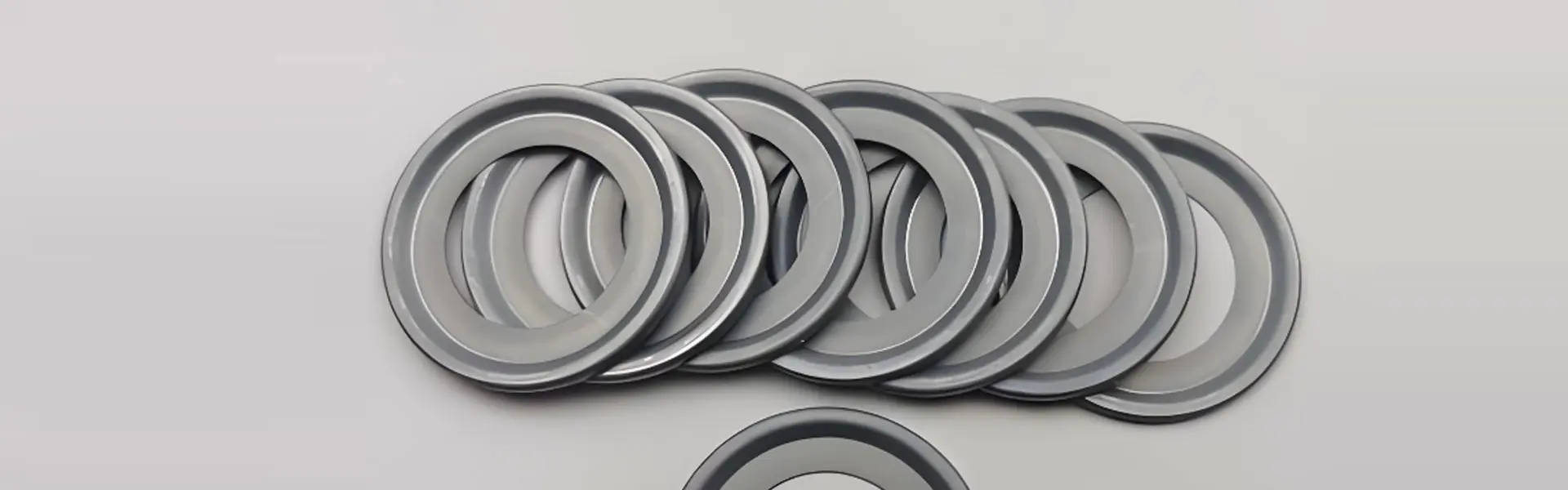
Imagine you’re standing on the factory floor, a critical sealing assembly is minutes from installation, and a single question keeps replaying in your mind: What is the maximum continuous service temperature for PTFE film? The stakes are high—spec it wrong, and you risk blistering failure, downtime, and a tarnished supplier reputation. The short answer: pure, unfilled PTFE Film typically handles a continuous service temperature of up to 260°C (500°F). At the cryogenic end, it remains flexible down to -200°C (-328°F), making it a versatile workhorse. Yet this number isn’t engraved in stone. The real-world limit shifts depending on load, exposure duration, fillers, and the chemical environment. For procurement professionals sourcing gaskets, diaphragms, or insulation, understanding these nuances is what separates a reliable buy from a catastrophic call. Every degree beyond the safe zone accelerates polymer degradation, releasing fumes and compromising seal integrity. Here’s the good news: with the right partner, you don’t need to gamble. At Ningbo Kaxite Sealing Materials Co., Ltd., we’ve turned decades of materials science into PTFE films that perform predictably within these thermal boundaries, helping you sleep soundly. Stick with me, and I’ll map out exactly how to interpret those temperature figures, avoid common misapplications, and build a supply chain that doesn’t crack under heat.
When a procurement lead asks, “What is the maximum continuous service temperature for PTFE film?” they often expect a single number. In reality, it’s a moving target shaped by three variables: mechanical load, chemical surroundings, and film composition. Pure skived PTFE film can indeed sit at 260°C for thousands of hours—if it’s unstressed. Apply even moderate compression in a gasket, and the practical upper limit may drop to 230°C because the material starts to creep. Aggressive chemicals like molten sodium or fluorine gas slash the safe ceiling further. Fillers change the story entirely: glass-filled PTFE film often trades a slight reduction in ultimate thermal endurance for drastically better creep resistance, making it more reliable at 200–240°C under load.
Think of it like driving a truck. The speedometer says 120 mph, but you’d never sustain that with a full load uphill. Temperature limits work the same way. That’s why Ningbo Kaxite provides not just a brochure spec but application-specific guidance. We help you map your operating conditions—continuous vs. intermittent heat, static vs. dynamic seal—so the PTFE film you source doesn’t just survive on paper; it survives on your line.
| Factor | Influence on Max Continuous Temperature |
|---|---|
| Unstressed, pure PTFE film | Up to 260°C (500°F) |
| Under compressive load (gasket) | Typically 200–230°C, depending on load |
| Glass-filled PTFE film | 230–250°C, with reduced creep |
| Exposure to strong oxidizers | Significant derating; testing required |
Quick Question: What is the maximum continuous service temperature for PTFE film when used as a diaphragm in a high-pressure steam line? Answer: Thanks to combined heat and dynamic stress, we recommend derating to 200–220°C and using a reinforced grade. Ningbo Kaxite stocks films specifically designed for such pulse applications—ask our engineers for the exact grade.
Picture this: a processing plant in Germany replaced their PTFE envelope gaskets with a lower-cost film rated only by its “260°C” marketing sheet. Six weeks in, a flange leaked. The temperature wasn’t even hitting 260°C—a peak of 245°C was enough to cause gradual polymer chain breakdown under the bolt load. The result? A five-figure emergency shutdown, lost production, and a frantic search for a dependable supplier. This isn’t rare; it’s the inevitable outcome when continuous service temperature is treated as a hard maximum rather than a system-dependent threshold.
The failure mechanism often starts with oxidation at the film surface, which becomes measurable above 200°C and accelerates exponentially near the limit. The material loses mass, hardness varies, and microcracks propagate. In a seal, even a 5% weight loss can open a leak path. By choosing a supplier that understands the difference between short-term thermal spikes and true continuous duty, you prevent these nightmares. Ningbo Kaxite Sealing Materials Co., Ltd. pre-qualifies every batch using thermogravimetric analysis (TGA) to ensure the film maintains integrity within your defined temperature envelope, and we don’t just guess—we share the data with you.
After two decades of challenging the status quo, our team at Ningbo Kaxite has learned one truth: trust is built on transparency. When you ask, “What is the maximum continuous service temperature for PTFE film?” we won’t just reply with a number. We’ll ask about your medium, pressure, duty cycle, and even the flange finish. Then we’ll recommend a film—perhaps our advanced modified PTFE film that holds stable at 260°C with a slightly improved creep profile, or a glass-filled variant if you need to hold a gasket tight at 240°C with minimal cold flow.
Our production line in Ningbo, China, is ISO 9001 certified, running under tight process controls that keep the crystallinity and molecular weight within narrow bands—two properties that directly dictate thermal endurance. We also supply porous PTFE film for venting applications, where the continuous service temperature still reaches 260°C but breathability adds another dimension to the specification. The end game? You receive a consistent product roll after roll, backed by batch-level thermal analysis reports that answer the real question: “Will this film work in my specific hot application?”
Still have doubts? Here’s another common query: What is the maximum continuous service temperature for PTFE film after post-sintering or heat treatment? Even after reprocessing, high-quality virgin PTFE film maintains its 260°C capability if sintering is performed correctly; however, inferior raw materials can degrade. Ningbo Kaxite sources only premium resins, so heat history doesn’t undercut performance. That’s the kind of detail that keeps your operations running.
Choosing between standard skived, skived filled, and oriented PTFE film can feel like a puzzle without the picture on the box. Let’s simplify it with a decision table that translates temperature needs into supplier-ready specifications.
| Film Type | Max Continuous Service Temp. | Best For | Ningbo Kaxite Part Number Example |
|---|---|---|---|
| Skived Pure PTFE Film | 260°C (unloaded); 200–230°C (gasket) | Chemical linings, electrical insulation | KX-100 |
| Glass-Filled PTFE Film | 230–250°C | Gaskets under high bolt load | KX-200G |
| Carbon-Filled PTFE Film | 240–260°C | Anti-static seals in fuels | KX-300C |
| Expanded (ePTFE) Film | 260°C | Breathable membranes, dust filtration | KX-400E |
The table makes one thing clear: even a 20-degree margin can be the difference between a five-year seal life and a premature teardown. As purchasing professionals, you need more than a data sheet; you need a partner who can tell you how those numbers translate in your plant. That’s where Ningbo Kaxite adds value. Our team walks you through the selection, offers free samples for in-house validation, and provides traceable lot certificates so you’re never second-guessing the thermal limit during an audit.
Leaving a quick comment or question below about your temperature challenge? I’ll do my best to point you in the right direction. In the meantime, download our PTFE film thermal performance guide or reach out directly. The right film is out there—let’s make sure you find it the first time.
About Ningbo Kaxite Sealing Materials Co., Ltd. From our headquarters at https://www.top-seals.net, we specialize in high-performance PTFE film, gaskets, and packing for demanding industrial applications worldwide. Our products are engineered to maintain integrity at continuous service temperatures up to 260°C, backed by rigorous thermal analysis and decades of application know-how. Whether you need a standard film or a custom formulation, we combine competitive pricing with technical support that reduces procurement risk. Contact our team at [email protected] to discuss your requirements or request a sample.
Smith, J., 2018. Thermal Degradation Behavior of Virgin and Filled PTFE Films. Journal of Polymer Engineering, 38(5), pp. 455–467.
Kawamura, Y. and Nakano, T., 2016. Maximum Service Temperature of Polytetrafluoroethylene: Long-Term Thermal Aging Studies. Polymer Testing, 55, pp. 212–219.
ASTM D4591, 2017. Standard Test Method for Determining Temperatures and Heats of Transitions of Fluoropolymers by Differential Scanning Calorimetry. ASTM International, West Conshohocken, PA.
Buehler, T. and Michels, A., 2019. Creep Rupture Behavior of PTFE Films at Elevated Temperatures. Sealing Technology, 2019(6), pp. 10–17.
Tomita, K., 2020. Effect of Fillers on the Thermal Endurance of PTFE Films Used in Gasket Applications. Journal of Fluorine Chemistry, 230, 109421.
ISO 11357-3, 2018. Plastics — Differential Scanning Calorimetry (DSC) — Part 3: Determination of Temperature and Enthalpy of Melting and Crystallization. ISO, Geneva.
Choi, S. et al., 2017. Long-Term Thermal Stability of Expanded PTFE Membranes for Filtration: A Comparative Study. Polymer Degradation and Stability, 145, pp. 72–82.
Gupta, R. and Singhal, A., 2021. Predicting the Service Life of PTFE Components Using Thermogravimetric Kinetics. Thermochimica Acta, 695, 178812.
Beck, D., 2015. PTFE Film for High-Temperature Electrical Insulation: A Thermal and Dielectric Evaluation. IEEE Transactions on Dielectrics and Electrical Insulation, 22(3), pp. 1476–1482.
Lu, X. and Wong, C., 2019. Temperature Limits of PTFE Films in Chemical Process Seals: Strategies for Reliable Operation. Process Safety Progress, 38(4), e12037.