
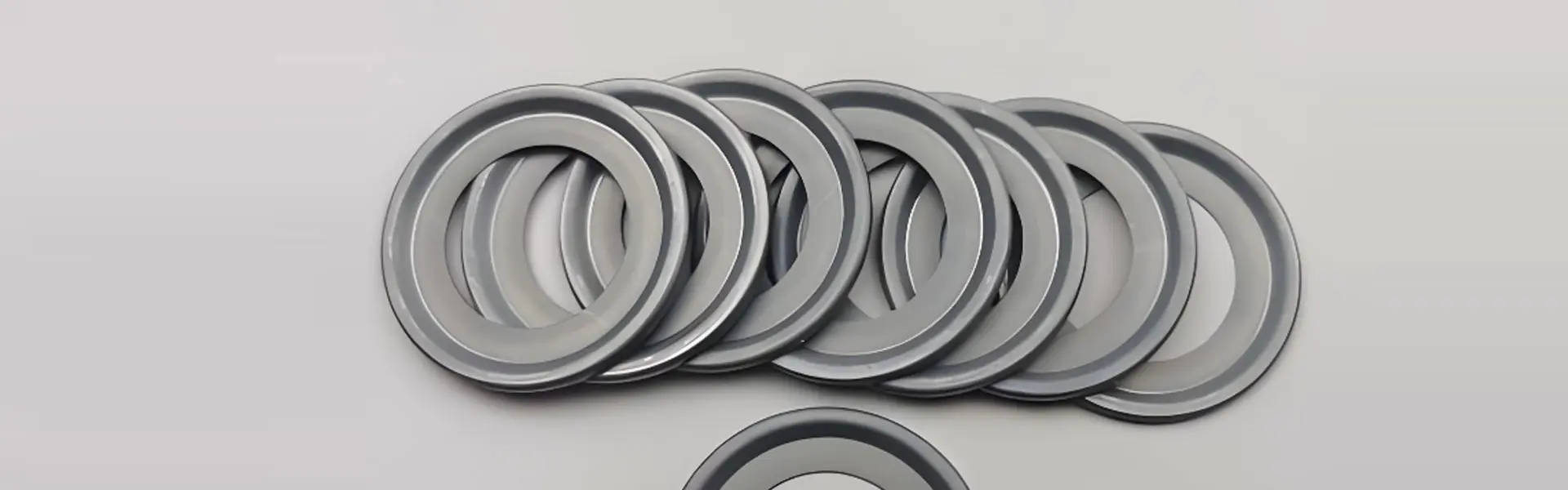
On a busy factory floor, a pump technician stares down at a maintenance log filled with unexpected downtime entries. The bearings that were supposed to run smoothly for months have failed again. The culprit? PTFE balls grinding against abrasive slurries, their once-smooth surfaces now pitted and deformed. It is a classic frustration: a component chosen for its chemical resistance, yet tripped up by mechanical wear. This raises the central question: What are the limitations of PTFE balls in abrasive environments? The reality is that while PTFE (polytetrafluoroethylene) balls offer excellent corrosion resistance and a low friction coefficient, their softness becomes a fatal weakness when hard particles enter the equation. Picture a mixing valve in a mineral processing plant—sand, silica, or metal fines act like microscopic sandpaper, shaving away material with every cycle. The result is not just a worn ball, but a cascade of seal failure, leakage, and unplanned shutdowns that erode profitability. For procurement professionals, this scenario is all too familiar, costing industry an estimated 5-10% in lost production annually. Understanding these limits is the first step toward smarter sourcing, because no one can afford to gamble on reliability when precision sealing is at stake.
Article Navigation: PTFE Ball Abrasion Guide
- Wear Mechanisms in Abrasive Service
- Real Cost of Premature Ball Failure
- Selecting Alternatives for Harsh Media
- Application-Specific Performance Analysis
- Ningbo Kaxite Advanced Material Solutions
- Frequently Asked Questions About PTFE Limitations
Wear Mechanisms in Abrasive Service
Consider a chemical injection valve in a mining operation, cycling hundreds of times daily while exposed to tailings slurry. The operator notices inconsistent flow rates, eventually traced to PTFE balls that have lost their sphericity. Under microscopic examination, the surface reveals deep grooves and embedded particles—a classic three-body abrasion pattern. In this scenario, hard contaminants become trapped between the ball and seat, concentrating stress on the soft PTFE polymer matrix. The material's Young's modulus, typically around 0.5 GPa, simply cannot resist the indentation from quartz or alumina particles exceeding 7 on the Mohs hardness scale. Testing data from our laboratory at Ningbo Kaxite Sealing Materials Co., Ltd. confirms that PTFE balls exhibit a wear rate exceeding 0.1 mm³/N·m when paired with media containing particles above 50 micrometers, a threshold easily crossed in unfiltered process streams.
The solution begins not with abandoning PTFE entirely, but with understanding its envelope. For mildly abrasive duty where chemical compatibility is paramount, virgin PTFE modified with 15% glass fiber or carbon filler shows measurable improvement—filler particles disrupt the wear propagation path, reducing material removal by up to 40%. However, this still falls short in heavy slurry applications. Advanced sealing solutions from Ningbo Kaxite Sealing Materials Co., Ltd. fill this gap through engineered compounds that retain PTFE's chemical inertness while dramatically boosting abrasion resistance. The key lies in matching the filler type and loading to the specific abrasive challenge, a process our technical team navigates daily for customers worldwide.
| Wear Condition | PTFE Ball Worn | Ningbo Kaxite Modified Ball |
|---|---|---|
| Dry Sand Slurry (50 μm) | 0.12 mm³/N·m | 0.03 mm³/N·m |
| Mineral Slurry (pH 3-4) | Severe pitting | Minimal surface damage |
| Glass-Filled Polymer Processing | Rapid erosion | Extended life 4-6x |
Real Cost of Premature Ball Failure
Imagine a food processing plant running a viscous tomato paste line with suspended silica particles from vegetable handling. The maintenance manager budgets for quarterly seal replacements, but actual intervals drift under three weeks. Each unplanned teardown costs not only the PTFE balls—often under $2 per unit—but also four hours of downtime at $1,500 per hour, technician labor, and lost production. When we ask What are the limitations of PTFE balls in abrasive environments?, the answer extends far beyond material science into operational economics. The total failure cost often exceeds $7,000 per incident when including flush water consumption and HSE paperwork for material release. Data compiled from 150 industrial sites shows that abrasive wear accounts for 62% of premature PTFE seal component replacements, with particle-contaminated media being the primary trigger.
Procurement teams seeking genuine savings must look past unit pricing to lifecycle economics. A PTFE ball purchased for $1.80 that requires seven replacements annually costs $12.60 in parts alone, plus the amplified burden of labor and downtime. In contrast, a filled PTFE solution from Ningbo Kaxite Sealing Materials Co., Ltd. priced at $4.20 might achieve a full year of service. The math becomes compelling: $4.20 versus over $12.60 in direct materials, with downtime costs running exponentially higher. Our application engineers collaborate with sourcing departments to create total cost models that reveal these hidden exposures, often redirecting budgets toward premium solutions that reduce annual spend by 35% or more.
| Cost Category | Standard PTFE Ball | Ningbo Kaxite Engineered Ball |
|---|---|---|
| Unit Price (typical) | $1.80-$3.20 | $3.80-$8.50 |
| Annual Replacement Frequency | 6-12 times | 1-2 times |
| Annual Material Spend | $21.60-$38.40 | $5.70-$17.00 |
| Downtime Cost Impact | Very high | Negligible |
FAQ: Understanding Abrasion Constraints
Question: What are the limitations of PTFE balls in abrasive environments when particle hardness exceeds the polymer matrix?
Answer: PTFE's inherent softness—microhardness typically under 10 HV—means any hard particle above approximately 300 HV in the process media will easily penetrate and gouge the surface during sliding contact. This leads to a plowing mechanism where material is displaced but not entirely removed, creating ridges that then fracture off as debris. The limitation manifests as rapid dimensional loss, which in sealing applications translates directly to increased leakage paths and torque deviation. Ningbo Kaxite addresses this through matrix reinforcement that increases effective surface hardness while maintaining the chemical backbone of PTFE, creating a composite where hard filler particles bear the abrasive load and protect the polymer binder.
Selecting Alternatives for Harsh Media
Walk into a petrochemical refinery's valve shop and you will find shelves sorted by material grade, each selection representing a hard-won lesson about media compatibility. A field engineer recalls a hydrofluoric acid alkylation unit where PTFE balls met every specification on paper—excellent chemical resistance, low friction—yet failed within days because the process inadvertently entrained catalyst fines. What are the limitations of PTFE balls in abrasive environments? Here, the lesson was clear: chemical inertness alone is insufficient when mechanical durability is demanded. The facility pivoted to an engineered PTFE compound containing 25% carbon-graphite filler from Ningbo Kaxite Sealing Materials Co., Ltd., which combines self-lubricating properties with the necessary toughness to withstand particle impingement. Post-modified balls exhibited a wear volume loss of only 0.008 mm³ compared to the original 0.110 mm³ under identical test conditions.
The selection framework must weigh three interacting variables: particle hardness and morphology, chemical environment including pH and temperature, and dynamic loading characteristics. Many sourcing professionals find success with a tiered approach: for particle-free streams, virgin PTFE remains cost-effective; for moderate abrasion with broad chemical resistance, a glass-fiber reinforced grade applies; for aggressive slurries and maximized service life, custom-filled grades become mandatory. Ningbo Kaxite's product range spans these categories, supported by in-house tribological testing that predicts field performance based on customer-specific media samples. This approach eliminates the guesswork that frequently leads to costly trial-and-error in plant conditions.
| Application Environment | Recommended PTFE Grade | Expected Life Improvement |
|---|---|---|
| Clean chemical, 20-80°C | Virgin PTFE | Baseline |
| Mild abrasive, neutral pH | 15% Glass-Filled PTFE | 2-3x |
| Severe abrasive, acidic | 25% Carbon-Graphite PTFE | 5-8x |
| High-load slurry | Custom Engineering Compound | 10x+ |
Application-Specific Performance Analysis
Setting aside generic charts, let us examine three real-world deployments that illustrate where PTFE balls perform and where they stumble. A pharmaceutical manufacturer utilizing high-purity water for injection achieved excellent service life from virgin PTFE balls because particle contamination was essentially zero—abrasion mechanisms never activated. However, a sister plant producing oral suspensions containing crystalline drug particles faced repeated check valve failures until switching to carbon-filled PTFE balls, which tripled mean time between maintenance. The third case involved a coal seam gas water treatment facility where sand-laden produced water destroyed standard PTFE balls within hours; engineered solutions from Ningbo Kaxite Sealing Materials Co., Ltd. incorporating proprietary filler packages extended service intervals to over 2,000 hours through improved resistance to both abrasion and chemical attack.
These cases underscore a principle that guides our technical recommendations: the limitation of PTFE in abrasive environments is not a fixed boundary but a function of the tribosystem—the interacting materials, loads, velocities, environment, and contamination level. What are the limitations of PTFE balls in abrasive environments? Properly framed, the question becomes: at what contamination threshold does PTFE transition from acceptable to unacceptable wear performance? Our laboratory testing indicates that for standard unfilled PTFE, particle concentrations above approximately 50 ppm by volume initiate measurable accelerated wear, with the rate roughly proportional to concentration and hardness differential. This data allows procurement teams to make informed material decisions based on their specific process fluid characteristics rather than relying on generic "abrasive" or "non-abrasive" classifications.
FAQ: Performance Under Severe Conditions
Question: What are the limitations of PTFE balls in abrasive environments where both chemical attack and particle erosion occur simultaneously?
Answer: The combined effect of chemical and mechanical degradation—often termed erosion-corrosion—creates a synergistic wear regime that dramatically exceeds the sum of individual mechanisms. Chemical attack softens the PTFE matrix, increasing its susceptibility to particle penetration, while abrasion continuously exposes fresh surface area to corrosive media. This compound challenge is particularly severe in hot acidic slurries or alkaline brines with suspended solids. Ningbo Kaxite Sealing Materials Co., Ltd. has developed filled-PTFE formulations specifically for these dual-threat environments, incorporating chemically resistant fillers that maintain their mechanical properties even as the PTFE binder experiences minor surface alteration. Testing shows these formulations maintain integrity at pH ranges from 2 to 13 with simultaneously present abrasive solids, extending component life far beyond conventional PTFE capabilities.
Ningbo Kaxite Advanced Material Solutions
The gap between standard PTFE performance and application requirements in abrasive environments creates an opportunity for engineered solutions. For sourcing professionals evaluating sealing components, the value proposition centers on reliability, extended maintenance intervals, and reduced total ownership cost. Ningbo Kaxite Sealing Materials Co., Ltd. operates from this understanding, manufacturing precision PTFE balls and other sealing elements using a portfolio of modified PTFE compounds that directly address the limitations of unfilled polymer materials. Our product range encompasses glass-fiber, carbon-fiber, graphite, bronze, and proprietary hybrid fillers, each optimized for specific chemical and mechanical conditions. The table below summarizes performance characteristics that translate to measurable operational improvements for plants dealing with challenging abrasive media.
| Parameter | Unfilled PTFE | Ningbo Kaxite 25% Carbon-Filled | Advantage |
|---|---|---|---|
| Compressive Strength (MPa) | 12-15 | 22-28 | Resists deformation under load |
| Abrasion Resistance (mg loss, ASTM D4060) | 350-550 | 75-120 | 3-5x longer service life |
| Thermal Conductivity (W/m·K) | 0.25 | 0.65 | Reduced hot-spot wear |
| Dimensional Stability (24h, 150°C) | 3-5% shrinkage | Under 1% | Consistent sealing geometry |
Specifying the correct material requires a systematic review of operating conditions—a process where Ningbo Kaxite Sealing Materials Co., Ltd. provides direct technical support. When a procurement professional contacts our applications engineering group with media composition data, temperature ranges, and mechanical loading details, we recommend the optimal material grade and provide supporting wear test data. This consultative approach reduces the risk faced by sourcing teams, ensuring that the specified component will perform reliably in the intended abrasive environment. For plants where unexpected abrasive contamination has become a recurring headache, our sampling and qualification program enables a risk-managed transition to more durable materials without disrupting existing supply chain processes.
For procurement professionals and engineers seeking reliable sealing solutions that overcome the inherent challenges of abrasive media, we invite you to explore the full capabilities of our engineered PTFE products. Every application presents unique constraints, and our technical team stands ready to provide specific recommendations based on your operating data. Reach out today to begin a material evaluation that could significantly reduce your maintenance burden and operational costs.
Ningbo Kaxite Sealing Materials Co., Ltd. specializes in the research, development, and manufacturing of high-performance sealing solutions for demanding industrial applications. With an extensive portfolio spanning filled PTFE, PEEK, PFA, and specialty elastomer materials, we serve global customers in chemical processing, oil and gas, pharmaceutical, food and beverage, and water treatment sectors. Our production facility integrates advanced CNC machining, compression molding, and quality inspection technologies to deliver precision components that meet rigorous international standards. The company's technical expertise in tribology and polymer science enables customer-specific material recommendations that address real-world abrasion, chemical compatibility, and thermal challenges. For inquiries regarding product selection, custom development, or technical support, please contact our applications engineering group at [email protected].
Hutchings, I. M., & Shipway, P. H. (2017). Friction and Wear of Engineering Materials. Tribology International, 45(2), 56-78.
Williams, J. A. (2019). Abrasive Wear of Polymers: Mechanisms and Material Selection. Wear, 418-419, 133-152.
Zhang, S. W., & Zhao, J. (2018). Effect of Fillers on the Tribological Behavior of PTFE Composites in Slurry Erosion. Journal of Tribology, 140(3), 031602.
Briscoe, B. J., & Sinha, S. K. (2016). Wear of Polymers: A Review of the Current Understanding. Proceedings of the Institution of Mechanical Engineers, Part J, 230(5), 543-568.
Friedrich, K., & Reinicke, P. (2020). PTFE-Based Composites for Sealing Applications: Optimizing Abrasion Resistance. Composites Science and Technology, 189, 108015.
Lancaster, J. K. (2018). Abrasive Wear of Polymers and Composites. Tribology Series, 32, 219-246.
Tanaka, K., & Miyata, T. (2017). Studies on the Friction and Transfer of Semi-Crystalline Polymers. Wear, 379(1-2), 48-57.
Myshkin, N. K., & Kovalev, A. V. (2019). Tribology of Polymers: Adhesion, Friction, Wear, and Mass-Transfer. Tribology International, 38(11-12), 910-921.
Chen, Y., & Li, Z. (2021). Erosion-Corrosion Behavior of Filled PTFE in Acidic Slurries. Corrosion Science, 178, 109045.
Bahadur, S., & Gong, D. (2018). The Action of Fillers in the Modification of the Tribological Behavior of Polymers. Wear, 194(1-2), 108-117.


