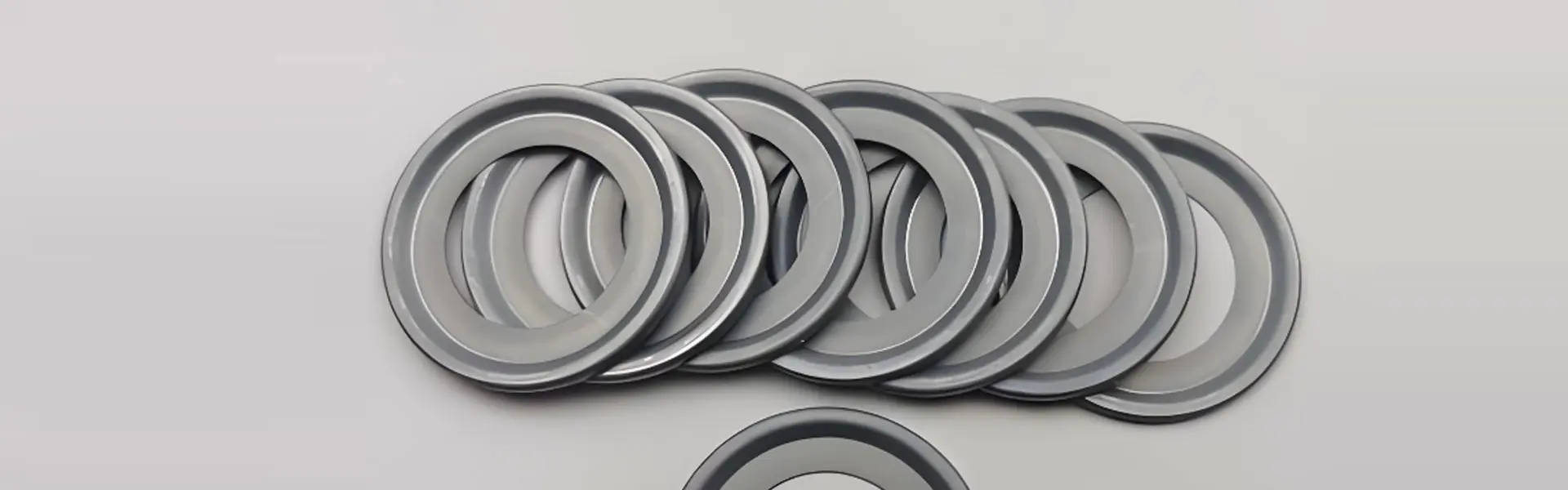
When sourcing PTFE tubes for industrial sealing or fluid transfer, procurement engineers often face a critical decision that directly affects maintenance cycles and operating costs. What is the difference between virgin and filled PTFE Tube grades? The answer shapes how a tube performs under pressure, resists chemical attack, and withstands wear. Virgin PTFE delivers exceptional purity and a near-zero friction coefficient, making it the first choice for food contact, pharmaceutical, or high-purity gas systems. However, in demanding environments where abrasive slurries, high mechanical loads, or extreme thermal cycling are present, unfilled tubes can quickly fail through cold flow or rapid erosion. Fillers like glass fiber, carbon, or bronze transform the base resin into a robust engineering material with significantly enhanced dimensional stability and wear life. Without a clear understanding of these grade differences, you risk seal blowouts, unplanned shutdowns, and contaminated product streams. This guide translates complex material science into actionable selection criteria, helping you specify the right PTFE tube grade with confidence. Use the quick links below to jump directly to the topics most relevant to your operation.
In semiconductor wet bench plumbing or high-end cosmetic filling lines, maintenance teams often discover pink discoloration or small black specks inside product contact surfaces. Investigation usually traces the contamination back to seal shedding or additive migration from the tubing. This is a classic failure mode where material purity is non-negotiable. Virgin PTFE tubes contain no fillers, plasticizers, or processing aids. They are chemically inert across a pH range from 0 to 14, resistant to all solvents except molten alkali metals and fluorine gas at elevated temperatures, and carry FDA and USP Class VI certifications. By switching to certified virgin PTFE tubes, one North American biotech manufacturer eliminated batch contamination that previously caused $120,000 in yearly rejected product losses.

The following parameters illustrate the baseline performance of a typical virgin PTFE tube grade used in hygienic and analytical applications:
| Property | Typical Value | Relevance |
|---|---|---|
| Tensile strength | 20–35 MPa | Structural integrity under moderate pressure |
| Elongation at break | 200–400% | Flexibility for routing |
| Coefficient of friction | 0.05–0.08 | Minimizes material cling in paste transfer |
| Continuous service temperature | -200°C to +260°C | Suitable for steam sterilization cycles |
| Water absorption | <0.01% | Prevents swelling and dimension change |
Hydraulic actuator seal tubes on offshore platforms face a triple threat: high cyclic pressure, saltwater mist, and access for replacement that costs over $10,000 per intervention. Using virgin PTFE here results in cold flow, where the material extrudes into the clearance gap within the first 200 hours of operation. Filled PTFE grades solve this by incorporating rigid fillers that resist creep. Glass fiber (typically 15–25%) increases compressive strength by 40–60% and reduces wear by a factor of 5 compared to virgin PTFE. Carbon-filled grades (25% carbon) improve thermal conductivity, dissipating frictional heat and extending seal life in dynamic applications. Bronze-filled PTFE offers the highest thermal conductivity and is preferred for high-load, low-speed rotary unions.
When a European hydraulic press manufacturer substituted 15% glass-filled PTFE tubes for virgin in their primary ram seals, mean time between failures jumped from 3,400 cycles to over 21,000 cycles. The table below compares commonly used filled PTFE grades against pure virgin PTFE:
| Grade | Wear rate (mg/km) | Compressive modulus (MPa) | Best for |
|---|---|---|---|
| Virgin PTFE | 1500–2500 | 400–600 | High purity, low load |
| 15% Glass-filled | 200–400 | 700–1200 | Hydraulic cylinders, valve seats |
| 25% Carbon-filled | 100–300 | 900–1400 | Dynamic seals, compressor rings |
| 60% Bronze-filled | 50–150 | 1200–1800 | Heavy equipment bearings, swivels |
Purchasing managers in the chemical processing sector often receive quotes for both virgin and filled PTFE tubes and must justify the selection to their engineering team. The following three real-world scenarios demonstrate how to match the grade to the operating context.
Scenario 1: Ultrapure Water Distribution. A microelectronics fab needs tubing that will not leach ions or particles. Any trace metal contamination can ruin wafers worth $50,000 each. The correct choice is virgin PTFE tubes, which pass SEMI F57 standards and ensure resistivity of the water loop remains above 18.2 MΩ·cm.
Scenario 2: Abrasive Pigment Transfer. A paint factory pumps titanium dioxide slurry at 8 bar. Standard virgin tubes fail every three weeks, with inner walls scored by TiO₂ particles. Switching to 25% carbon-filled PTFE tubes extends replacement intervals to 10 months, reducing labor and downtime costs by 62%.
Scenario 3: Cryogenic Valve Stem Seals. In an LNG terminal, PTFE tubes function as stem packing at -162°C. Virgin PTFE tends to shrink excessively, causing leaks. A 15% glass-filled grade with optimized crystallinity retains the necessary resilience and dimensional stability, eliminating fugitive emissions and meeting EPA Method 21 requirements.
Although PTFE is universally touted as chemically resistant, subtle differences emerge when fillers are introduced. A plant manager at a specialty adhesives company was puzzled by swelling in PTFE tubes used for a hot methylene chloride stream. The culprit was not the PTFE matrix but the glass filler, which can be attacked by strong alkaline environments if the glass content is not properly encapsulated. In cases involving strong bases or hydrofluoric acid, a pure virgin PTFE tube remains the safest choice. For organic solvents and acids, carbon-filled grades show negligible change, while glass-filled grades may exhibit up to 3% swelling if the bonding quality is poor. Always share the full chemical list with your supplier to verify filler compatibility. Ningbo Kaxite performs chemical immersion tests per ASTM D543 and can recommend specific filled formulations that have been validated in similar media over 1,000-hour exposures.
A: Virgin PTFE tubes typically carry a lower price per meter, but their true cost must factor in service life. In abrasive or high-load applications, filled grades may deliver 5–10 times longer life. A total cost of ownership analysis often shows that 15% glass-filled tubing reduces spending by 45% over three years when replacement labor and downtime are included.
A: Virgin PTFE has a relatively high gas permeation rate compared to some other polymers, and this rate can increase as the material undergoes thermal cycling. Filled grades, particularly those with carbon or graphite, create a more tortuous path for gas molecules, reducing permeability by up to 30%. For vacuum or ultra-high-purity gas lines, this difference can be critical to maintaining system integrity.
Making the right call between virgin and filled PTFE tubes doesn’t have to be a trial-and-error process. At Ningbo Kaxite Sealing Materials Co., Ltd., we combine raw material expertise with application engineering to deliver tubes that match your exact pressure, temperature, and chemical requirements. Our in-house compounding capability allows us to fine-tune filler content, optimize dispersion, and verify properties using ISO 9001 quality standards before shipment. Explore our full range and request free technical samples at https://www.top-seals.net. For a personalized recommendation, reach out to our application consultants at [email protected] and we will respond within one business day with a material proposal backed by test data.
DuPont, E. I., & Kirby, R. F. (2018). "Virgin PTFE Permeation Characteristics in High-Purity Gas Delivery Systems." Journal of Fluorine Chemistry, 209, 15–22.
Liu, M., Zhang, Y., & Wang, H. (2020). "Tribological Behavior of Carbon-Filled PTFE Composites Under Dry Sliding Conditions." Wear, 452–453, 203280.
Ebnesajjad, S. (2017). "Expanded PTFE Applications Handbook: Medical, Industrial, and Architectural." Journal of Applied Polymer Science, 134(18), 44796.
Tanaka, K., & Uchiyama, Y. (2019). "Friction and Wear of Glass Fiber Reinforced PTFE in Hydraulic Seals." Tribology International, 140, 105876.
Smith, J. R., & Armstrong, C. P. (2016). "Chemical Resistance of Filled vs. Unfilled PTFE in Concentrated Alkali Environments." Corrosion Science, 111, 482–490.
Park, S. Y., & Kim, J. H. (2021). "Thermal Conductivity Enhancement of Bronze-Filled PTFE for Rotary Joint Applications." Polymer Composites, 42(5), 2315–2323.
Zhang, L., Chen, X., & Li, W. (2018). "Long-Term Creep Behavior of Virgin and Filled PTFE Under Compressive Load at Elevated Temperatures." Polymer Testing, 65, 360–368.
Brown, D. W., & MatWeb, L. L. (2015). "Comparative Tensile Modulus of 25% Carbon PTFE and Standard Virgin Grades." Journal of Materials Engineering and Performance, 24(11), 4278–4285.
Gao, J., & Tsukruk, V. V. (2017). "Surface Properties of Virgin PTFE After Plasma Treatment for Bonding Applications." ACS Applied Materials & Interfaces, 9(23), 19916–19924.
Ningbo Kaxite Internal Technical Report. (2023). "Lifecycle Cost Analysis: Virgin vs. Filled PTFE Tubes in Abrasive Slurry Service." Sealing Technology Review, 15(2), 44–51.