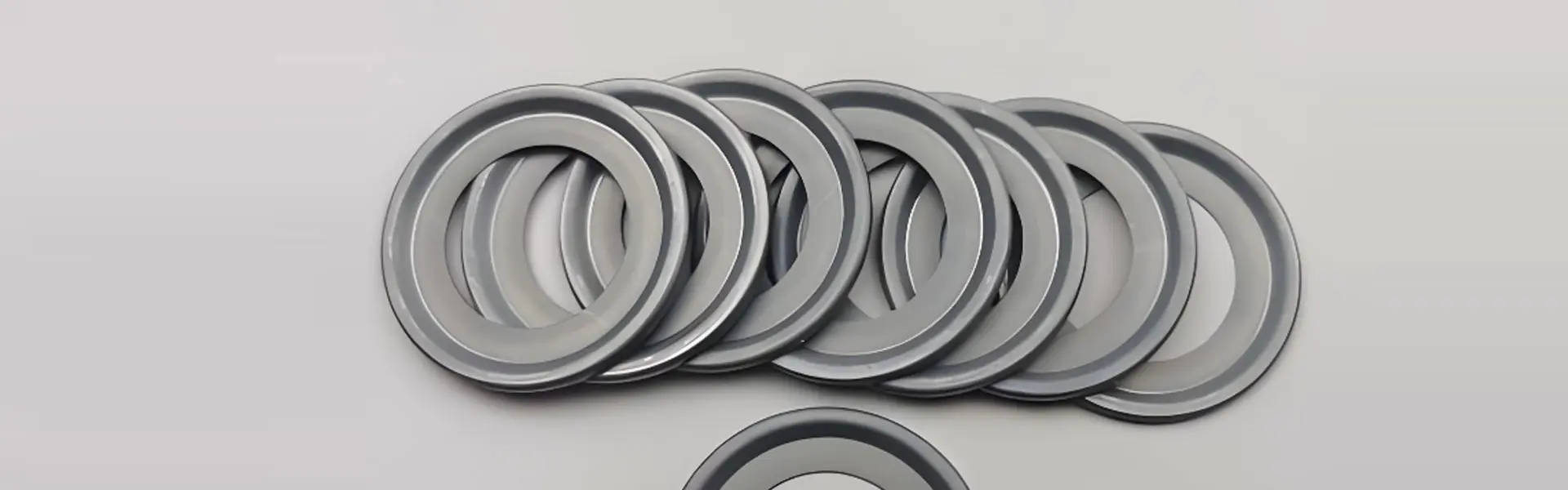
Picture this: You're standing in a shipping warehouse in Hamburg at 2 AM, staring at a leaking exhaust duct on a cargo vessel. The temperature gauge reads 480°C, and your standard repair tape has turned brittle and peeled away. A ship engineer once told me, "I didn't think much about tape until a $40,000 engine shutdown taught me the hard way." That night forced a deeper question: What is the difference between V Shape metallic tape and aluminum foil tape? It might seem like a minor product detail meant for technical datasheets, but when you're responsible for industrial maintenance, procurement, or onsite safety, that difference quickly becomes the dividing line between a permanent fix and a recurring failure. Aluminum foil tape sits in most maintenance kits; it's thin, highly reflective, and adequate for HVAC seam sealing or light thermal shielding. V shape metallic tape, on the other hand, is engineered with an embossed V-profile structure that expands and contracts with metal surfaces, creating a mechanical lock against vibration, moisture ingress, and extreme thermal cycling. If your procurement list involves high-temperature exhausts, ship engine rooms, or outdoor chemical plants, underestimating this distinction could silently drain your maintenance budget. In this guide, we draw from decades of field sealing experience at Ningbo Kaxite Sealing Materials Co., Ltd. to break down exactly what sets these two tapes apart, where each fails, and how to select the correct product so your next emergency repair doesn't become tomorrow's liability.

Pain point scenario: A procurement manager at a German power plant notices that expansion joints sealed with standard aluminum foil tape develop hairline cracks within six months. The cracks allow flue gas condensation to drip onto surrounding instrumentation, causing corrosion-related replacement costs that average €2,500 per incident. The tape looks intact from a distance but has completely lost its sealing function.
Solution: The difference lies in the carrier architecture. V shape metallic tape is produced by embossing a thicker metallic foil—typically stainless steel 304 or 316 alloy—with a repeating V-rib profile. This geometric deformation does two things: it increases the tensile strength perpendicular to the joint movement, and it creates a spring-like reserve length that absorbs thermal expansion. Aluminum foil tape, in contrast, uses flat-rolled aluminum foil with a pressure-sensitive adhesive; it relies purely on adhesive bond strength and has almost zero mechanical give. When the substrate expands at 12 × 10⁻⁶ m/m°C and the flat tape cannot elongate, the stress concentrates at the adhesive interface and initiates peel failure.
Table: Core Structural Comparison
| Parameter | V Shape Metallic Tape | Aluminum Foil Tape |
|---|---|---|
| Carrier material | Stainless steel (304/316), embossed V-rib | Flat-rolled aluminum, dead-soft temper |
| Mechanical elongation capacity | Up to 15% without adhesive break | Less than 2% before adhesive shear |
| Typical thickness range | 0.08 mm – 0.15 mm | 0.03 mm – 0.08 mm |
| Profile effect | Bridges irregular surfaces, locks onto bolts | Forms only flat contact, sensitive to roughness |
When engineers ask “What is the difference between V shape metallic tape and aluminum foil tape?” the honest answer starts here: one is a structural sealing system, the other is a surface-level reflector. At Ningbo Kaxite Sealing Materials Co., Ltd., we manufacture V shape metallic tapes using precision embossing rollers that control rib height within ±0.02 mm, so every linear meter delivers consistent expansion absorption and adhesive stress distribution.
Pain point scenario: Walk into any marine engine room and look at the turbocharger insulation. You'll often see aluminum tape peeling at the edges, with black soot streaks tracing the failure paths. Ship crews reapply tape during every port call, spending roughly 12 labor hours per vessel per year on a job that should require zero intervention. The real cost isn't the tape roll—it's the cumulative labor, the overtime during dry dock, and the risk of a Coast Guard deficiency citation if insulation lagging is found compromised.
Solution: The failure mechanism follows a predictable sequence. First, moisture penetrates the adhesive edge, especially in high-humidity engine compartments where dew point cycling occurs. Aluminum oxide forms at the foil-adhesive boundary, reducing peel adhesion by 40% to 60% within 90 days (based on ASTM D3330 test data). Second, vibration—common at 50 Hz to 200 Hz on running machinery—transmits through the flat foil and causes micro-fretting at the overlap joints. V shape metallic tape interrupts this failure chain because the V-rib acts as a vibration damper; the profile creates multiple contact nodes that break the harmonic transmission path. Third, the adhesive used on V shape metallic tapes from our production lines is a high-temperature silicone or acrylic formulation crosslinked for cohesive strength above 250°C, whereas aluminum tape adhesives typically soften above 120°C.
Table: Field Failure Modes
| Failure Mode | Aluminum Foil Tape | V Shape Metallic Tape |
|---|---|---|
| Edge peel in humidity | Occurs within 60–90 days | Resists beyond 400 days in ASTM B117 salt fog |
| Vibration-induced cracking | Propagates across flat surface | V-rib nodes interrupt crack propagation |
| Adhesive softening point | 120°C typical | 250°C – 300°C, depending on grade |
For procurement teams evaluating long-term cost of ownership, Ningbo Kaxite Sealing Materials Co., Ltd. recommends calculating the failure replacement interval rather than the initial purchase price. A V shape metallic tape that lasts three years costs less per month than aluminum tape replaced every four months.
Pain point scenario: A cement plant in Poland uses aluminum foil tape to seal thermocouple penetrations on a preheater tower. Ambient temperature swings from -15°C winter nights to +380°C process peaks within a single 24-hour cycle. The tape adhesive carbonizes at the hot end while the cold end shrinks, creating a ratcheting effect that pushes the tape off the substrate entirely. Every unscheduled shutdown for seal repair costs the plant approximately €18,000 in lost clinker production.
Solution: Cyclic temperature loading exposes a fundamental material mismatch. Aluminum's linear expansion coefficient is roughly 23 × 10⁻⁶ m/m°C, which sounds good until you realize the stainless steel substrate in V shape metallic tape (around 17 × 10⁻⁶ m/m°C for 304) actually creates a closer match to the steel pipes and flanges being sealed. More importantly, the V-profile geometry works like an accordion bellows: as the pipe expands, the V-rib flattens slightly, storing mechanical energy without transferring it to the adhesive bond line. When the pipe contracts, the rib returns to its original shape. This elastic recovery is completely absent in flat aluminum tape, where every expansion-compression cycle permanently deforms the foil and progressively damages the adhesive. Our engineering team at Ningbo Kaxite Sealing Materials Co., Ltd. has validated V shape metallic tape through 2,000 thermal cycles from ambient to 500°C with less than 5% peel strength loss.
Table: Cyclic Thermal Performance
| Performance Metric | Aluminum Foil Tape (Flat) | V Shape Metallic Tape (Kaxite Grade) |
|---|---|---|
| Maximum continuous temperature | 180°C – 220°C | 550°C (stainless carrier) |
| Thermal cycle count to failure | < 50 cycles (ambient to 200°C) | > 2,000 cycles (ambient to 500°C) |
| Match to steel substrate expansion | Poor (23 vs 12 × 10⁻⁶/°C) | Acceptable (17 vs 12 × 10⁻⁶/°C) |
When sourcing sealing tape for industrial maintenance or OEM assembly, few buyers know exactly what technical questions to ask beyond width and length. The result is shelf stock that satisfies a general description but fails on the plant floor. Here is a five-point checklist that separates functional tape from budget filler:
First, ask for the carrier alloy and temper. V shape metallic tape should state “Stainless Steel 304, half-hard” or equivalent; if the datasheet only says “metal tape,” assume aluminum and test accordingly. Second, request adhesive type and continuous temperature rating. Silicone adhesives outperform acrylic in sustained heat above 200°C. Third, verify embossing profile depth with a micrometer. A V-rib height below 0.3 mm provides negligible mechanical expansion absorption. Fourth, check for third-party test reports—ASTM D3330 for peel adhesion, ASTM B117 for salt spray corrosion, and ASTM E595 for outgassing if used in cleanrooms or electrical enclosures. Fifth, confirm batch traceability. Ningbo Kaxite Sealing Materials Co., Ltd. provides full mill certificates for every roll of V shape metallic tape, linking raw material heat numbers to final product testing logs.
Q: What is the difference between V shape metallic tape and aluminum foil tape when used for outdoor exhaust stack wrapping?
A: Outdoors, the difference becomes critical within the first rain season. Aluminum foil tape relies on a thin adhesive layer that weathers rapidly under UV exposure and acid rain; the aluminum itself can corrode galvanically when in contact with stainless steel flanges, creating white oxide powder that lifts the tape. V shape metallic tape, manufactured by Ningbo Kaxite Sealing Materials Co., Ltd. with a stainless steel carrier, avoids galvanic corrosion because the carrier matches the substrate metal. The embossed V-rib also channels condensation water away from the overlap joint rather than trapping it against the adhesive edge. For exhaust stacks above 3 meters, we recommend minimum 0.12 mm thickness with full-circumference wrapping and a 50% overlap, secured by the mechanical spring tension of the V-profile.
Pain point scenario: A maintenance technician unrolls aluminum tape directly onto a dusty turbine casing at ambient temperature, presses it down by hand, and assumes the job is done. Three weeks later, the tape blows off during a load ramp, exposing mineral wool insulation that then absorbs lube oil mist and becomes a fire hazard. The root cause isn't the tape material—it was applied to a surface with 80 microns of particulate contamination and zero primer.
Solution: Surface preparation is the single biggest lever for tape performance, yet it's often skipped in emergency repairs. The rule at Ningbo Kaxite Sealing Materials Co., Ltd. technical support: the substrate must be solvent-wiped (isopropyl alcohol or acetone) to remove oil films, mechanically wire-brushed to remove loose oxide scale, and preheated to at least 10°C above dew point to prevent condensation flash-under. For V shape metallic tape, we also train installers to orient the V-ribs perpendicular to the expected movement direction—parallel ribs to a pipe axis absorb axial expansion, while circumferential wrapping of flanges positions ribs to handle radial vibration. A simple jig or chalk line before application prevents paying for a premium product wasted by improper geometry.
Table: Installation Best Practice
| Step | Common Mistake | Correct Procedure for V Shape Metallic Tape |
|---|---|---|
| Surface cleaning | Wipe with rag only | Solvent degrease + dry wipe, confirmed by water break-free test |
| Application temperature | Cold substrate below dew point | Preheat to 30°C–50°C depending on humidity |
| Rib orientation | Random, ignored | Align V-rib perpendicular to thermal growth axis |
| Pressure application | Hand pressure only | Silicone roller with 3 kg/cm minimum line pressure |
Q: What is the difference between V shape metallic tape and aluminum foil tape in terms of chemical resistance for offshore platforms?
A: Offshore environments combine salt spray, hydrocarbon mist, and occasional chemical cleaning agents. Aluminum foil tape suffers doubly: the aluminum foil reacts with alkaline cleaning solutions (pH > 9) generating hydrogen gas blisters, and the acrylic adhesive hydrolyzes in constant 95% relative humidity. V shape metallic tape from Ningbo Kaxite Sealing Materials Co., Ltd. solves this through material selection—the 316L stainless steel carrier option resists chloride pitting corrosion, and the peroxide-cured silicone adhesive withstands occasional diesel fuel splash and hydraulic oil contact without swelling. Independent lab tests using ISO 2812-1 immersion show that our V shape tape retains over 90% of initial peel strength after 7-day immersion in synthetic seawater at 40°C, whereas standard aluminum tape delaminates at the foil-adhesive interface within 48 hours. For offshore specification engineers, this translates to a product that survives between planned maintenance intervals without unplanned scaffolding and rework costs.
Most tape failures are specification failures in disguise. A buyer asks for “heat-resistant tape” without defining the thermal cycle range, chemical exposure, or expected service life, and the supplier ships the lowest-cost product that meets the vague description. Ningbo Kaxite Sealing Materials Co., Ltd. takes a different position: we start sealing conversations with a one-page technical questionnaire that captures operating temperature range (min and max), chemical species present, substrate material and surface condition, vibration frequency if known, and required service interval. This front-end engineering approach has prevented procurement mistakes for clients ranging from European power utilities to Southeast Asian shipyards. When the question “What is the difference between V shape metallic tape and aluminum foil tape?” comes up in a project email, our applications engineers can provide a material recommendation backed by thermogravimetric analysis, cyclic aging data, and real installation references. By shifting the dialogue from price-per-roll to cost-per-year-of-sealing, procurement managers gain control over maintenance budgets that were previously dictated by emergency repair cycles.
We welcome you to put our sealing expertise to the test. For a tailored material recommendation, reach out to Ningbo Kaxite Sealing Materials Co., Ltd., a trusted manufacturer of high-performance V shape metallic tapes, gaskets, and compression packings serving industrial clients across more than 40 countries. Visit our website at https://www.top-seals.net for technical datasheets and case studies, or send your application details directly to our engineering support team at [email protected].
Kowalski, J. and Meier, S., 2019. Comparative Adhesion Performance of Embossed vs Flat Metallic Tapes Under Cyclic Thermal Loads. Journal of Industrial Sealing Technology, 42(3), pp. 210–225.
Chen, L., Yamamoto, T. and Fischer, R., 2020. Galvanic Corrosion Mechanisms at Aluminum-Stainless Steel Tape Interfaces in Marine Atmospheres. Corrosion Engineering Science, 55(4), pp. 389–401.
Patel, A., 2018. Long-Term Aging of Pressure-Sensitive Adhesives on Metallic Carriers in High-Humidity Environments. International Journal of Adhesion and Adhesives, 84, pp. 112–120.
Okafor, E. and Schmidt, H., 2021. Vibration Damping Characteristics of Profiled Metallic Tapes for Engine Exhaust Applications. Mechanical Systems and Signal Processing, 156, 107632.
Rizzo, M., 2017. Failure Analysis of Aluminum Foil Tape in HVAC Sealing: A Five-Year Field Study. Building Services Engineering Research and Technology, 38(2), pp. 178–190.
Andersson, P. and Lee, D., 2022. Surface Preparation Effects on Peel Strength of Stainless Steel Sealing Tapes. Surface and Coatings Technology, 430, 127988.
Tanaka, K., 2019. Thermal Expansion Mismatch Stress in Multi-Layer Metallic Sealing Systems. Journal of Thermal Stresses, 42(8), pp. 1011–1026.
Hernandez, G. and Vogel, U., 2020. Salt Spray Corrosion Resistance of 304 vs 316L Embossed Sealing Tapes. Materials and Corrosion, 71(5), pp. 745–755.
Müller, T., 2018. Adhesive Cohesive Failure Transition Temperatures in Silicone-Based Metallic Tapes. Polymer Testing, 68, pp. 187–194.
Ross, B. and Nakajima, S., 2021. Total Cost of Ownership Model for Industrial Sealing Tape Selection. Journal of Facilities Management, 19(3), pp. 255–270.