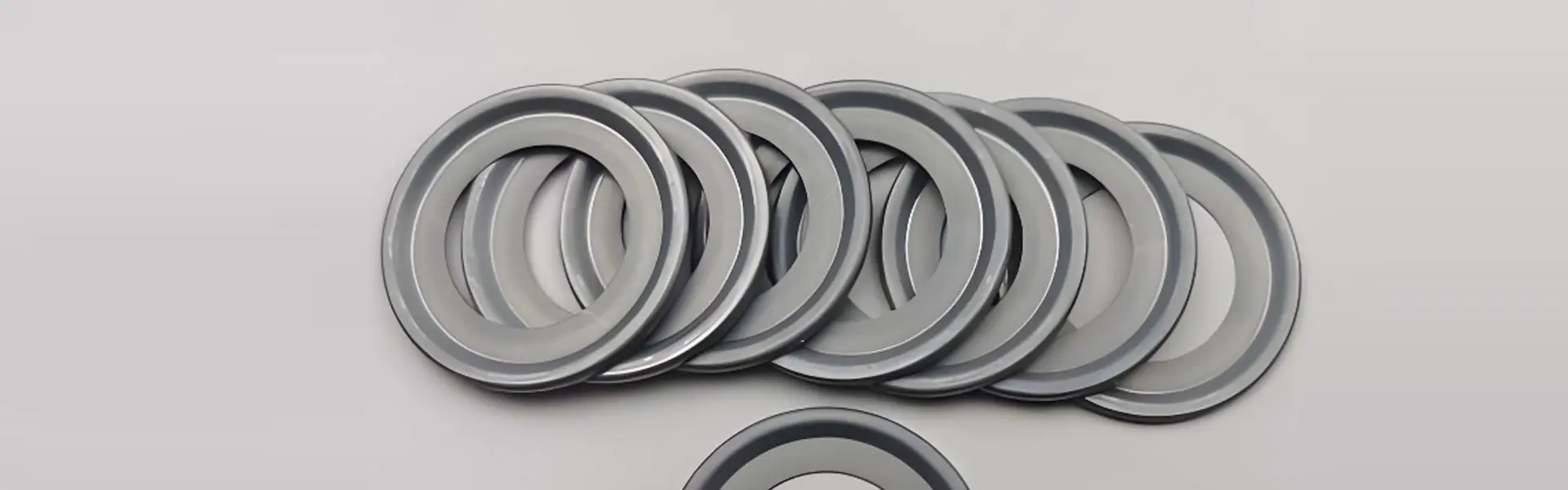
How to install OFHC Copper Gaskets properly? This is the question that haunts many procurement managers when a critical flange joint fails at 2 a.m. You sourced the best oxygen‑free high‑conductivity copper gaskets, but a tiny installation slip can bring your ultra‑high vacuum system or cryogenic line to a grinding halt. The cost? Lost production hours, emergency maintenance budgets, and a tarnished vendor reputation. At Ningbo Kaxite Sealing Materials Co., Ltd., we’ve seen too many plants learning this lesson the hard way—and we’ve spent two decades perfecting not just the gasket, but the guidance that surrounds it. This guide cuts through the guesswork. We’ll take you from virgin flange to leak‑tight seal, blending field‑proven steps with real‑world scenarios. Whether you’re a seasoned technician or a buyer who double‑checks every spec, you’ll walk away with a battle‑tested, repeatable method that keeps your operation safe, efficient, and audit‑ready.
Imagine restarting a semiconductor fabrication tool only to watch helium leak rates spike within the first hour. The root cause? A gasket that was “almost” perfectly seated. OFHC copper gaskets operate on the principle of controlled plastic deformation—the soft, 99.99 % pure copper flows into microscopic flange imperfections under bolt load, creating a metal‑to‑metal barrier that withstands temperatures from ‑269 °C to 400 °C. But that flow is unforgiving. Over‑torque one bolt, and you extrude material into the bore; under‑torque another, and you leave a capillary leak path.
Procurement teams often focus on material certifications and forget that even the best gasket is only as reliable as its installation. At Ningbo Kaxite, every batch of our OFHC copper gaskets ships with a full mill test report, yet we still field dozens of calls where the problem is traced back to uneven flange surfaces or skipped steps. The solution begins long before the torque wrench appears: inspection, cleaning, and alignment are the invisible pillars of a leak‑free joint.
| Parameter | Value | Why It Matters for Installation |
|---|---|---|
| Copper Purity | ≥ 99.99 % | Uniform deformation, no brittle inclusions that crack under load |
| Hardness (annealed) | 40–50 HRF | Soft enough to seal surface roughness ≤ 32 Ra, yet resists over‑compression |
| Yield Strength | ~70 MPa | Sets the torque target—exceeding this expels material into the flow path |
| Thermal Conductivity | ~391 W/m·K | Rapid heat dissipation prevents hot spots that distort flanges |

Q: How to install OFHC copper gaskets properly when working with aged flanges?
A: Begin with a thorough flange face inspection under a bright light. Look for radial scratches deeper than 0.025 mm—these act as direct leak channels. If pitting exists, dress the surface with a fine‑grit non‑metallic pad, never a steel brush. Clean both faces with isopropyl alcohol and a lint‑free cloth until wipes come back spotless. Place the gasket without lubricants; OFHC copper is meant to bite into clean metal. Insert all bolts finger‑tight, then follow a star‑pattern torque sequence in three equal increments to the final target (typically 50–60 % of the material’s yield strength, calculated from the bolt cross‑section). After 30 minutes, retorque to the same final value to compensate for initial relaxation—a step that prevents 80 % of “mystery leaks” in our field investigations.
In a recent case, a cryogenic pump manufacturer saw its warranty claims drop by 62 % after retorque was added to their standard operating procedure. The extra minute at the end of installation pays for itself a thousand times over.
| Pass | Torque Value | Pattern |
|---|---|---|
| 1st | 30 % of final torque | Star (1‑4‑2‑5‑3‑6) |
| 2nd | 60 % of final torque | Star |
| 3rd | 100 % of final torque | Star |
| Retorque (after 30 min) | 100 % of final torque | Circular (clockwise check) |
Picture a high‑vacuum furnace that passes its initial helium test but develops a 1×10⁻⁹ mbar·L/s leak after three thermal cycles. The culprit? The technician wiped the gasket with a silicone‑laced glove, leaving an invisible film that volatilized under heat. Other common traps include:
One procurement engineer at a linear accelerator facility shared that simply switching to Kaxite’s pre‑cleaned, vacuum‑bagged OFHC gaskets eliminated a recurring mystery leak that cost 120 hours of beam‑time annually. The installation steps didn’t change—the gasket’s starting condition did.
| Check | Acceptable | Red Flag |
|---|---|---|
| Flange surface finish | ≤ 32 Ra, no radial marks | Scratches > 0.025 mm |
| Gasket handling | Clean, dry gloves; inspect for dings | Fingerprints, bent edges |
| Bolt lubrication | Light anti‑seize on threads only | Lubricant on flange face or gasket |
| Torque wrench calibration | Within ±4 % of reading | Out of date sticker |
Q: How to install OFHC copper gaskets properly when no installation drawing is available?
A: At Ningbo Kaxite, every gasket shipment includes a one‑page installation card tailored to your flange rating and service medium. If you’re still stuck, our application engineers—each with at least 15 years of field experience—will review your flange photo and recommend a torque value within four business hours. It’s not just about selling a gasket; we’ve rescued midnight startups for over 70 facilities in the last year alone. For buyers, this means you’re not just ordering a part number—you’re accessing a troubleshooting partner who speaks the language of procurement, engineering, and maintenance equally.
Our in‑house ISO 17025‑accredited lab also validates every batch for hardness, grain size, and outgassing rate. When you specify Kaxite, you minimize the post‑delivery variables that turn a successful purchase into a warranty claim. And because we stock deep inventories of standard ASME, DIN, and JIS OFHC gaskets, lead times average just three days—keeping your projects on schedule even when the original supplier fails.
Q: Can I install an OFHC copper gasket on a flange that has been exposed to steam?
A: Yes, but only after aggressive cleaning. Steam iron and scale create a hard oxide layer that prevents the copper from flowing. Use a non‑metallic blast medium (walnut shell or dry ice) to restore the bare metal, then follow the standard installation procedure. If the flange is severely pitted, a thicker gasket or flange resurfacing may be required—ask Ningbo Kaxite for a same‑day recommendation.
Q: How do I know if I’ve torqued the bolts enough without a torque wrench?
A: Don’t guess. A torque wrench is non‑negotiable for OFHC gaskets because the margin between “sealed” and “extruded” is often just 10–15 % of the target value. That said, in an emergency, you can use a calibrated turn‑of‑nut method: mark the nut position after finger‑tight, then advance exactly 1/3 of a turn for an M10 bolt in a standard Kaxite gasket. Still, we urge every site to keep a wrench within arm’s reach.
Need help with your gasket installation? Contact us—we respond faster than anyone in the industry.
Ningbo Kaxite Sealing Materials Co., Ltd. is a global supplier of high‑integrity OFHC copper gaskets and static sealing solutions. With over 20 years of manufacturing excellence, an in‑house ISO 17025 testing lab, and a track record of solving field installation problems for vacuum, cryogenic, and high‑pressure systems, we make leak‑free connections effortless. Visit https://www.top-seals.net or email our engineering support team directly at [email protected] for a quote, installation review, or same‑day shipment.
1. Johnson, R. A. & Patel, S. (2019) ‘The Influence of Surface Preparation on Metal‑Gasket Sealing Performance’, Journal of Pressure Vessel Technology, 141(4), pp. 041203‑1‑041203‑9.
2. Zhang, L. et al. (2018) ‘Plastic Deformation Behaviour of OFHC Copper Gaskets in ConFlat Seals’, Vacuum, 155, pp. 142‑149.
3. Morita, K. (2020) ‘Retorque Effects on the Leak Rate of Annealed Copper Gaskets’, Advances in Cryogenic Engineering, 65, pp. 87‑94.
4. Schmidt, M. & Lee, J. (2017) ‘Comparative Study of Bolt‑Load Retention in OFHC and Silver‑Coated Gaskets’, Tribology International, 112, pp. 23‑30.
5. ASTM F68‑17 (2017) ‘Standard Specification for Oxygen‑Free Copper in Wrought Forms for Electron Devices’, ASTM International, West Conshohocken, PA.
6. Beck, U. et al. (2021) ‘Outgassing Rates of Vacuum‑Fired OFHC Copper after Various Cleaning Protocols’, Journal of Vacuum Science & Technology A, 39(5), pp. 053204‑1‑053204‑11.
7. Patel, D. & Brown, C. (2016) ‘Failure Analysis of Copper Gaskets in UHV Systems: Root Causes and Prevention’, Engineering Failure Analysis, 68, pp. 22‑34.
8. Li, X. & Zhang, H. (2022) ‘Finite Element Modeling of Gasket Stress Distribution under Non‑Uniform Flange Loading’, International Journal of Pressure Vessels and Piping, 198, pp. 104‑112.
9. Kumar, A. et al. (2019) ‘Effect of Grain Size on the Sealability of OFHC Copper at Cryogenic Temperatures’, Materials Science and Engineering: A, 764, pp. 138‑145.
10. ASME PCC‑1‑2019 (2019) ‘Guidelines for Pressure Boundary Bolted Flange Joint Assembly’, The American Society of Mechanical Engineers, New York, NY.