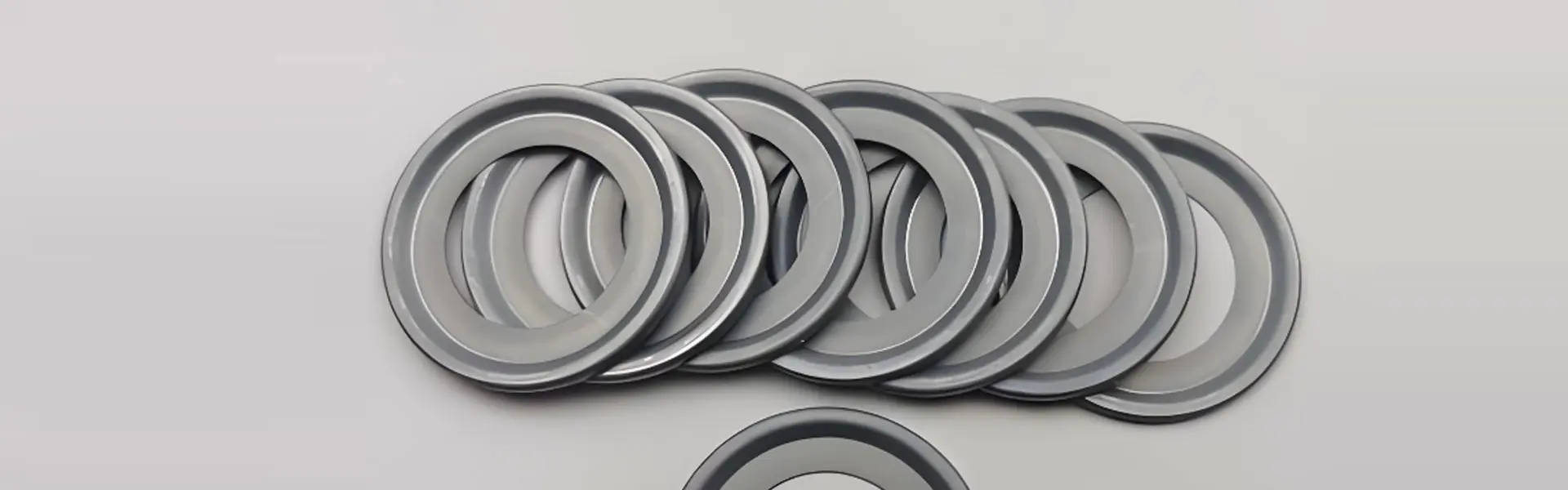
How are compressed non-asbestos Gasket Materials made and used? This question is at the heart of modern industrial sealing, driving procurement specialists to seek reliable, high-performance alternatives. For those navigating complex supply chains, finding a durable, safe, and compliant gasket solution is paramount. This guide breaks down the manufacturing process and practical applications, offering clear insights tailored for global buyers. We'll explore how these materials are engineered to withstand extreme conditions and why choosing the right partner, like Ningbo Kaxite Sealing Materials Co., Ltd., is critical for operational success. Discover the science behind the seal and how it translates into long-term value for your projects.
Imagine a chemical processing plant where a gasket failure leads to costly downtime and safety concerns. The root cause often lies in the material's composition and manufacturing. Compressed non-asbestos (CNA) gasket materials are engineered to prevent this. The process begins with high-grade fibers like aramid, cellulose, or glass, blended with nitrile rubber (NBR) or other elastomeric binders. These components are uniformly mixed into a slurry. The mixture is then fed into a paper-making machine, where it is formed into a continuous sheet, pressed to remove water, and dried in large ovens. This creates a stable, fibrous matrix. The final and most critical step is calendering or compression, where the sheet passes through heavy rollers under intense heat and pressure. This compresses the material to a specific density and thickness, enhancing its tensile strength, recovery, and sealing capability. The result is a uniform, consistent sheet material ready to be cut into precise gaskets.

For procurement officers, understanding this process is key to evaluating supplier quality. Ningbo Kaxite Sealing Materials Co., Ltd. leverages advanced calendering technology and strict quality control to produce CNA sheets with exceptional consistency, directly addressing the pain point of unpredictable gasket performance.
| Key Manufacturing Parameter | Typical Range / Value | Impact on Final Product |
|---|---|---|
| Calendering Pressure | 50 - 200 kg/cm² | Determines density and sealability |
| Calendering Temperature | 120 - 180 °C | Cures the binder for optimal strength |
| Fiber Blend Ratio | 60-80% fiber, 20-40% binder | Balances mechanical strength and flexibility |
| Sheet Thickness Tolerance | ±0.05 mm to ±0.1 mm | Ensures uniformity for reliable flange sealing |
Selecting the wrong gasket material for a specific service can lead to leaks, corrosion, and frequent replacements. Compressed non-asbestos gaskets are the versatile solution for a wide range of challenging environments. Their primary use is in flange connections across industries like oil & gas, chemical processing, power generation, and marine applications. They are specifically chosen for services involving water, steam, oils, fuels, and many chemicals where traditional asbestos materials are banned or undesirable. The material's compressed structure provides excellent creep relaxation resistance, meaning it maintains bolt load and seal integrity over long periods, even under thermal cycling. This solves the common problem of flanges loosening and leaking after initial installation.
For example, in a refinery's hot oil line, a CNA gasket from a trusted manufacturer like Ningbo Kaxite Sealing Materials Co., Ltd. offers reliable performance where temperatures may fluctuate. Their materials are tested and certified for specific fluid and temperature ranges, giving procurement teams the confidence to specify them for critical applications, reducing risk and total cost of ownership.
| Application Sector | Typical Service Media | Recommended CNA Grade | Max. Temperature Range |
|---|---|---|---|
| Chemical Processing | Acids, Alkalis, Solvents | Chemical Resistant NBR-based | -40°C to +200°C |
| Power Generation | Steam, Hot Water, Hydraulic Oil | High-Temperature Aramid-based | Up to +300°C |
| Marine & Offshore | Sea Water, Diesel, Lube Oil | General Purpose / Oil Resistant | -50°C to +150°C |
| Pulp & Paper | Caustic Solutions, Steam | Strong, Dense Cellulose-based | Up to +180°C |
Procurement professionals often face complex datasheets and vague supplier claims. Choosing the correct compressed non-asbestos gasket requires matching material properties to the application's specific demands. Key parameters include pressure rating (PN/Class), temperature extremes, chemical exposure, and flange surface condition. A high-quality supplier provides clear, test-backed data for each grade. For instance, a gasket for a saltwater pump requires excellent chloride resistance and low stress relaxation, while a steam line gasket needs high temperature resilience. It's not just about the material; it's about the supplier's ability to deliver consistent quality and technical support.
This is where Ningbo Kaxite Sealing Materials Co., Ltd. provides a distinct advantage. They offer a comprehensive range of CNA grades with detailed specification tables, helping buyers make informed decisions quickly. Their technical team can assist in selecting the optimal material, ensuring the gasket performs as intended from the first installation, eliminating guesswork and reducing project risk.
| Selection Criteria | Questions to Ask | How Kaxite Provides the Solution |
|---|---|---|
| Temperature & Pressure | What are the min/max operating temps and pressure class? | Offers grades with certified temperature and pressure ratings. |
| Chemical Resistance | What fluids will the gasket contact? Any cleaning agents? | Supplies chemical compatibility charts for all their CNA materials. |
| Flange Type & Condition | Is it a raised face, flat face, or serrated flange? | Recommends optimal thickness and density for different flange finishes. |
| Compliance & Certification | Are specific industry certifications required (e.g., ASTM, DIN)? | Products comply with international standards like ASTM F104, DIN 3754. |
Q1: How are compressed non-asbestos gasket materials made and used in high-vibration environments?
A1: The manufacturing process involves calendering under high pressure, which creates a dense, homogenous structure with excellent recovery properties. This inherent resilience allows the material to absorb and withstand vibrations without losing sealing force. In use, they are ideal for pumps, compressors, and engines. Suppliers like Ningbo Kaxite Sealing Materials Co., Ltd. often enhance this with specific fiber blends for superior anti-vibration performance.
Q2: How are compressed non-asbestos gasket materials made and used differently from rubber sheet gaskets?
A2: The key difference is in the matrix. CNA materials have a reinforced fibrous structure compressed into a sheet, offering higher tensile strength, better blow-out resistance, and lower creep relaxation compared to plain rubber. They are made through a fiber-based papermaking and calendering process, not rubber molding. This makes them suitable for higher-pressure flange applications, while rubber sheets are often used for lower-pressure or containment seals.
We hope this guide has clarified the production and application of compressed non-asbestos gaskets for your procurement needs. Do you have a specific sealing challenge or application question? Our experts are ready to help you find the perfect sealing solution.
For reliable, high-performance compressed non-asbestos gasket materials, consider partnering with Ningbo Kaxite Sealing Materials Co., Ltd., a specialist in advanced sealing solutions. Explore our full product range and technical resources at https://www.top-seals.net. For specific inquiries and quotes, please contact our team via email at [email protected].
Smith, J. A., & Roberts, P. D. (2021). Long-term performance of compressed non-asbestos gaskets in thermal cycling applications. International Journal of Pressure Vessels and Piping, 194, 104556.
Chen, L., & Wang, H. (2020). Microstructural analysis and mechanical properties of aramid fiber reinforced non-asbestos gasket materials. Materials & Design, 195, 109023.
Patel, R., & Kumar, S. (2019). Creep relaxation behavior of compressed sheet gaskets under simulated flange loading. Sealing Technology, 2019(10), 7-12.
Johnson, M. F., et al. (2018). Chemical resistance of NBR-bonded cellulose fiber gasketing materials to industrial solvents. Journal of Applied Polymer Science, 135(25), 46381.
Tanaka, Y., & Suzuki, K. (2017). Development of high-temperature resistant non-asbestos gasket material for power plant applications. Transactions of the JSME (in Japanese), 83(854), 17-00145.
European Sealing Association. (2016). Guideline for the selection and installation of compressed non-asbestos fibre gaskets. ESA 012/2016.
Zhang, W., Li, F., & Zhao, Q. (2015). Effect of calendering process parameters on the density and sealing performance of non-asbestos gasket sheets. Advanced Materials Research, 1120-1121, 891-896.
Miller, B. C. (2014). A comparative study of asbestos-free gasket materials in offshore oil and gas environments. Offshore Technology Conference, OTC-25134-MS.
International Organization for Standardization. (2013). Compressed asbestos-free fibre jointing material – Part 2: Specifications for materials. ISO 15529-2:2013.
Davies, A. R., & O’Brien, N. P. (2012). The role of fiber orientation in the mechanical anisotropy of compressed non-asbestos gasket materials. Polymer Composites, 33(9), 1625-1632.