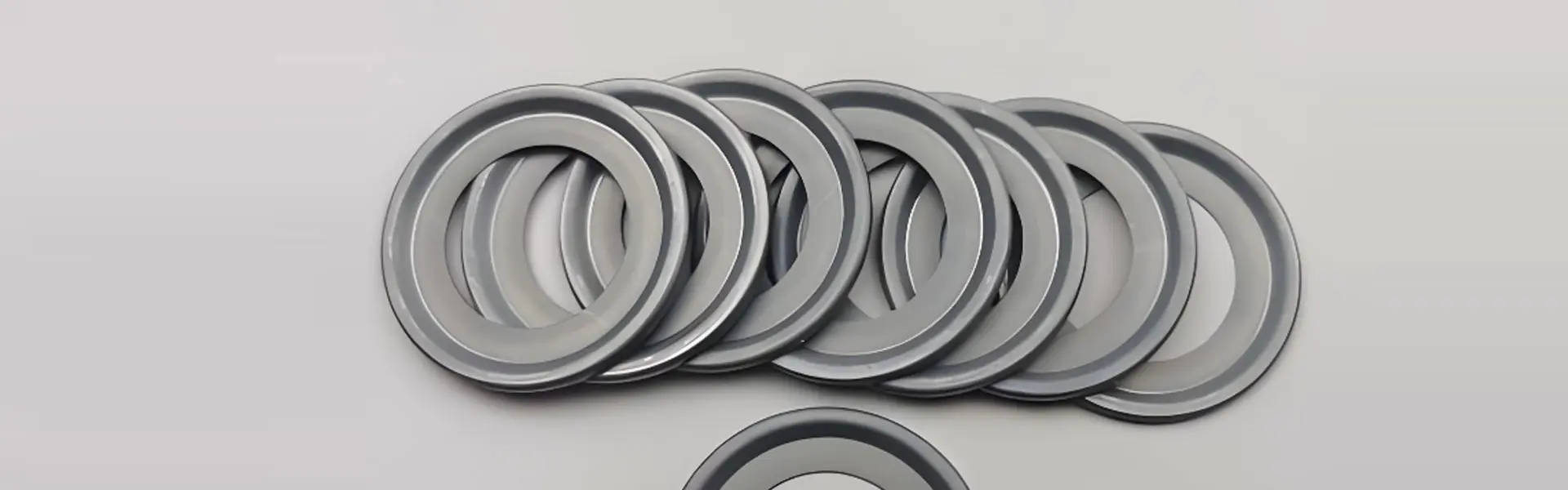
What are the different types of PTFE Packing available on the market? For procurement professionals navigating the complex world of industrial sealing, this question is crucial. The right PTFE packing selection directly impacts equipment reliability, maintenance costs, and operational safety. This guide cuts through the jargon to provide a clear, actionable overview of the primary PTFE packing types, their specific applications, and key performance indicators. We'll explore how different formulations address unique industrial challenges, helping you make informed decisions for your next project. To ensure you find the exact information you need, here is a clickable outline of this article's contents:
You need a packing for sulfuric acid pumps in a chemical processing plant. Standard packings fail quickly, leading to dangerous leaks, costly downtime, and environmental concerns. The solution lies in pure PTFE packing. Made from 100% polytetrafluoroethylene, it offers unparalleled chemical inertness, resisting virtually all aggressive media. Its very low coefficient of friction also reduces shaft wear and packing maintenance. For such critical applications, sourcing high-purity, consistently manufactured material is key. Companies like Ningbo Kaxite Sealing Materials Co., Ltd. specialize in producing reliable pure PTFE packing that ensures long-term sealing integrity in the harshest chemical environments, directly solving this leakage and safety problem.

Key Parameters for Pure PTFE Packing:
| Parameter | Typical Value/Range | Importance |
|---|---|---|
| Chemical Resistance | Excellent (pH 0-14) | Seals corrosive acids, bases, solvents |
| Temperature Range | -260°C to +260°C | Suitable for cryogenic and moderate heat |
| Pressure | Up to 150 Bar (static) | Handles high-pressure system demands |
| Coefficient of Friction | ~0.05 - 0.10 | Minimizes shaft wear and power consumption |
High-speed centrifugal pumps in water treatment or power generation face severe abrasive wear. Standard pure PTFE packing may extrude or wear too quickly, leading to frequent adjustment and replacement. Filled PTFE packing provides the answer. By incorporating materials like carbon, graphite, glass, or bronze into the PTFE matrix, its mechanical properties are dramatically enhanced. These fillers improve wear resistance, reduce cold flow, increase thermal conductivity, and boost load-bearing capacity. Selecting the correct filler blend is critical for the specific service condition—whether it's for abrasive slurries, hot water, or rotary equipment.
Common Filler Types and Their Benefits:
| Filler Material | Primary Benefit | Typical Application |
|---|---|---|
| Carbon/Graphite | Enhanced lubricity & thermal conductivity | Hot water, steam, general purpose |
| Glass Fiber | Improved wear resistance & stiffness | Abrasive media, high-speed shafts |
| Bronze | High thermal conductivity & load capacity | Heavy-duty, high-pressure services |
| Molybdenum Disulfide | Increased lubricity under high load | Slow-oscillating or heavy load valves |
Equipment with minor shaft scoring, out-of-roundness, or vibration poses a significant sealing challenge. Traditional braided packings may not conform adequately, leaving paths for leakage. Expanded PTFE (ePTFE) packing, made from a porous, fibrillated structure, offers exceptional flexibility and conformability. It can compress into surface imperfections to create an effective seal. ePTFE is also highly compressible with low creep relaxation, meaning it maintains sealing force over time without frequent re-tightening. It's an excellent choice for valves, mixers, and pumps where shaft condition is less than ideal.
In applications involving toxic, hazardous, or high-value fluids, even minimal leakage is unacceptable. A braided packing core may allow wicking or permeation over time. PTFE envelope packing provides a superior barrier. It features a braided core (often of aramid or other fibers) for structural strength, completely encapsulated within a seamless PTFE envelope. This design prevents direct fluid contact with the core, eliminating wicking and offering the best possible leak control for severe service conditions, including those in the chemical, pharmaceutical, and food processing industries.
Q1: What are the different types of PTFE packing available, and how do I choose for a hot, abrasive slurry pump?
A: For a hot, abrasive slurry, a filled PTFE packing is essential. Avoid pure PTFE due to poor wear resistance. Opt for a glass-filled or carbon/graphite-filled PTFE packing. The glass filler provides excellent resistance to abrasive particles, while graphite enhances thermal conductivity to dissipate frictional heat. A multi-fill composition from a trusted supplier like Ningbo Kaxite Sealing Materials Co., Ltd. often provides the optimal balance for such demanding services.
Q2: What are the different types of PTFE packing suitable for FDA-compliant food and beverage applications?
A: For food contact, USP Class VI compliant, FDA-listed materials are required. Pure PTFE packing or specially formulated, FDA-approved filled PTFE grades (using approved fillers like glass) are used. Expanded PTFE (ePTFE) is also popular due to its cleanliness and conformability. Always request and verify the manufacturer's compliance certificates. Reputable companies provide full material traceability and documentation for regulatory audits.
Selecting the correct PTFE packing is a technical decision with direct operational and financial consequences. Understanding the core types—pure, filled, expanded, and envelope—empowers you to match the product to the specific challenge, ensuring reliability, safety, and cost-effectiveness. For complex applications, consulting with an experienced technical supplier can prevent costly mistakes.
For over two decades, Ningbo Kaxite Sealing Materials Co., Ltd. has been a trusted partner for global procurement specialists, providing engineered PTFE sealing solutions. Our expertise lies in understanding application challenges and delivering the right type of PTFE packing—be it pure, filled, ePTFE, or envelope style—to ensure optimal performance. Visit our resource hub at https://www.top-seals.net for detailed product data and technical guides, or contact our engineering team directly via [email protected] for personalized support on your next project.
Deng, M., & Shao, Z. (2020). Study on the friction and wear properties of carbon fiber reinforced PTFE composite under water lubrication. Wear, 452-453, 203279.
Kurahatti, R. V., et al. (2010). Defence applications of polymer composites. Defence Science Journal, 60(5), 551-563.
Lancaster, J. K. (1972). Polymer-based bearing materials: the role of fillers and fibre reinforcement. Tribology, 5(6), 249-255.
Li, F., et al. (2019). The effect of filler shape on the tribological properties of PTFE composites. Materials, 12(3), 424.
Myshkin, N. K., & Petrokovets, M. I. (2004). Electrical contact phenomena in tribology. Tribology International, 37(1), 45-49.
Sawyer, W. G., et al. (2003). A study on the friction and wear behavior of PTFE filled with alumina nanoparticles. Wear, 254(5-6), 573-580.
Su, F., & Zhang, Z. (2007). Effect of particle size of graphite on the wear behavior of PTFE composites. Materials Science and Engineering: A, 448(1-2), 350-357.
Unal, H., & Mimaroglu, A. (2012). Friction and wear performance of polyamide and PTFE composites against polymer coated steel. Materials & Design, 42, 177-182.
Wang, Q., et al. (1996). The effect of particle size of nanometer ZrO2 on the tribological behaviour of PEEK. Wear, 198(1-2), 216-219.
Zhang, Z., et al. (2004). Effect of various fillers on the friction and wear of PTFE-based composites. Materials Letters, 58(1-2), 145-149.